

KJAN News can be heard at five minutes after every hour right after Fox News 24 hours a day!
Keep up-to-date with Fox News Radio, Radio Iowa, Brownfield & the Iowa Agribusiness Networks!


KJAN News can be heard at five minutes after every hour right after Fox News 24 hours a day!
Keep up-to-date with Fox News Radio, Radio Iowa, Brownfield & the Iowa Agribusiness Networks!
WAVERLY, Iowa (AP) — A trial is scheduled to begin July 16 for a northeast Iowa man accused of shooting to death his 36-year-old son. Bremer County District Court records say 59-year-old Daniel Niebuhr, of Fairbank, pleaded not guilty Monday to a charge of first-degree murder. The judge also ruled that Niebuhr was mentally competent to stand trial.
The Bremer County Sheriff’s Office says Niebuhr told deputies who were called to the Fairbank home March 22 that he shot his son as his son sat on a couch watching television. Deputies found the body of Brock Niebuhr inside the home.
There are several matters to be addressed during the Atlantic City Council meeting 5:30-p.m. Wednesday, at City Hall. The agenda says the Council will act on:
The Council will also act on an Order to re-appoint Lucas Mosier to the Community Promotion Commission, as well as discuss, and possibly act on, a change in Park Board position from Elected to Appointed. In other business, the Atlantic City Council will (as part of a regular series of actions), recognize the Atlantic High School Girl’s Golf Team.
(Radio Iowa) — Iowa’s Attorney General says Iowa is part of an agreement to that will give 143 former students of I-T-T Tech debt relief from some of their students loans. The leader of the A-G’s Consumer Protection Division, Jessica Whitney, says they have been investigating the now bankrupt school for years. “We were concerned about this loan program for starters and some other just general concerns we had with for profit colleges. And so we had been looking into them — and once they went bankrupt we knew they had this outstanding loan program and outstanding debt for Iowans, and we just wanted to try and address that,” Whitney says.
She says loans that total more than one-point-three million dollars will be forgiven. Whitney says they had concerns about how the credit union service organizations or CUSO handled the loans with students. She says they didn’t tell students about the cost of the loans and they believe the students didn’t realize they were taking out private loans with interest rates of 16 and 17 percent — and then they were graduating and not getting quite the jobs or salaries they were promised. Whitney says the settlement helps ease some of the burden from the students. “Especially these super high interest private loans. We hope that it helps students because they were still seeking to collect these. We hope that it gives students some relief,” according to Whitney.
She says any former I-T-T Tech students with the loans will be notified. “Officials should be reaching out — and if students have questions — we have been working closely with the Consumer Financial Protection Bureau. And students can contact them if they haven’t heard in say a month or so,” Whitney says. She says the number students can call is: 855-411-2372. The settlement also requires the CUSO to supply credit reporting agencies with information to update credit information for affected borrowers. Iowa is one of 44 states involved in the settlement with 18-thousand-664 former I-T-Y students nationwide who will get loan relief.
DES MOINES, Iowa (AP) — An Iowa health coach accused of defrauding dozens of people who lost more than $6.5 million by investing in a gym program has taken a plea deal. U.S. District Court records say 49-year-old Mark Blankespoor pleaded guilty Friday to one count of wire fraud. Prosecutors dropped 23 more counts in return for his plea. His sentencing is scheduled for Oct. 24.
Prosecutors say Blankespoor told investors from at least May 2013 through this past January that the medically oriented program would be licensed to fitness clinics nationwide and that investors could earn a 40 percent return on their money. But prosecutors say Blankespoor instead used their money for himself and to pay other investors.
(Radio Iowa) — Former Iowa Governor Tom Vilsack — who served eight years as President Obama’s secretary of agriculture — says having congress ratify the “U.S. Mexico Canada Agreement” will provide stability to farmers and momentum for other trade deals. “Having this agreement passed creates optimism, creates a hopefulness about the future,” Vilsack says, “which is incredibly important for agriculture and for the food industry, to have that optimism that things are going to be better.”
Vilsack hosted a forum early Monday morning in central Iowa with representatives from most of the state’s ag commodity groups. “This isn’t about giving President Trump a victory. It’s about giving the farmers in this room a victory,” Vilsack said. “It’s about giving all the people who are connected to the food and agriculture industry a victory. It’s about giving the American economy a victory.”
Vilsack says 28 percent of the American workforce is employed in the food and agricultural sector. Vilsack is now president and C-E-O of the U.S. Dairy Export Council. He says the U-S-M-C-A preserves Mexico as a market for about 30 percent of all U.S. dairy products. The new agreement also opens Canada to more U.S. dairy sales, according to Vilsack.
Drew Mogler of the Iowa Pork Producers Association says the deal is important because one out of every four hams produced in the U.S. ends up in Mexico. “Last year, Iowa exported about $700 million worth of pork to both Canada and Mexico,” he says. “This year our exports have dropped off a little bit, volume-wize, down to Mexico, so getting some certainly back (for) producers is important for us.”
Greta Irwin of the Iowa Turkey Federation says Mexico is the number one foreign market for U.S. turkey and the deal could increase turkey exports to Canada by up to 30 percent. “This type of agreement is huge for our industry,” Irwin says. Kevin Studer of the Iowa Corn Growers says farmers need a break. “This spring has been a mess. We all know it. We’ve got to get this anxiety off the table,” Studer said. “Let’s clear the deck on USMCA. Let’s get our trade people to be able to focus on getting China done.”
The U-S Mexico Canada Agreement is also important for the state’s biofuels industry. Monte Shaw of the Iowa Renewable Fuels Association says Mexico is an emerging market for Iowa-produced ethanol. “If that market were to go away because this (USMCA) fell apart and we actually pulled out for some period of time from NAFTA, that’d be like shutting down three and a half plants,” Shaw says.
The Trump Administration has not yet forwarded the new trade agreement for North America to congress. Once that happens, the U.S. House and Senate will have 30 days to ratify it. Vilsack says it would be best to have that vote THIS year, rather than having it happen in 2020 — during a politically-charged election year.
Here is the latest Iowa news from The Associated Press at 3:35 a.m. CDT
DES MOINES, Iowa (AP) — The director of the Iowa Department of Human Services says he resigned at the request of Gov. Kim Reynolds. Jerry Foxhoven released a statement Monday afternoon saying he’d submitted his resignation at the request of the governor and that it was an honor to serve as director of the agency. Neither Reynolds nor Foxhoven gave a reason for the change.
WEST DES MOINES, Iowa (AP) — Police investigating the shooting deaths of four family members in a Des Moines suburb are classifying three of the deaths as homicides and one as a suicide. West Des Moines police said Monday that autopsies showed 44-year-old Chandrasekhar Sunkara’s death was a suicide. The deaths of his wife, 41-year-old Lavanya Sunkara, and their boys ages 15 and 10 were homicides. Relatives who were staying as guests at the home discovered the bodies Saturday. Police didn’t release details about the deaths.
OMAHA, Neb. (AP) — The U.S. Army Corps of Engineers says it has almost completed work to close three of the most serious levee breaches on the Missouri River in southwest Iowa. Matthew Krajewski is readiness branch chief for the Corps’ Omaha district. Krajewski says four of about 40 breaches needed urgent attention after the flooding in March and May, and three of those should be closed Monday. The levees needing urgent repair were designed to protect Council Bluffs, Bartlett, Percival and Hamburg.
UNDATED (AP) — Medication withheld, cries for help ignored, routine checks neglected: With suicides a problem in many jails across the U.S., an AP/Capital News Service examination raises troubling questions about whether deaths could have been avoided with more training, better technology and fewer broken rules. What are authorities doing to stop these tragedies? Some are adding staff and changing policies, but one expert says jails are unfairly being asked to become mental health and drug treatment centers.
The Atlantic City Council, Wednesday evening, will discuss and act on a change from electing Parks and Recreation Board members to appointing those members, which comes as a complete surprise to the Parks Board. The Board, earlier this year, proposed reducing the terms of members to four-years instead of six, which the Personnel and Finance Committee endorsed during their meeting in February.
City Administrator John Lund said in a preview to Wednesday’s City Council meeting, that he and City Attorney David Wiederstein found it impossible to change the terms without disrupting the cycle of elections. Wiederstein is recommending the Council consider the option of ending the elections for the Board, and having them made by appointment. Lund says he agrees with that idea, and it would fall in-line with the Airport Commission and AMU Board.
Parks Board member Charlene Beane said the change was “Very disconcerting.” They didn’t know about the change until the matter appeared in the local paper Monday morning. She said “I’m horrified. The more elected jobs there are in the city, the better your democracy is represented. I think this idea of appointed positions keeps the same old pool going.” She said also, “Right now I see a lot of top-down governing that I don’t think is for the best.”
Assistant Parks Director Roger Herring agreed, saying “Often times you get into situations where you have accusations that it’s a ‘Good ol’ Boy’s society,’ to which Beane replied, “And it often is.” Herring said in that type of situation, you surround yourself with your own ‘yes” people, [whereas with elections] you have a better chance of representation, because you have a group that senses there’s a situation there and they want to be more involved…and run the risk of running for election and soliciting votes.” Beane said the change “came out of left field, and I resent it.” Other Board members concurred.
Councilman Pat McCurdy suggested the Parks Board attend Wednesday evening’s meeting to voice their opposition to terms of appointment instead of election. In other business, Interim Parks Director Bryant Rasmussen provided updates on the Schildberg Development Project. He said the west playground community building is this Friday and Saturday. The Street Department has been working in advance to excavate the playground area, and Snyder and Associates Engineers will pinpoint the holes for the playground poles and mounting equipment to make the install proceed faster.
A representative of Miracle Playground Equipment will be on hand Saturday to guide the construction process. Anyone wanting to help with the construction of the playground is welcome to show up between for one of two shifts each day: 8:00 AM until Noon and 1:00 PM until 5:00 PM. Lunch and tools will be provided. You may contact Park Director Bryant Rasmussen for more information at the Parks and Recreation Office (712) 249-3542.
WEST DES MOINES, Iowa (AP) — Police investigating the shooting deaths of four family members in a Des Moines suburb are classifying three of the deaths as homicides and one as a suicide.
West Des Moines police said Monday that autopsies showed 44-year-old Chandrasekhar Sunkara’s death was a suicide. The deaths of his wife, 41-year-old Lavanya Sunkara, and two of their children, boys aged 15 and 10, were homicides.
Other family members who were staying as guests at the home discovered the bodies Saturday.
Police didn’t release details about the deaths and haven’t named the boys who were killed. The Iowa Department of Public Safety says Chandrasekhar Sunkara had worked for 11 years in the department’s information technology unit. He wasn’t a sworn officer.
ATLANTIC- Officials at Cass County Health System announced today (Monday), that Dr. Blanca Marky is now seeing patients at Atlantic Medical Center. Dr. Marky is a board-certified neurologist, and she will be providing care for patients in Atlantic every month on the first and third Tuesday.
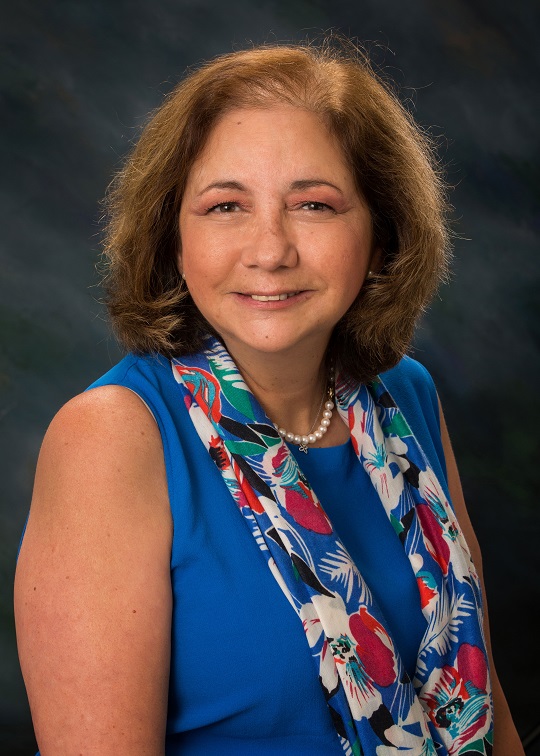
Dr. Markey
She cares for patients with general neurology needs, headaches, numbness, multiple sclerosis, dementia, epilepsy, treatment following stroke, and more. She performs neurological treatments including electromyograms (EMG), electroencephalograms (EEG), and Botox injections.
In addition to her work in Atlantic, Dr. Marky works at St. Anthony Clinic in Carroll, Iowa. She has more than twenty years of experience and is certified by the American Board of Psychiatry and Neurology, American Academy of Neurology, American Association of Electrodiagnostic Medicine, and American Academy of Nursing (FAAN). She is a native of Mexico City, Mexico, and she is fluent in English, Spanish, and French.
“We are thrilled to have Dr. Marky join the medical team at Cass County Health System,” said Brett Altman, CEO. “She comes with extremely positive recommendations from patients and her fellow physicians. As part of our commitment to provide more services locally, Dr. Marky helps meet the needs of our family, friends, and neighbors who need neurological care and we are one of few western Iowa hospitals that offer neurology services.”
To make an appointment with Dr. Marky, please call the Atlantic Medical Center at 712-243-2850.
A 22-year old man from Clarinda was injured during a single-vehicle accident Saturday night. The Page County Sheriff’s Office says Christian Lyle Lauritsen was driving a 2002 Jeep Cherokee eastbound on 190th Street, about one-quarter of a mile north of Clarinda, when he failed to maintain control as his SUV entered a curve going onto Q Avenue.
The vehicle then crossed the median before striking a stop sign and hitting the embankment. The SUV went airborne and rolled, coming to rest on its wheels after striking an E911 sign. The accident happened at around 11-p.m.
Lauritsen was transported to the Clarinda Regional Hospital by Clarinda Ambulance for undisclosed injuries. He was cited for Failure to maintain control and Failure to maintain or use safety belt. A passenger in the vehicle, 22-year old Luke Gage Strong, was cited for Failure to maintain or use safety belt. Damage to the vehicle is estimated at $5000.00. Damage to the signs owned by Page County is estimated at $400.00.


 Facebook
 Twitter
 YouTube
 RSS
RSS