

KJAN News can be heard at five minutes after every hour right after Fox News 24 hours a day!
Keep up-to-date with Fox News Radio, Radio Iowa, Brownfield & the Iowa Agribusiness Networks!


KJAN News can be heard at five minutes after every hour right after Fox News 24 hours a day!
Keep up-to-date with Fox News Radio, Radio Iowa, Brownfield & the Iowa Agribusiness Networks!
DES MOINES, Iowa [KCCI-TV] — Gov. Kim Reynolds is appealing a pre-trial decision requiring her office to provide emails in a lawsuit with the Des Moines Register.
Last month, a Polk County judge ruled that the governor’s office must provide the court with four emails central to an open records lawsuit. These emails are to be privately reviewed by the judge, with an Oct. 10 deadline set for handing over the documents. However, the governor’s office has appealed the decision.
The emails were withheld from an 825-page open records request made by the Register, following an exchange Reynolds faced on Capitol Hill concerning allegations made against Lutheran Services of Iowa.
Reynolds claims the emails were intended to be confidential and are protected under executive privilege. The Des Moines Register argues that there is no executive privilege under Iowa law.
(Red Oak, Iowa) – Sheriff’s officials in Montgomery County report a woman from Adams County was arrested at around 8:35-p.m., Tuesday, on several Adams County warrants. 34-year-old Christine Whitney McGlade, of Carbon, was wanted on warrants for: Failure to Appear on serious misdemeanor charges of Gathering where marijuana is used, Driving While Revoked and OWI/1st offense; An aggravated misdemeanor charge of Driving While Barred; and Simple Misdemeanor charges that include Possession of drug paraphernalia, Operating without an ignition interlock device, and Operating without registration.
McGlade was transported to the Montgomery/Adams County line, and transferred to the custody of Adams County Sheriff’s deputies.
IOWA (KCAU) — Another Republican candidate has announced they are running for Iowa’s Fourth Congressional District. Veteran, military spouse, and construction executive, 40-year-old Douglas Jensen, of Silver City, announced his campaign on Friday.
In a press release, Jensen said “The legislative branch is the first article of the constitution for a reason. Our Founders built a government of the people, by the people, and for the people – yet Congress today can’t even fulfill its most basic duty of passing a budget. That failure shows just how far Washington has drifted from serving the American people.”
He said if he were to be elected, his focus will be on balancing budgets, working across differences, and rebuilding public trust.
The race, so far, includes Republican-aligned candidates: Siouxland Chamber president Chris McGowan; Iowa State Representative Matt Windschitl; software consultant and volunteer firefighter Christian Schlaefer, and Iowa Tea Party member Ryan Rhodes.
Three Democrats have also joined the race for Iowa’s 4th Congressional District seat: Ashley WolfTornabane of Storm Lake; Stephanie Steiner of Sutherland, and Dave Dawson of Lawton.

(Radio Iowa) – A Midwest biosecurity expert says bird flu was spread from farm-to-farm in 85 percent cases identified during the 2015 outbreak, but only 15 percent of current bird flu outbreaks have been traced to nearby poultry operations. Abby Schuft, a poultry education trainer for University of Minnesota Extension, says that means it’s time to dig deeper into biosecurity measures.
“We are now beyond having clean boots and clean clothing when we enter the housing where our birds are,” Schuft said. “There are so many other environmental…factors that are playing into this on how the virus is spreading and being introduced to farm sites.” In September, Iowa officials confirmed Canadian geese in ponds in Dubuque County had bird flu.
Last week, U-S-D-A officials confirmed bird flu had hit a commercial operation in Calhoun County with 42-thousand turkeys. Schuft says poultry operators and people raising chickens in their backyard need to consider outside factors that could introduce bird flu to their flock. She notes standing water after a heavy rain can be a resting spot for migrating birds and harvested fields nearby offer a food buffet to wild birds.
“That’s a challenge then for our poultry producers when there’s wild waterfowl in lots of different places,” Schuft says, “which simply means then there’s opportunity for the virus to really just be everywhere.” Schuft suggests farm vehicles driven near poultry barns be washed frequently to prevent the spread of bird flu.
“Even as the weather’s cooling down, we don’t necessarily want to have to power wash our vehicles outside or our farm equipment, but we still need to be diligent about that truly until we absolutely can’t when the water might be freezing in the hoses,” Schuft said, “really ensuring that you’re not taking any shortcuts when you notice some of those seasonal changes that are happening.”
Federal records show eight poultry flocks in Iowa had been hit by bird flu this year — but last week’s Calhoun County site was the first since April. Bird flu has recently been confirmed in poultry at 13 commercial sites in Minnesota, in three commercial flocks in South Dakota and at two commercial operations in Wisconsin.
(Radio Iowa) – State and local officials joined executives from one of the world’s largest meat processing companies at the groundbreaking for a new sausage plant in Perry. J-B-S expects the plant will start production by the end of next year and eventually employ 500. Iowa Economic Development Authority Director Debi Durham notes Perry has been through a rollercoaster after a tragic school shooting in early 2024 and the closure of the Tyson pork plant in mid-2024.
“This community embodies the idea that you are more than your circumstances,” Durham said. “With every unforeseen challenge, unthinkable tragedy or business setback, you show us what you are made of – hard work, heart and optimism.” Nearly 13-hundred people were laid off when Tyson closed its Perry plant on June 28th of last year. Perry Mayor Dirk Cavanaugh says the new plant will help his community recover from last year’s set backs.

Groundbreaking for new sausage plant in Perry on Oct. 14, 2025. (Photo courtesy of JBS USA)
“It will bring good jobs back to Perry so our residents don’t have to commute to work. It will attract new businesses and residents to our community. It will also give a boost to our existing businesses.” J-B-S operates plants in Council Bluffs, Marshalltown and Ottumwa and the new plant in Perry will be the company’s first sausage production site in the United States.
J-B-S recently purchased a shuttered Hy-Vee facility in Ankeny, where it plans to produce ready-to-eat bacon and sausage — and some of the raw ingredients for that sausage will come from the Perry plant.
(Lee County, Iowa) – Two juveniles on an electric bike were injured Tuesday afternoon in southeast Iowa, when the bike failed to stop at an intersection and was struck by a car. The Iowa State Patrol says the accident happened at around 4:45-p.m. in Fort Madison.
The report says a 2020 Honda Civic driven by 19-year-old Jordyn Burch, of Ft. Madison, was traveling eastbound through the intersection of Avenue E & 20th Street, when a southbound e-bike operated by a 9-year-old failed to stop. The bicycle struck the front driver’s side area of the car. The 9-year-old and a 12-year-old passenger on the bike were ejected during the collision.
The younger child was flown by helicopter to the University of Iowa Hospital. The 12-year-old was transported by ambulance to the hospital in Fort Madison. The names of the juveniles were not released.
CARROLL – The Iowa Department of Natural Resources is investigating a hog manure release into a tributary of Elk Run Creek in Carroll County.
On October 14, the DNR Field Office in Atlantic was notified by Eric Baumhover, manager of B&B Custom Pumping, a certified manure applicator business, of a manure spill which occurred in the evening hours on October 13.
Staff from the DNR Field Office in Atlantic responded to the incident. Further investigation revealed that approximately 5,000 gallons of manure was spilled when a hose blew while land-applying manure from the Brady Boell hog confinement site located at 25510 120th St in Carroll.
Field staff reported the applicator took immediate action after the incident by placing dams in several locations to contain the manure while continuing to pump it out of the creek, which prevented it from flowing to Elk Run. Corn stalks were also used to soak up the manure on the ground.
Cleanup efforts continue while on-site crews pump the manure-laden water out of the creek. Soil will be excavated as needed. No dead fish have been observed. Samples have been collected and will be submitted to the State Hygienic Laboratory for testing.
The incident remains under investigation. The department will determine if further enforcement action is warranted.
To report a release after hours, please call the DNR’s emergency spill line at (515) 725-8694. Quick reporting can help DNR staff identify the cause of an incident. The DNR website has more information about spill reporting requirements.
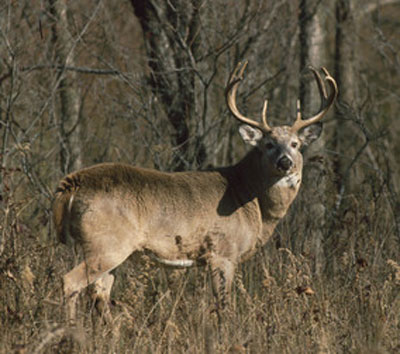
(Radio Iowa) – Deer hunting is underway in Iowa with the first two seasons requiring hunters to use a couple of the older methods of hunting. D-N-R state deer biologist Jace Elliott says the bow and early muzzleloader seasons have started slowly. “So far, we’ve had pretty average, perhaps a bit below average harvest in the early part of this year, but that’s easy to attribute to the warm weather,” Elliott says. Elliott says unseasonably warm weather limits deer movement.
“Cold weather, especially cold fronts, get deer up on their feet in the daylight hours better. They are going to be traveling more during daylight hours in the early season when weather is a little colder. We just haven’t had much of that yet,” he says. He says hunters understand the impact of weather on deer movement, and that impacts their decision on when to sit in their stands. “It’s also hunters that are choosing to maybe wait until it gets a little bit colder,” Elliott says, “as you know, handling venison and things like that can be an improved experience once that that weather gets colder as well.”
(Iowa DNR photo)
The bow hunting season is the longest one, so there is plenty of time for those hunters to get a deer. “So far we have several thousand deer that have been registered across the state, which shows that you know, we’re off to a good start. But for an average year, we have another hundred thousand deer harvests to go,” he says. The early muzzleloader season runs through this coming weekend. There have been around five-thousand deer taken already. The most deer are taken during the regular gun seasons that don’t start until December.
(Radio Iowa) – The Manchester City Council has approved the site plan for a proposed custom meat processing facility in the city’s industrial park. Todd Summers owns and operates a meat locker in Earlville, but Manchester City Manager Tim Vick says that facility needs some upgrades. “He’s looking at maybe just doing a much larger facility here in Manchester,” Vick says, “and so there are multiple phases that we are looking at.”
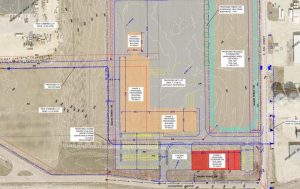
Site plan for proposed Manchester Locker (provided by City of Manchester)
Vick says phase one of the plan would be to develop 15 acres and build a 26-thousand square foot facility. “Animals would come in. They’ll be slaughtered, processed and out of the door,” Vick said. Vick says the business — which would be called The Manchester Locker — would also have retail space to sell meat directly to customers. Summers — who’s planning to operate a meat locker in Manchester — bought Dan’s Meat Locker in Earlville last year. It offers custom meat processing of beef, pork, lamb and deer and makes retail sales of everything from steaks to homemade sausage.
U-S-D-A records show there are nearly 150 licensed processing plants for meat and poultry in Iowa.


 Facebook
 Twitter
 YouTube
 RSS
RSS