

CLICK HERE for the latest market quotes from the Iowa Agribusiness Network!
CLICK HERE for the latest market quotes from the Brownfield Ag News Network!


CLICK HERE for the latest market quotes from the Iowa Agribusiness Network!
CLICK HERE for the latest market quotes from the Brownfield Ag News Network!
How can Master Gardeners and community volunteers support local food systems? In 2015, exploring the question as part of the Winter Webinar Series (www.mastergardener.iastate.edu/training.html.) Master Gardeners and the general public will learn about how to support school gardens, food banks, community gardens, and more. The final session of the series will be held from 6:30-8:30 p.m. on Thursday, March 12 at the Montgomery County Extension Office, 400 Bridge Street in Red Oak. The topic of this session is Back to School: Learn how volunteers are engaging in school gardens and supporting systems change for health. Hear examples from Master Gardener Coordinator Laurie Taylor in western Iowa.
There is a $3 fee to offset charges affiliated with the webinar-Master Gardeners get in free! Call 623-2592 so extension staff can plan for your attendance. Information from ISU Extension and Outreach in Montgomery County can always be found at www.extension.iastate.edu/montgomery or on Facebook page at Montgomery County-IA Extension.
Iowa’s largest manufacturing employer is reporting first quarter earnings today that reflect a significant drop from a year ago. Quad Cities-based Deere and Company shows net income for the quarter at nearly 387-million dollars, compared to 681-million in the first quarter last year. That’s a slide of 294-million. Deere spokesman Ken Golden says the news is not a surprise. “We had projected the global farm economy was going to be sluggish this year, but we’re also coming off of some really high, record years, so you have to put that in perspective,” Golden says. “The report we put out today is all about the sluggish farm economy but also our diverse lineup, because construction and forestry and financial services had higher profits.”
Worldwide net sales and revenues for the first quarter fell 17 percent, to around six-point-four billion dollars, down from seven-point-six billion last year. The report also shows net sales of the equipment operations were down one-point-three million. “Yes, we’re down from a year ago but this is about where we thought we would be,” Golden says. “We had projected going into the year that it was going to be a soft year, especially in large agricultural machinery which is really sort of a sweet spot for John Deere.”
Last month, Deere announced indefinite layoffs at five locations that build ag equipment. That includes roughly 565 workers at three locations in Waterloo, 300 at the Des Moines Works in Ankeny and 45 at the Harvester Works in East Moline, Illinois. About 500 employees at Deere’s Seeding and Cylinder facility in Moline, Illinois, also will go on an extended shutdown to adjust inventory. Golden was asked if more job cuts loom. “We have taken the action that we needed to take based on what we knew,” Golden says. “We knew that industry sales were going to be softer, especially in agriculture. We have taken those job actions and we are hopeful that more are not going to be needed.”
Besides Iowa and the Midwest, farmers in many parts of the world have struggled with drought and other severe weather issues in recent years, while last year, prices for many key U-S commodities took a nose-dive. Golden says it was expected that the sale of ag equipment, like big tractors and combines, would take a hit. “If you compare large ag sales from just two years ago, we’re down 50%,” Golden says. “The good news is, we’re a much better company and net income is higher than it would have been in those types of decreases in the past.”
Looking ahead, Deere equipment sales are projected to drop 17-percent for fiscal 2015 and be down about 19-percent for the second quarter compared with year-ago periods. A Deere news release says, “…even with a continued pullback in the agricultural sector, John Deere expects to remain solidly profitable in 2015. Our forecast reflects a level of results much better than we’ve experienced in previous downturns. This illustrates our success establishing a wider range of revenue sources and a more durable business model.”
(Radio Iowa)
DES MOINES, Iowa (AP) — The U.S. Department of Agriculture says in a new report that the number of farms in Iowa continues to slide. In an annual report released Thursday the USDA says Iowa farms fell to 88,000 last year, 500 fewer than the year before. Most of the decrease came in the small farm category, those with annual sales between $1,000 and $10,000.
The number of Iowa farms has fallen 1.2 percent since 2010, while the average farm size is up 1.2 percent in the same period, a reflection of national trends. The average farm in Iowa is 347 acres, up one acre from the year before. Iowa had 30.5 million acres in farms last year, down 100,000 acres from the year before.
Shelby County Iowa State University Extension and Outreach have announced the Pesticide Safety Education Program (PSEP) team is now offering certified commercial pesticide applicators the opportunity to receive email notifications of upcoming Continuing Instructional Courses (CIC) and other pesticide safety education opportunities.
Kristine Schaefer, PSEP program manager at ISU Extension and Outreach, says “Applicators can select the categories for notification and can make update if it changes, or opt-out at any time. This will help applicators know when the CIC programs are offered if for some reason employers do not receive our spring or fall postcard reminders.”
PSEP will use an online email management system to send notifications to commercial, noncommercial and public applicators interested in the pesticide safety courses to maintain their certification. Schaefer says participation in the notification signup is voluntary. Applicators who are for-hire are required to have certification and be licensed in the state and must participate in CICs in order to maintain their license for pesticide application.
To sign up for the notifications, go online at: http://eepurl.com/_kHb1. After entering an email address, name and zip code, categories of interest for pesticide safety training opportunities (i.e., agriculture weeds, aerial application, public health, turf or household pests, etc.) can then be selected. Once registered, a confirmation email will be sent. Recipients can change their profile at any time.
To register or to obtain additional information about the CIC program, contact the ISU Extension and Outreach office in Shelby County at 712-755-3104.
A new pedestrian bridge in Avoca connecting to a trail system was completed last month, giving residents of the community a connection from East Thomas Street to Edgington Memorial Park over the East Nishnabotna River. Anna Hoegh, director of Avoca Main Street, told the Daily NonPareil in 2007, the city council worked to establish the foundation of a prosperous future through a financial comprehensive plan.
The downtown master plan was a part of that idea, with a facade program to improve the aesthetics of the city’s downtown. Hoegh said the improvements will help the city attract more business while retaining what is already there. The pedestrian bridge cost $243,850 and was constructed to create a quicker route of travel for those who live on the east side of Avoca. It is 120 feet long and 12 feet wide, made of steel with a wooden deck.
The city only spent $72,358 on the project, however, thanks to grants by the Iowa Department of Natural Resources for $75,000 and another grant from Regional Planning Area 18, which was for $171,492. The grant from the IDNR was devoted to the construction of three connecting trails from the bridge to the town.
Several southwest Iowa communities have received grants totaling $203,000, through MidAmerican Energy’s Trees Please! program. The Daily NonPareil reports the cities include Council Bluffs, Farragut, Macedonia, Marne, Modale, Randolph, Red Oak, Shelby and the Glenwood Tree Board. Each of those entities received funds to promote energy efficiency and environmental beautification through the planting of trees. Council Bluffs received $20,000. The other cities received $1,000 each.
Council Bluffs Parks and Recreation Assistant Director John Batt said the grant will go towards planting a variety of trees around town, primarily on public property, parks and trails wherever possible. Communities and organizations submitted applications to MidAmerican and were selected based on their individual merits and benefits to the community while also being able to obtain matching funds.
Tina Yoder, energy efficiency manager for MidAmerican Energy said trees serve as a natural wind break while providing shade to homes and businesses.
A series of workshops targeting Iowa beef producers will be held across western Iowa next month which will compare various types of cattle operations. Beth Doran is a beef program specialist at the Iowa State University Extension, based in Orange City. She says the workshops are targeted towards potential and current producers. “We’re going to try to give an overview of facility types,” Doran says. “We’ll be talking about different kinds of facilities, hoop barns, monoslope barns, open lots, deep-pitted slotted-floor barns. We’ll talk about the advantages and disadvantages of them and review some of the research on those types.”
Doran says producers will receive several production resources and tools as well as an updated manual on feedlot systems. “We’re also going to give the workshop participants several scenarios and they’ll have to work through making appropriate choices for an operation,” Doran says. “That might involve their financing decisions, cost-benefit measurements and taking a look at that production environmental risk that’s going on with that.” Doran says northwest Iowa contains a lot of the different operations that will be discussed in the workshops.
Producers interested in attending should call their local extension office to pre-register. The workshops will be held (locally) March 18th in Lewis, and on March 25th in Carroll.
(Radio Iowa)
Officials with the Iowa DNR say the three month window to reserve a state park campsite for a Friday arrival on Memorial Day weekend opens this Sunday, Feb. 22. But more than a few campers have their sites already reserved arriving on the weekend before Memorial Day and staying through the holiday. Todd Coffelt, chief of the Iowa Department of Natural Resources State Parks Bureau, says “Campers can make reservations for sites three months ahead of their first night stay.” He said also “We had a flurry of reservations when campers began getting their sites for a two-week stay that includes the Memorial Day weekend.”
Most parks will have nonelectric sites available for the Memorial Day Weekend. Not every campsite is available on the reservation system. Parks maintain between 25 and 50 percent of the electric and nonelectric sites as non-reservation sites, available for walk up camping.
Information on Iowa’s state parks is available online at www.iowadnr.gov including the link to reservations. Campers can also log on directly to http://iowastateparks.reserveamerica.com; enter their preferred amenities and requirements, dates and/or parks to see what sites are available and make a reservation.
Iowa is playing host to a national event focused on bird hunting, wildlife conservation and dog training. Mick Klemesrud is a spokesperson for the Iowa Department of Natural Resources, a sponsor of the 2015 National Pheasant Fest and Quail Classic — this Friday through Sunday at the Iowa Events Center in Des Moines. Klemesrud notes two days coincide with the State Wrestling Tournament. “We’ll get a lot of the different vendors from the across the country that are involved in pheasant and dog training. They expect about 25,000 (people to attend) so it would be nice if we had a little bit more than that with the additional people in town,” Klemesrud says.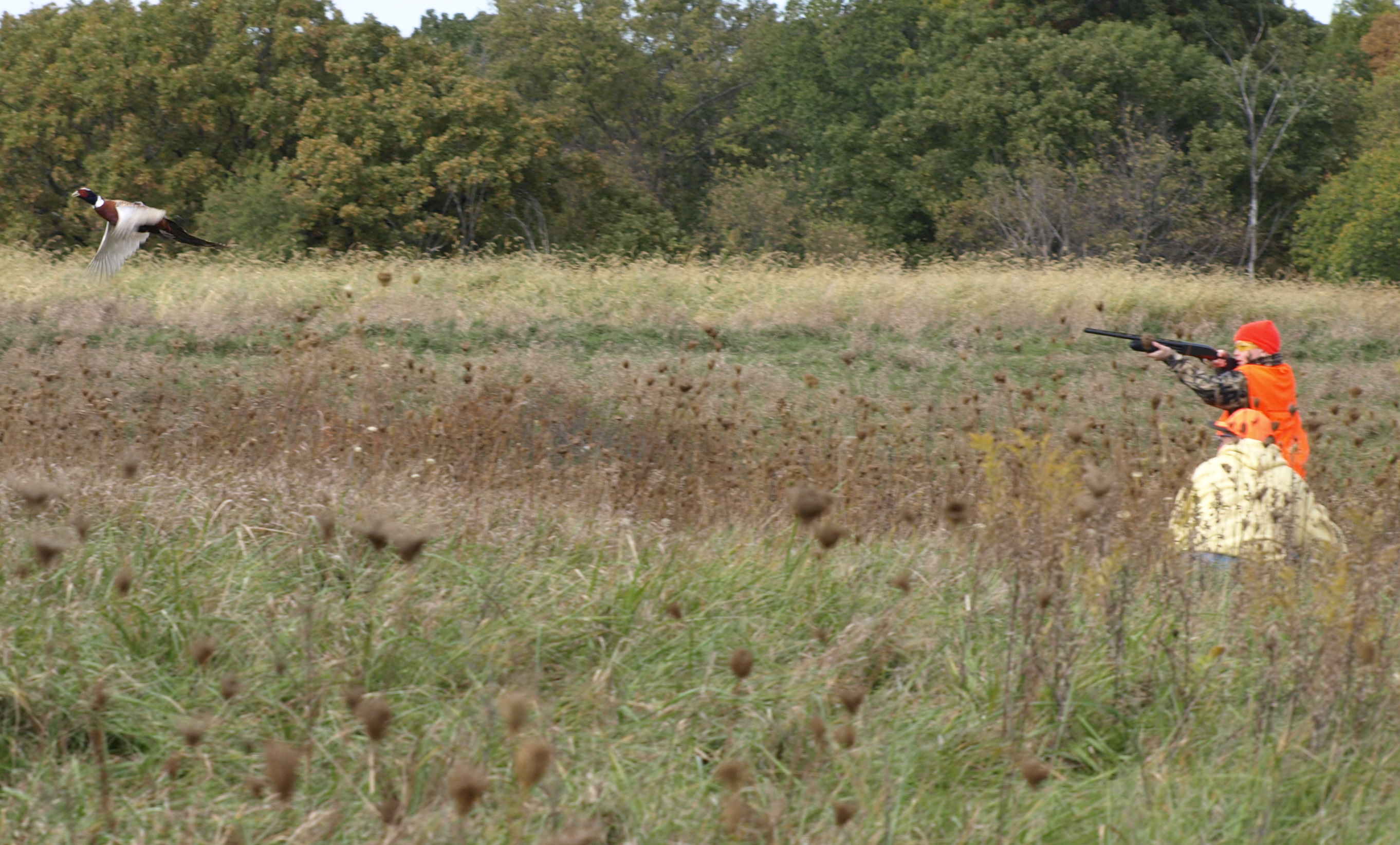
The annual Pheasants Forever event began in 2005 and was previously hosted by Iowa in 2007 and 2010. Klemesrud says pheasants may not be as plentiful in Iowa as decades ago, but they’re making a comeback. “We are not to the glory years that we were in the 1990s, but we’ve had a few upticks in our pheasant numbers and we expect to have good survival into next year,” Klemesrud says. “So, we’re going build on year-over-year pheasant numbers and if we have a good spring, we’re going to have more pheasants than even last year.”
At this weekend’s event, landowners can meet with DNR conservation officers to discuss ways they can help improve upland bird habitat. Klemesrud says the event will also include a Youth Village. “In the Youth Village, we’ll have a lot of different entertainment and games for the kids. Our officers will have some air rifle ranges, some 3D archery and we’ll have a snowmobile simulator,” Klemesrud says.
Daily admission to Pheasant Fest is $10 for adults, $5 for children 6-16, while children 5 and under get in free. For a complete schedule of events visit www.pheasantfest.org.
(Radio Iowa)


 Facebook
 Twitter
 YouTube
 RSS
RSS