

CLICK HERE for the latest market quotes from the Iowa Agribusiness Network!
CLICK HERE for the latest market quotes from the Brownfield Ag News Network!


CLICK HERE for the latest market quotes from the Iowa Agribusiness Network!
CLICK HERE for the latest market quotes from the Brownfield Ag News Network!
Bob Bebensee and DNR Conservation Officer Adam Arnold talk about all things outdoors. Topics this week include upland birds, bobcats, and deer hunting.
Podcast: Play in new window | Download (9.7MB)
Subscribe: RSS
Officials with the Cass County Conservation Service have announced the Trumpeter Swans have arrived at the Schildberg Recreation Area, and that the contest which began back in October, has ended. A contest was held with regard to the arrival date of the large winged birds. The winning date was November 9th, when 15 Trumpeter Swans arrived and stayed for more than 24-hours.
Officials say Leola Kanning picked the correct date, and with her good guess and won an 8×10 Trumpeter Swans print from the Cass County Conservation Board. The Board thanks everyone who took the time to enter the contest.
DES MOINES, Iowa – November 17, 2017 – The Trump Administration recently appointed Annette Sweeney as the new State Director for USDA Rural Development in Iowa. Sweeney began her new role earlier this week. Sweeney’s experiences as a teacher, parent, family farmer, business owner and church volunteer led her to the Iowa House of Representatives from 2009 to 2013 where she sponsored numerous pieces of legislation that passed overwhelmingly with bipartisan support. Her work improved opportunities for rural businesses and enhanced the quality of life for rural Iowans.
Since serving as a state lawmaker, Sweeney participated in trade missions to Brazil, China and South Korea promoting the quality of Iowa agricultural products. She also served on the State Agriculture and Rural Leaders board of directors working with legislators across the United States, Canada and the United Kingdom. Sweeney was appointed to the Governor’s Council on Agriculture Education and has volunteered with such organizations as Southfork Watershed Alliance, Iowa Corn and America Agri-Women, the nation’s largest coalition of farm, ranch and agribusiness women.
As State Director, Sweeney will use her leadership experience to oversee Rural Development programs in a customer-focused manner to restore prosperity in rural Iowa.
If you’ve been out and about lately, you may have seen an animal that looks a lot bigger than your typical house cat, looking for food. Adam Arnold, Conservation Officer for Page and Montgomery Counties, says it wouldn’t be unusual for you to have seen a Bobcat. He says Bobcats have made a pretty remarkable comeback, especially in the southern tier counties of the State. He says he sees a good number of the animals during his rounds and in talks with hunters who may have trapped one during Fur Harvester Season.” Only one Bobcat is allowed per Harvestor license in this area. Further north, counties have closed their fur harvester season, and if you have caught more than the limit, you may end up having to turn it loose.
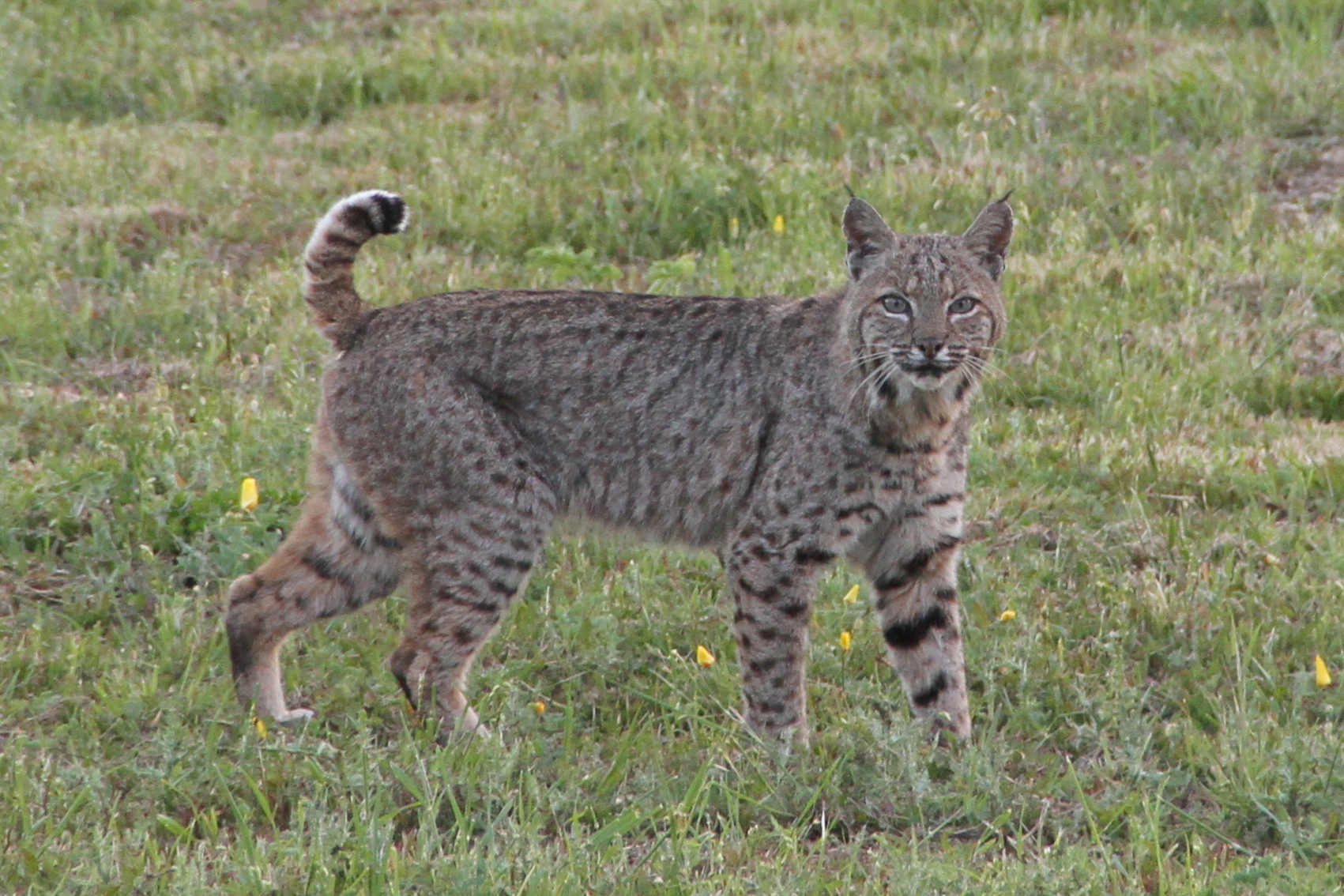
Bobcat
Arnold says the pheasant and quail hunting season got off to a slow start, due to the weather and a delay in bringing-in the harvest. He said when the season opened at least 50% of the crops were still in. Now that much of the crop has been harvested, hunters should have a better chance to get their take. He says the numbers aren’t as strong as they’d like, but he expects the numbers to rebound in the future. The kicker is, the birds are weather dependent, which can affect their ability to reproduce.
As for the deer archery season, Adam Arnold says safety needs to be addressed first and foremost. A number of tree stand accidents have been in the news lately, either because of aging equipment and/or failure to use a safety strap. He says the height at which tree stands are placed make them deceptively dangerous to work with. He urges you to inspect your equipment, make sure it’s not rotted out, and is certfied by the Tree Stand Manufacturer’s Association, and by all means, use that safety strap!
WASHINGTON, D.C. – U.S. Senate Committee on Agriculture, Nutrition, and Forestry Chairman Pat Roberts, R-Kan., and Ranking Member Debbie Stabenow, D-Mich., today (Thursday) announced the Committee voted to favorably report nominee Glen R. Smith, from Atlantic, Iowa, to be a Member of the Farm Credit Administration Board. Mr. Smith may now be considered by the full U.S. Senate for confirmation.

Glen R. Smith
“The Senate Agriculture Committee has acted in a bipartisan fashion on each nomination we have received,” Roberts and Stabenow said. “We are pleased to send Glen Smith, a qualified nominee for the Farm Credit Administration Board, to the full Senate for confirmation.”
The Committee held a hearing on the nominee on Nov. 9th.
OMAHA, Neb. (AP) — The economy will likely remain slow in rural parts of 10 Plains and Western states in the months ahead. The overall Rural Mainstreet Index for the region remained in negative territory below 50 and declined to 44.7 in November from October’s 45.3. The index is based on Creighton University’s monthly survey of bankers.
Creighton University economist Ernie Goss the current low commodity prices and declining farm income continue to weigh on the rural economy. The index ranges between 0 and 100, with any number under 50 indicating a shrinking economy. The index tracking the price of farmland and ranchland declined to 36.5 in November from October’s already-weak 39.2.
Bankers from Colorado, Illinois, Iowa, Kansas, Minnesota, Missouri, Nebraska, North Dakota, South Dakota and Wyoming were surveyed.
The Shelby County Emergency Management Agency is requesting participating businesses and County Fire Departments, to “Please place your Local Fire Danger Signs in the LOW category.” EMA Coordinator Bob Seivert says “This was a very short season, and not as dry as we typically see. The number of fire responses was markedly low, as compared to the past. We hope the regular updates on the potential for fires to spread have reduced the number of fire responses, during our typically drier spring and fall seasons.”
Seivert said also, “The number of calls we get from the public reporting their controlled burns, and involvement of our Local Volunteer Fire Chiefs, is a partnership which improves many aspects of public safety. Thank you for your participation in this program!”
The 2017 East Pottawattamie County annual 4-H Jamboree awards ceremony was held on Sunday, November 12, 2017 at the Oakland Community Center in Oakland, Iowa at 1:00pm. With approximately 100 people present, the afternoon got started with the Pledge of Allegiance, followed by recognizing past honorary members, County Youth Committee, County Extension Council and our Extension Staff. The new 2017-2018 County Youth Council members were introduced and installed. Those members include Sarah Butcher, Claire Denning, Symantha Fisher, Julia Kock, Alexis Meek, Kyley Nelsen, Sidney Nelsen, Abigale Petersen, Camryn Pierson, Kinsey Scheffler, and Lydia Wede.
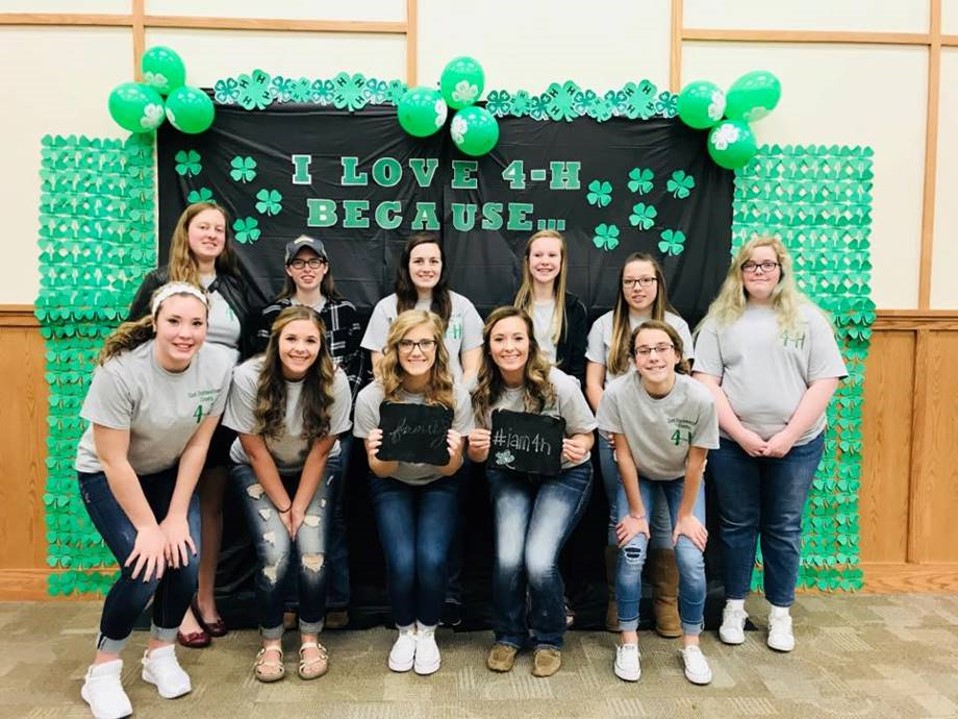
2017-2018 County Youth Council: Top row, left to right: Lydia Wede, Symantha Fisher, Sarah Butcher, Claire Denning, Alexis Meek, Camryn Pierson. Bottom row, left to right: Kinsey Scheffler, Kyley Nelsen, Abigale Petersen, Sidney Nelsen, Julia Kock.
The 2016-2017 Clover Kids members present got the chance to introduce themselves in front of the group and those who have completed 3rd grade and are graduating the Clover Kids program were recognized. The afternoon followed with club introductions and project awards. 2016-2017 4-H members were recognized for their commitment to their goals in the project areas they have chosen. To receive these awards, youth must have completed a record book, project records and worksheets associated with their chosen project areas. A prayer and a short break for finger food snacks brought by all 4-H families to share followed the project awards.
As the awards ceremony started back up, winners were drawn for the 4-H raffle. Shooting Sports awards were given by Steve and Amy Meek to those East Pott Hot Shot members who participated in the State 4-H Shoot Out. Outstanding Member Awards were given next; those awards went to two 4-H members in each 4-H age group who were outstanding members in the 4-H program. The next award was the 4-H Spirit Award, given to a 4-H member who is always excited about 4-H and show enthusiasm year round. The award went to Abigale Petersen. Each year 4-H club officers from each 4-H club are encouraged to complete their officer record book and submit them for awards. This year 18 officers worked hard to complete and submit their books. As the award ceremony continued, senior 4-H member’s record books were judged for Senior Elite Awards given to members in grades 9-12 for their overall 4-H career in the project area. Those youth were given a certificate and a 4-H gift for their hard work.
Our final individual 4-H awards were given out in honor of 6 East Pottawattamie County 4-H and agriculture supporters. These six youth were given a certificate and a 4-H gift for their hard work. The next three awards went to 4-H clubs who worked hard throughout the 4-H year. The Herdsmanship Award was given to Botna Valley Achievers 4-H club who worked hard to keep their livestock neat and in order during the Pottawattamie County Fair. The Club Booth award was given to on Clover Kids group and one 4-H club who had the best club booth display in our static judging building at the County Fair. These were given to the Botna Valley Achievers Clover Kids and Westside Feeders 4-H Club. Finally, during National 4-H week in October 4-H clubs have the opportunity to decorate local businesses windows to show off their 4-H club and celebrate the week. Botna Valley Achievers 4-H Club was chosen as the best window display for 2017.
The last two awards for the afternoon were given to those adults to have helped to make 4-H in East Pottawattamie great. Each year leaders are recognized with their 5-year certificates and pins from Iowa State University. This year leaders Bonnie Feigenbutz, Amy Meek and Lauren Schueman were awarded with their 5-year leadership pins. The last award was the Honorary 4-H Member award, given to Jennifer Kock and Kathleen Jacobsen, members who have dedicated their time to the East Pottawattamie County 4-H program. The afternoon finished with the 4-H pledge and the final 4-H raffle names being drawn for 4-H prizes.


 Facebook
 Twitter
 YouTube
 RSS
RSS