

CLICK HERE for the latest market quotes from the Iowa Agribusiness Network!
CLICK HERE for the latest market quotes from the Brownfield Ag News Network!


CLICK HERE for the latest market quotes from the Iowa Agribusiness Network!
CLICK HERE for the latest market quotes from the Brownfield Ag News Network!
(Radio Iowa) — A new climate assessment for Iowa and the rest of the Northern Plains predicts the region will see overall warmer temperatures and more “rain extremes” in the months and years ahead. Meteorologist Dennis Todey, director of the U-S-D-A’s Midwest Climate Hub, based in Ames, says ag producers will need to make more and more adjustments, starting with soil health. “At worst, maintain. Don’t lose any more of your soil, but do things that help regenerate that soil with reducing tillage when you’re harvesting a crop,” Todey says. “Don’t remove some of that stover as much as possible to help renew the soil and help keep regenerating the soil.”
While concerns have been raised for years over nutrient application on fields and the subsequent run-off, Todey says fertilizer use will have to be even more carefully monitored. “Being more judicious with our nutrient application so we don’t get any kind of water quality issues,” Todey says. In some areas of the region, he says agricultural producers may have to consider changing the crops they plant to align better with the changing climate. “Corn and soybeans are things that people know how to grow,” Todey says. “They’re insured. There’s a number of issues supporting that, but, especially when we have the pricing issues right now, are there other things you can grow, that you know how to grow, that are more able to be managed under the conditions we’re dealing with?”
The national climate assessment report endeavors to forecast approaching changes over the next 10-to-30 years.
(Radio Iowa) — Iowa farmland values have dropped four of the last five years in the Iowa State University survey — but some farmland owners are still optimistic that will change in the new year. Iowa State University economist Wendong Zhang conducts the annual survey. He says one third of those in the survey expect a modest decline, while 15 percent see no change. “So roughly half are in the camp of a modest decline or no change — half (expect) an increase.”
The optimism about the land values extends beyond this year. “Five years from now a vast majority of people are thinking the land value will be higher than the current level,” he says. Zhang takes a more guarded approach in predicting what might happen. “I think I’m probably a little more pessimistic than the average respondents. In general I see a stabilizing land market. I probably wouldn’t expect a significant increase in the land market — at least in the immediate future,” Zhang says. The limited amount of land available was the top factor cited on the price of land by those in the survey.
Zhang doesn’t expect the number of sales to increase. “In general yes we’ll see more transition, but I don’t think that you will see a large influx at the same time. What you see this year, there is a 22 percent increase in the number of auctions across the state,” Zhang says, “remember that 2017 is really, really low in terms of sales.” The majority of farmland sales — 72 percent — were to existing farmers and that included 69 percent of the sales to local farmers and only three percent were to existing relocating farmers. He doesn’t expect things to change much in 2019.
He says the farm land market will continue to be a tight market. Zhang says much of the land is passed through families — and about the only thing that would change that process is a change in tax law. “If you delay your sales until death, then you avoid paying capital gains taxes. That is maintained in the tax reform and that is one of the major things,” Zhang says. “If that changes then I think that will cause a lot of rethinking in terms of when and how you sell land.” The majority of farmland sales, 52 percent, were from estate sales, followed by retired farmers at 23 percent. Active farmers account for 15 percent of sales, while investors accounted for eight percent.
DAVENPORT, Iowa (AP) — Food pantries in eastern Iowa and western Illinois are being flooded with milk donations under a federal program to buy and distribute nearly $50 million in dairy products to compensate farmers hurt by trade tariffs. River Bend Foodbank CEO Mike Miller tells the Quad-City Times that about 80,000 half-gallons of milk will be distributed to food pantries across the Quad-City region through March. The spike in donations comes from a U.S. Department of Agriculture program to help dairy farmers caught in the middle of President Donald Trump’s trade disputes with Mexico, China and Canada.
Tariffs have cost American dairy farmers more than $1 billion since May. Miller says the USDA program is helpful but challenging because milk has a limited shelf life and the program lacks distribution volunteers.
Adair County Sheriff Jeff Vandewater, Sunday night, reported the arrest on Dec. 18th, of 46-year old Daniel Ray Brownlee, of Macksburg. Brownlee was arrested for Failure to Dispose of a dead animal and Livestock Neglect. He was subsequently cited for the offenses and then released.
Authorities say on Dec. 10th, the Adair County Sheriff’s Office received a complaint about possible livestock neglect and improper disposal of a deceased cow, in the 3000 block of 300th Street, in Adair County. The caller said the deceased animal had been there so long other animals were feeding on it. A deputy saw the deceased animal from the roadway, and said noted there appeared to be no hay or other food sources in any of the hay rings or around the lot. Some of the cattle were also malnourished.
After he climbed the gate for further inspection, the Deputy found no water in any of the tanks, and the pond was frozen over. As he was documenting the scene, he found a red cow that was on its side and presumably deceased, but to his surprise, the animal was still alive and had been in the process of giving birth, but with complications. The calf was mostly outside the cow and frozen to death. The cow was alive but in severe distress. The deputy then left the area to obtain a search warrant and the assistance of a veterinarian. The vet arrived later that same evening and said the cow needed to be put down.
The owner of the cow (Daniel Brownlee) was notified of the situation and instructed to dispose of the cow in accordance with Iowa Code. When the deputy returned on Dec. 13th, he was shocked to find the animal still alive and still in serious distress, and in the exact same position she was in 69 hours earlier. When Brownlee was again contacted, he said the thought the cow had died. The deputy obtained his permission to euthanize the animal, and contacted the same veterinarian as before.
CEDAR RAPIDS, Iowa (AP) — A farmer who owned an Iowa grain brokerage has pleaded guilty to falsely marketing $140 million dollars’ worth of corn, soybeans and wheat as “certified organic.”
Sixty-one-year-old Randy Constant of Chillicothe, Missouri, pleaded guilty to wire fraud Thursday under a plea agreement with federal prosecutors in Cedar Rapids.
Constant faces a potential prison sentence of 12 years or more, but that could be reduced at sentencing due to his ongoing cooperation. The deal calls for Constant to forfeit $128 million, but his lawyer says he’s broke.
Attorney Mark Weinhardt says Constant’s profit was a tiny fraction of the $140 million in total sales and mostly supported a sustainable fish production company that has failed. Weinhardt says Constant “accepts full responsibility” for falsely representing that grain he sold was organic.
You’re invited to join Cass County Conservation Staff at the Schildberg Recreation Area- Lake #4, on Saturday, January 5th, 2019 for the annual “Soiree with the Swans.” Conservation Staff will be giving ten-minute presentations regarding the Trumpeter Swans every half-hour beginning at 11:00 a.m., with the last one being presented at 2:00 p.m. There will also be time to view the swans through spotting scopes and witness random swan feeding sessions. Hot chocolate, cookies, grilled hotdogs, and other snacks will be provided free of charge with donations being accepted (for swan care). 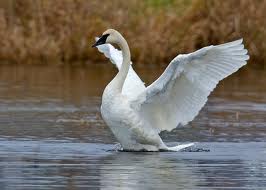
The Schildberg Recreation Area is located on the northwest edge of Atlantic, Lake 4 is on the north side of Highway 83. IF THE WEATHER IS “BAD” OR THE SWANS ARE NOT AT THE PARK…the program will be held at the Atlantic Public Library Jan/ 5th, from 12:00 p.m.-1:00 p.m. with a light lunch available. The event is being sponsored by the Cass County Conservation Board, Atlantic Parks and Recreation, the Iowa Department of Natural Resources, and the Atlantic Public Library.
Guthrie Center, Iowa – Registration is now open for the Feb. 8-10 Beyond BOW (Becoming an Outdoors Woman) workshop in Guthrie County. The two-day, hands-on workshop headquartered at Springbrook State Park, near Guthrie Center, is an opportunity to learn to ice fish, winter survival skills, how to snowshoe and cross country ski and more. Evening sessions and overnight lodging will be at nearby Firefly Creek Ranch at 2345 Redwood Ave, Guthrie Center. The Iowa Department of Natural Resources and the Shelby and Pottawattamie County Conservation boards are partnering to offer this program.
Workshop fees include instruction/training, program materials and equipment, meals and lodging (if selected). Various workshop and lodging options are available. Registration is available at https://www.iowadnr.gov/bow. Attendees should plan to eat prior to arriving Friday. Participants will need to a valid fishing license for the ice fishing course before the workshop.
Beyond BOW is a continuation of the popular Becoming an Outdoors Woman (BOW) workshop, that focuses on teaching outdoor skills to women 18 years or older. However, the workshop is open to anyone, regardless of gender.
(Radio Iowa) — Licenses are now on sale for the paddlefish season on the Missouri and Big Sioux rivers. The D-N-R fisheries expert for the area, Chris Larson says there are a couple of options for getting a license. You can purchase one tag now through December 31st. There are 950 resident or 50 non-resident licenses and if there are any left over you can purchase a second tag from January 1st through January 7th. A resident license sells for 25 dollars and 50 cents and a nonresident license is 49 dollars. You must also have a valid Iowa fishing license. Larson says there usually are enough licenses for everyone who wants one. “The first year we sold almost 800 of the thousand that are available — but the last couple of years we’ve sold right around 400. You should be able to get one — obviously there’s no guarantee — but we have not sold out since we started the season in 2015,” according to Larson.
Paddlefish are caught by snagging them as they swim on the bottom of the river. He says they’ve made some changes to try and get more people interested. One change involves the rules that required you to throw back any rough fish you snagged while trying to get a paddlefish. “Anglers were upset about that and they also wanted a longer season,” Larson says. “So, we open the season earlier, its going to open February second through the 30th of April, which is an earlier start than when we started the season five years ago. You can also snag rough fish and keep those as well. So if you want some common carp or Asian carp for table fare,” he explains. It’s the second year for the adjustments that are aimed at bringing back those who tried paddlefishing and didn’t stay with it. He says hopefully the people who were upset about not keeping the rough fish will come back out.
Larson says you have to be specific in where you are looking for the paddlefish. He says the fish in the winter will be found in the slow-moving deep water and the only place you can find that is the holes behind the wing dikes where the fish overwinter. You a limited to catching one fish when you purchase a paddlefish tag. “You have to put the tag on the jaw — and as soon as you are out of tags you have to stop snagging. If you only have one tag and you snag a paddlefish and you are going to harvest it, you are done. You can also continue to snag the paddlefish and release them as well,” Larson says.
You can find out more about the paddlefish season by going to the Iowa Department of Natural Resources website at: www.iowadnr.gov.


 Facebook
 Twitter
 YouTube
 RSS
RSS