

CLICK HERE for the latest market quotes from the Iowa Agribusiness Network!
CLICK HERE for the latest market quotes from the Brownfield Ag News Network!


CLICK HERE for the latest market quotes from the Iowa Agribusiness Network!
CLICK HERE for the latest market quotes from the Brownfield Ag News Network!
McLEAN, Va., July 18, 2019 — Glen R. Smith, of Atlantic, was designated Wednesday (July 17) by President Donald Trump, as chairman and CEO of the Farm Credit Administration (FCA). The FCA has examination and regulatory authority over the Farm Credit System, with oversight by Congress. Collectively, the institutions of the Farm Credit System constitute the nation’s largest single provider of agricultural credit, with offices in all 50 states and assets over $350 billion.
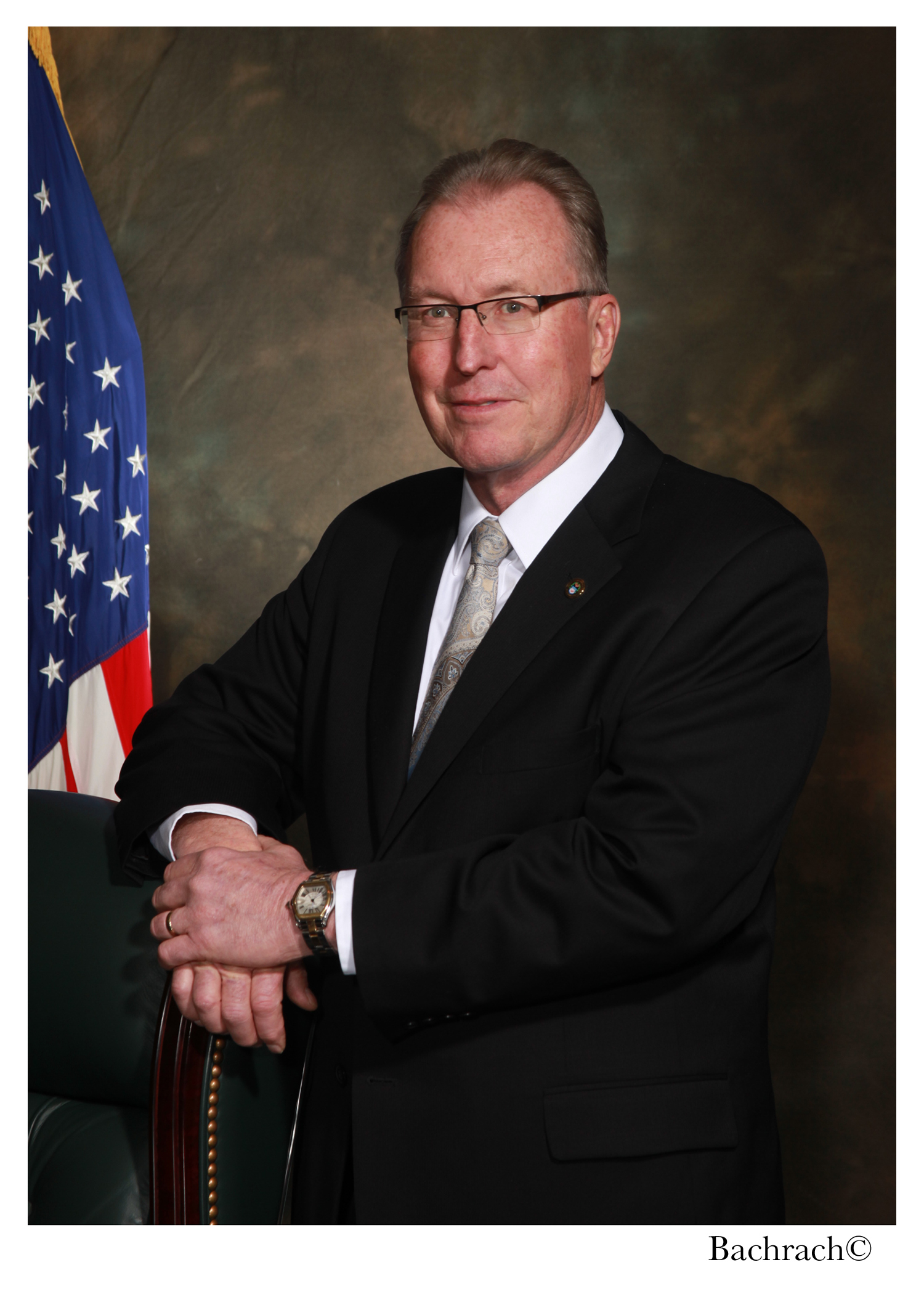
Glen R. Smith, of Atlantic, IA
Glen Smith has served as a member of the FCA board, as well as a member of the board of directors of the Farm Credit System Insurance Corporation, since December 2017, when President Trump appointed him to the FCA board. His term on the board will expire on May 21, 2022.
As chairman, he succeeds Dallas Tonsager, who died in office in May. As CEO, he succeeds Jeffery Hall, who became acting CEO following Mr. Tonsager’s incapacity from illness. Mr. Hall continues to serve as a member of the FCA board and as chairman of the board of directors of the Farm Credit System Insurance Corporation.
Glen Smith is a native of Atlantic, Iowa, where he was raised on a diversified crop and livestock farm. His farm experience started at a very early age, after his father was involved in a disabling farm accident. He graduated from Iowa State University in 1979 with a Bachelor of Science in agricultural business and accepted a position with Doane Agricultural Services as state manager of the company’s farm real estate division.
In 1982, Mr. Smith and his wife, Fauzan, moved back to his hometown and started farming and developing his agricultural service business. Today, their family farm, Smith Generation Farms Inc., has grown to encompass about 2,000 acres devoted to corn, soybeans, hay, and a small beef cow herd.
Mr. Smith is founder and co-owner of Smith Land Service Co., an agricultural service company that specializes in farm management, land appraisal, and farmland brokerage, serving about 30 Iowa counties. From 2001 to 2016, he was also co-owner and manager of S&K Land Co., an entity involved in the acquisition, improvement, and exchange of Iowa farmland.
Mr. Smith has served on numerous community, church, and professional boards. He was elected to the Atlantic Community School Board of Education on which he served for nine years.
(Radio Iowa) — The Iowa State Fair will have 50 new foods available when the gates open in August. Spokesperson Mindy Williamson says they try to add some new foods each year. “I think our highest number yet has been 42 — so this is the most new foods we’ve ever had and we are super excited. Our concessionaires are getting very creative and they know the benefit of having something new for fair goers,” Williamson says. She says the new foods will join the favorites like porkchop on a stick. “It gives people the choice if they want to come try something new at the fair — or if they want to stick with their old tried and true favorite,” Williamson says.
They held a contest to judge some of the top new foods. One of the choices is “Georgie’s Roast with the Most Wrap.” She says it is the traditional pot roast with a new twist which is putting it in a wrap to make it more mobile for people to carry. Another top newbie is The Chief, which is a new creation of Navajo barbecue fried bread with slow-smoked beef brisket. “The brisket that’s in there and the special slaw that she has on it are new,” Williamson says, “But also the Indian bread is with a special rub as well. So, it is a special taste.”
Williamson says they are asking people to go in and vote for their favorites from the top 10. Williamson says they have a new app you can get at the App Store for you I-phone, or the android phone will automatically update. You can vote for your favorite. Williamson says you can also use the app at the State Fair to find your favorite new and old foods. She says they recently had a delivery that signals the countdown to the final days before 2019 opening. “The butter was just delivered last Friday, so the butter cow sculpture will start working some of her magic in the next couple of weeks,” according to Williamson. “And then our companion sculptures this year are Sesame Street.”
The sculpture will make some of those characters in butter to go along with the butter cow. She says the are excited to see the work begin on the butter cow. “Whenever the butter gets delivered it’s official — that the Iowa State Fair is going to start shortly,”Williamson says. To see a complete list of the new foods, go to www.iowastatefair.org. This year’s fair begins August 8th and runs through the 18th.
Elizabeth Zaiger was selected as the 2019 Audubon County Fair Queen during a ceremony on Wednesday night. Zaiger, the daughter of Jason and Ann Zaiger, will preside over activities at the fair this week and will represent Audubon County at the Iowa State Fair Queen Contest in Des Moines August 6-10. She inherits the crown from 2018 Queen Rachel Mosinski. Erin Irlmeier, daughter of Ken and Sandy Irlmeier was the first runner-up. McKenna Nielsen, daughter of Randy and Melanie Larsen, was named the second runner-up. Other contestants included Abby Bruch, Allie Detweiler, Mary Svoboda and Adrian Zach. Judging was conducted a week ago during interviews with judges Martin and Jo Reynolds.
CLICK HERE to hear an interview with the Queen and the runners-up.
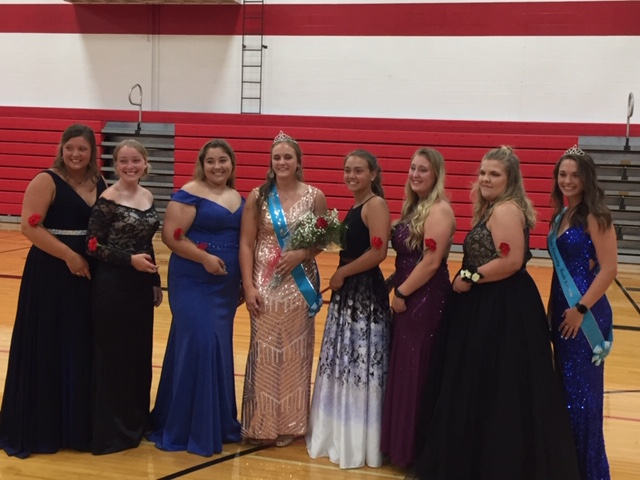
Mary Svoboda, Abby Bruch, Adrian Zach, 2019 Queen Elizabeth Zaiger, Erin Irlmeier, McKenna Nielsen, Allie Detweiler and 2018 Queen Rachel Mosinski.
The Iowa Department of Natural Resources (DNR) reports conservation officers cited dozens of paddlers on July 6th for no life jackets on board their kayaks. The 300 plus paddlers, most in kayaks, some in inner tubes, were floating from the Puckerbrush Access to the Booneville Access on the Raccoon River, north of Van Meter, in Dallas County. 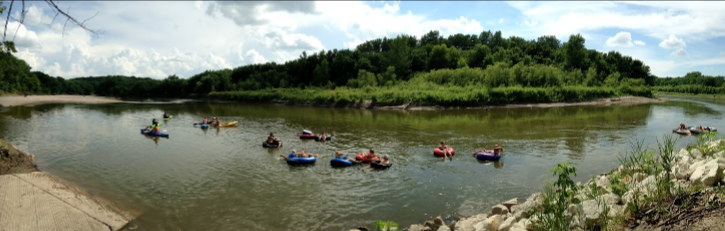
Nate Anderson, Iowa DNR conservation officer, says “It’s so important to have a life jacket on or at least available, as small paddling craft can easily tip and throw a paddler into the water. If you are sitting on the life jacket instead of wearing it, it won’t be there when you really need it.”
Safety incidents are on the rise among Iowa paddlers. Forty-seven percent of Iowa’s 19 boating deaths from 2016 through 2018 were paddlers. Four paddlers, not wearing life jackets, died this year. Iowa law requires a life jacket to be on board all canoes, kayaks and paddleboards. Children 12 and under must wear a life jacket at all times when in a canoe, kayak or on a paddleboard.
Todd Robertson, paddling instructor and Outreach Coordinator for Rivers Programs at the Iowa DNR, says “You should always wear your life jacket, regardless of your swimming ability or paddling experience. This is super important when paddling on moving water, like a river, where changing currents and hazards can dump you into the river.”
The Iowa DNR is offering an opportunity to complete the required Hunter Education Course right here is Cass County this August. The course will be held August 6th, 8th, and 10th at the DNR Environmental Service Division Field Office #4 at 1401 Sunnyside Lane in Atlantic. Students must attend all classroom and range sessions to become certified. This is a free course with all materials supplied to the students on the first evening class.
Iowa law requires that anyone born after January 1, 1972 must be certified in hunter education before they are eligible to purchase an Iowa hunting license. Any child under 11 years of age must be accompanied by a parent or guardian during every session.
The class times will be Tuesday, August 6th from 6:00pm-9:00pm. Thursday, August 8th from 6:00pm-9:00pm. Saturday, August 10th from 8:00am-2:00pm. To register for the course you can go to www.iowadnr.gov and follow the proper links under hunter education and find the Cass County course.
(Radio Iowa) — After being closed twice by spring floods, the DeSoto National Wildlife Refuge is open again, hopefully for good. The 83-hundred acre refuge in southwest Iowa was forced to put up barricades in March when the Missouri River washed in. Repairs were made and it reopened several weeks later, only to be flooded a second time. Senior Park Ranger Peter Rea says one key area is still closed. “We haven’t been able to draw down the water enough to get our boat ramps back open,” Rea says. “It’s either bank fishing or hand-launching boats only at this time. As conditions improve, we’re going to try to get those accesses reopened as soon as we can for the public.”
Rea says the park staff has been scrambling to restore the infrastructure that was damaged by so many weeks of being underwater. “Since March until now, it’s been a battle to stay open with us being closed for a good majority of that time,” Rea says. “As the water is receding, there’s a lot of work to be done, a lot of trails to rebuild, roads to work on.” The visitor’s center is open again but the south entrance to the refuge remains closed. The East Gravel Road is closed to vehicles but is open to foot traffic. DeSoto is one of the few parks in the area that’s been able to reopen after this spring’s record flooding. “There’s definitely a lot to do but mainly we’re just excited to get at least some access back open to the public so that people can come and enjoy the place as well,” he says.
Several other parks in the region remain closed, either due to flooding or needed repairs due to flooding, including Tom Hanafan Park and Big Lake Park in Council Bluffs.
DES MOINES, Iowa (AP) — Good news for fans of ancient meditation practices and small bovids: Goat yoga is returning to the Iowa State Fair. Fair officials say in a news release that the class, which was introduced to the fair last year, will resume this at the state fair on Aug. 12, 14 and 17 in the Paul R. Knapp Animal Learning Center.
The class will include yoga poses not only with baby goats, but also piglets, ducklings and chicks. New this year will be an exclusive Iowa State Fair Goat Yoga mat for the first 250 registered participants.
Tickets are $20 and are open to any age. Tickets are on sale at www.iowastatefair.org . Fair Admission is not included, but advanced admission tickets are on sale at www.iowastatefair.org .
DES MOINES, Iowa (AP) — President Donald Trump has repeatedly told U.S. farmers he will support ethanol and he largely continues to have their support but many are growing unhappy with EPA decisions that hamper ethanol production.
The EPA refuses to restore 2.6 billion gallons of ethanol removed from production through refinery waivers. It’s a significant blow to corn farmers and counter to Trump’s promise but many hesitate to blame Trump, known for retaliatory tweets.
Republican U.S. Sen. Charles Grassley of Iowa is the most direct urging Trump to compel EPA “to reverse course and keep his word to the forgotten Americans who have faithfully stood with him,”
U.S. Representative Cindy Axne, a Democrat says Trump isn’t taking responsibility for policies that hurt farmers and his administration is good at distancing him from EPA decisions.
Atlantic Parks and Recreation Director Bryant Rasmussen informed KJAN that the connector trail between the Schildberg Campground and KJAN will be closed on Monday, July 15th. The closure is due to sidewalk repairs being done that day. Atlantic Parks and Recreation apologizes for any inconvenience during that work.


 Facebook
 Twitter
 YouTube
 RSS
RSS