

CLICK HERE for the latest market quotes from the Iowa Agribusiness Network!
CLICK HERE for the latest market quotes from the Brownfield Ag News Network!


CLICK HERE for the latest market quotes from the Iowa Agribusiness Network!
CLICK HERE for the latest market quotes from the Brownfield Ag News Network!
(Radio Iowa) – A lawsuit related to the Covid outbreak at a Tyson meatpacking plant in Waterloo alleges managers and supervisors placed cash bets on how many workers would contract the virus. The Iowa Capital Dispatch was first to report on the allegations in a lawsuit filed by the family of a plant employee who died of the coronavirus in late April. The plant’s manager is accused of running the winner-take-all betting pool on how many workers would get Covid. Another upper-level manager is also named in the lawsuit and accused of telling employees Covid-19 was “not a big deal” and was basically a “glorified flu.”
The lawsuit alleges top managers at the Waterloo plant shifted their responsibilities to lower-level employees so they could avoid the plant floor this spring as the virus spread among workers. Tyson issued a written statement, saying it will not comment on the specific allegations outlined in the lawsuit. The company says it has taken protective measures at all Tyson plants that exceed federal guidelines for working in close quarters during the pandemic.
The City of Atlantic’s Yard Waste site is once again open. It was closed Wednesday due to high winds and low humidity that could have increased the risk of a large fire. The yard waste site will remain open during normal hours of operations, as long as the winds don’t create a repeat of the problem experienced Wednesday. Officials remind users also, the City’s Yard Waste Site is for Atlantic residents only. “Please be respectful of that,” they said, “So that it does not get overloaded.”
(Radio Iowa) – Forecasters say drought conditions that spread across much of Iowa earlier this year will likely linger well into winter. Meteorologist Dennis Todey, director of the U-S-D-A’s Midwest Climate Hub — based in Ames, says it doesn’t appear there will be many chances to replenish moisture levels in the soil before things begin to freeze up. “We had a very dry end of summer and end to fall,” Todey says. “It’s been great for harvest but not good for soil moisture recharge. By this point, it’s very unlikely we’ll get the soil moisture recharged to where we want it to be.”
Despite a warming trend in Iowa this week, Todey says winter will be here in a little over a month. “Our soils are going to go in pretty dry and when the cold does come, we will freeze up and we’re not going to have much chance to recharge soil moisture at that rate,” he says. The drier conditions typically mean a quicker start to the planting season in the new year. “When spring comes around and we do thaw and we want to get to ag activity, there’s a better chance of being able to get moving earlier,” Todey says.
“Downside is that we’ve got some fairly dry soils that we’re going to need to put some moisture in. That’s my bigger concern with this whole situation, these dry soils that we have going on into winter and into the early spring.” Todey says another danger with dry soils is that frost can get much deeper and cause damage to pipes and plants.
The City of Atlantic’s Park and Recreation Department met Monday evening and heard updates from Parks and Rec Director Bryant Rasmussen. He mentioned an Omaha Foundation Grant period has closed. The grant was for the installation of a trail at Mollett Park at the east end of E. 3rd Street Place. And, a grant was received to help cover the costs to effect a quick fix on the Schildberg Washout area. The interim solution is to re-slope the trouble spot and incorporate vegetation.
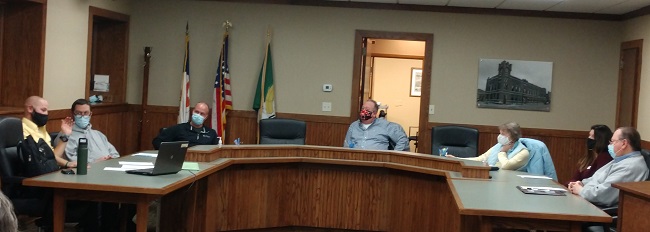 Rasmussen said also:
Bryant said the kayak launch on the Schildberg docks have been installed, thanks to John Krogman and Elkhart Plastics. The waterless restroom he said has been repaired at Schildberg, and a new donation post was installed at the Dog Park, in an attempt to elicit funds for new amenities at the park and for maintenance and upkeep of the current park.
The goal, he said, is to hopefully get $100 per year. Already this past week, they have received $57 in cash and change dropped-off.
Hamburg, IA – The Iowa Department of Natural Resources, Golden Hills RC&D and the Loess Hills National Scenic Byway have announced the Waubonsie State Park Artist in Residence awards for the 2019-2020 Program. (See the winners mentioned below) The goal of the residency program is to reach a broader audience of park-goers, thus increasing the number of visitors and ultimately educating more people about the Loess Hills ecosystem. The artists and visitors will engage with the natural resources of the park through a visual arts lens.
Many quality applications were received from artists representing a wide array of disciplines. Four artists were selected to fill residencies ranging from one week to four weeks long in November through March of next year. Artists receiving the residency awards for the second Waubonsie State Park Artist in Residence Program include Sheila Newenham, Shelly Eisenhauer, Daniel Castaneda and Terri Parish McGaffin.
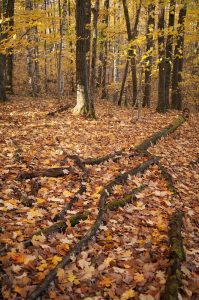
Sheila Newenham (Nature Photography)
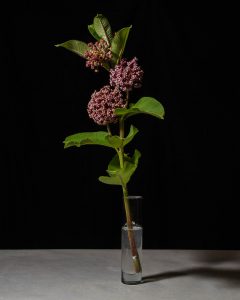
Shelly Eisenhauer (Photography & Digital Media)
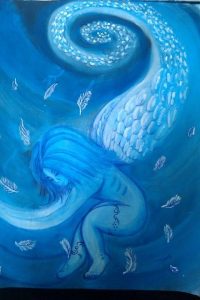
Daniel Castaneda (Graffiti Artist/Mixed Media)
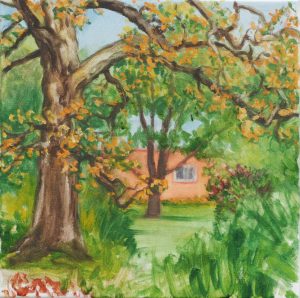
Terri Parish McGaffin (Various Painting Media)
The four artists in this year’s residency program will use their time at Waubonsie to immerse themselves in the landscape as a source of inspiration and opportunity to intensely focus on their work. The artists represent a diverse array of media, including photography, digital media, sculpture, graffiti murals, and oil, acrylic and watercolor paint.
Sheila Newenham is a photographer from Wayne, Illinois and will begin her residency on Sunday, November 17th. She hopes to connect people to nature by sharing her passion for wildlife and wild places. By bringing the individual, emotional, sentient side of our natural world into people’s homes, she hopes to expand your appreciation and experience of the wild. “I want my art to show you something you’ve never seen before or to make you think about something in a new way and for it to stay with you when you leave.”
Shelly Eisenhauer of Glenwood specializes in photography and digital media. “I am excited to use my lens and lights to explore the transformation of the natural landscape of the park – specifically the native plant life – in the winter months. Rain, snow and the turn of the colder seasons affect the texture and color of plants in a very different way than the heat of summer, and I suspect most park visitors are less aware of the winter landscape.”
Daniel Castaneda of Omaha, Nebraska is a multidisciplinary graffiti artist and multifaceted artisan, “My artwork is inspired on the art of nature, keeping alive my culture and roots of my ancestors. I like to use different materials and styles to transform the components given when designing murals or sculpting ideas.” During his residency, Daniel will use the organic materials and natural views that surround his space to create his artworks.
Terri Parish McGaffin from Sioux City, Iowa has spent many years as an art professor and administrator, and is looking forward to spending time during her residency focusing on artistic practice and discovery. “I have always believed that which I observe is more magical than that which I can invent. Stimulated by environment, I record these observations in paintings, which have a level of intimacy unlike other processes of representation.”
One of the region’s ecological and recreational treasures, Waubonsie State Park’s 2,000 acres in the Loess Hills of southwest Iowa feature prairies, savannas, and woodlands which are home to diverse flora and fauna, not to mention breathtaking vistas. Park Manager Matt Moles has worked with Golden Hills RC&D Project Coordinator Lance Brisbois and Loess Hills National Scenic Byway Coordinator Rebecca Castle to develop and launch the project.
While there have been other artist residency programs offered through the National Parks System and select parks in other states, this was the first such program in one of Iowa’s State Parks. The program is loosely modeled after similar regional programs such as the Residency Program at Kimmel Harding Nelson Center for the Arts. Since the Waubonsie State Park Artist in Residence Program’s inaugural year, the Iowa DNR and Iowa State University have partnered with the Iowa Arts Council on a similar program featuring staff and students from ISU.
The artists will receive lodging in a studio cabin and a primitive studio space in the park at no cost for the duration of the residency. In return, artists will deliver at least one public program during their residency and donate one piece of art to the park at the conclusion of their stay.
Waubonsie State Park is only about an hour’s drive from Omaha or Lincoln, NE; two hours from Kansas City; and 2.5 hours from Des Moines. It is located near the southern end of the Loess Hills National Scenic Byway. To learn more about the Artist in Residence program and the artists, visit www.goldenhillsrcd.org/artist-in-residence.
NEW VIENNA, Iowa (AP) — Authorities say a grain barn in eastern Iowa has been destroyed in an early-morning fire. Television station KCRG reports firefighters were called to the blaze around 3:20 a.m. Monday in Dubuque County. Officials say arriving firefighters found the barn completely engulfed in flames. Crews were able to extinguish the fire, but the barn is a total loss. Officials say a house and a vehicle on the property sustained heat damage during the fire. Officials say the fire caused about $25,000 in damage. No injuries were reported.
(Radio Iowa) – Iowa cattle producers could soon be able to use a cell phone app on their animals that’s based on bovine facial recognition. Kansas State University animal scientist K-C Olson says they gathered about a thousand short videos of feeder cattle restrained in a chute and the information was loaded into a neuro network based on artificial intelligence. Olson says the results were encouraging enough to develop a cell phone app. “You simply position the cell phone camera in front of an animal,” Olson says. “When the conditions are right, as judged by the app, it will snap a series of pictures, it will put a GPS stamp on each one and a date stamp on each one. Those are automatically uploaded to a secure cloud database.”
Use of the app could eventually save producers from all sorts of hassles, from security to animal health. “Any subsequent time that another producer, another owner, would be curious about the origins of a particular calf, they could use the same app, take the pictures, upload those to the database,” he says. “The information that they would then receive is when the animal was read into the system and where, physically where the animal was when it was read into the system.”
Human facial recognition is now a standard for identification in airports and other secure locations. That technology is based on the geometry of the human face and uses intricate measurements to put a permanent identification on a person. “Later on, when that human being needs to get on a flight or something similar, they can have hat on, they can have glasses on, they could have grown facial hair, they could have grown older, but that technology is capable of nearly 100 percent accurate read rate,” he says. “The thinking here is that why couldn’t we have something like that for beef cattle.”
Olson says the ultimate goal would be the creation of a national animal disease traceability system. He says the technology will be commercialized this fall and possibly before 2021, producers could add birthweights, vaccination history and other information.
(By Ryan Matheny, KMA, Shenandoah)
(Radio Iowa) – Iowa State researchers are among a group developing technologies that use plant-based inks to print low-cost, biodegradable, and recyclable electronics for sensors and batteries. I-S-U’s, Jonathan Claussen, is working on the printing process for the inks. “We can actually make a material called graphene out of it. It’s a carbon-based material that is highly conductive and has other great properties such as high thermal conductivity and we make these inks and print them.” Claussen is an associate professor of mechanical engineering and says sensors can be used in a variety of ways. “We use them to sense fertilizers in the soil, pesticides in plants or in the soil, to food-borne pathogens in food, to even using them to try and detect cancer for cancer diagnostics,” Claussen says.
He says here’s another use for them as well. Claussen says it also deals with creating energy harvesters that could be used to store energy and charge up an electronic device. He says there’s a lot of potential uses.”We will help in printing them and then developing them into sensors,” he says. And he says they will particularly focus on ion sensors for use in hydroponics and plants. Claussen says using these plant-based inks is a safer way to make these items. “This uses printing technology that is a lot easier to scale. It’s a lot more friendly to the environment — the materials themselves are more friendly — they are just carbon-based. But also, we don’t need to do expensive cleanroom processing which has a lot of chemicals that are harmful to the environment,” Claussen says.
He says these sensors won’t replace all the existing sensors. “They wouldn’t replace silicon chips in your computer,” Claussen says, “but they could be used for sensors that may be integrated into clothing or senors that may be going into farm fields that integrate with some conventional electronics as well.” The National Science Foundation has awarded a five-year grant of nine million dollars to support the project and its team of researchers from the University of Chicago, Northwestern University, the University of Illinois Urbana-Champaign, the University of Illinois at Chicago, and Iowa State University.


 Facebook
 Twitter
 YouTube
 RSS
RSS