

CLICK HERE for the latest market quotes from the Iowa Agribusiness Network!
CLICK HERE for the latest market quotes from the Brownfield Ag News Network!


CLICK HERE for the latest market quotes from the Iowa Agribusiness Network!
CLICK HERE for the latest market quotes from the Brownfield Ag News Network!
ATLANTIC, IA (March 25, 2021) – Celebrate Spring and Easter with Produce in the Park’s Spring Celebration Farmers Market! A reminder: Spring Celebration Market is being held the day before Easter, and is accepting pre-orders now. Spring Celebration Market is pre-order drive-through pick-up only (there will be no in-person shopping). Pre-orders are being accepted now through Thursday, Thursday, April 1 (10 PM) on www.produceintheparkatlanticiowa.com. Purchases can be picked up on Saturday, April 3 at the Cass County Community Center between 12:00 – 2:00 PM.
 Spring Celebration Market offers fresh greens, local food meal kits, farm-fresh eggs, spring-scented candles and soaps, and plants for summer gardens, in addition to a huge variety of
sweet treats and desserts from take-and-frost Easter-themed cookies to gourmet pies, and pastel-colored angel food cake to Danish pastries and Kringle. The market is being held the day
before Easter, so customers can pick up treats for Easter Baskets and local foods for Easter meals.
For more information on vendors and products, and to place pre-orders visit Produce in the Park’s website www.produceintheparkatlanticiowa.com or Produce in the Park’s Facebook page
www.facebook.com/ProduceInThePark. Spring Celebration Market is sponsored by the Atlantic Community Promotion Commission, First Whitney Bank and Trust, and Cass County Tourism, and supported by the Atlantic Area Chamber of Commerce.
(Atlantic) – The Cass County Conservation Board is now taking Pre-orders for their Native Plant Sale! The order form and payment will be DUE April 30th 2021 at 4PM. Forms can be found online https://www.casscountyia.gov/county-departments/conservation-office/
Native Local Eco-type live Plants will be sold. Live plants from nursery will come as small plugs; cells are 5” deep x 2” wide at top or 4.5”deep x 2” Cone. 1 Specie of Native grass, and 10 Native Forbs including many that benefit Pollinators! All orders must be picked up during designated times at our offices in Lewis unless prior arrangements made. Designated pick up times will be: Thursday May 27th 8 AM-6 PM OR Friday May 28th 8AM-7PM. Plants not picked up will be donated with NO REFUND.
The Adair County Board of Supervisors, Wednesday, voted to extend for another 90 days, an Engineering Agreement with Union County. The two counties will continue to share the services of Adair County Engineer Nick Kauffman, while Union County looks to get their own Engineer in-place. Kauffman has been serving as the Adair-Union County Engineer since mid-September, 2020, following the resignation of Union County Engineer Zack Gunsolley at the end of August, 2020. The original agreement was set to have expired March 3rd.
Kauffman said also, he has received driveway applications from MidAmerican Energy for a Solar Farm. The driveway/culvert for the proposed farm would be at southeast of Stuart, near the intersection of Walnut and 130th Street.
Discussion was once again held with regard to Solar Farms in Adair County. Supervisor Steve Shelley said he wanted to specifically learn about any health benefits the farms might cause, and not any gripes about MidAmerican Energy or questions regarding a perceived conflict of interest he may have. He gave each person who wanted to speak, five minutes – in order to say on time for the next agenda item.
As with their meeting on March 9th, the Board heard from Adair County residents Curt Beane and Tammy Baier on the matter of Solar Farms. Tammy Baier sent each board member a copy of the Madison County Ordinance on those devices, prior to their meeting. She said her main concern goes back to the days when the Wind Turbines were introduced to Adair County.
She said the Supervisors should know and understand the extent of the project, the size and what kind of project it is.
Tammy Baier said also, Adair County was one of the largest producers of cattle in Iowa. The foot imprint for solar, she said, takes up a lot of land, and will affect ag farm production in the county. She said Solar will take away a lot of jobs if it becomes expansive, like the turbines.
She said concluded by saying she doesn’t want Adair County to become “A dumping ground” for Solar, farms, and she questioned if the County residents would realize a decrease in energy costs, as well as a reduction in taxes. Baier also doesn’t want Solar farms to get tax abatements, like the turbines did. They should have to start paying taxes, she said, just like any other big business coming into the county.
No action was taken. In other business, the Board voted to re-open the Adair County Courthouse to the public April 5th, with the caveat that each department may set it own rules with regard to COVID-19 safety. The Supervisors will continue to hold their meetings by telephone conference call, until further notice.
It may not feel like boating season yet, but the Iowa Department of Natural Resources (DNR), along with boating safety advocates nationwide, are urging boaters to KeepYourEdge by enrolling in a boating education course this spring. “Education is the key to having a safe and enjoyable day on the water, and spring is the perfect time to take a course before the summer boating season begins,” said Susan Stocker, boating law administrator and education coordinator for the Iowa DNR. Traditional and online courses are available. Courses are made to fit every schedule and lifestyle. The Iowa DNR has boater education information online at https://www.iowadnr.gov/things-to-do/boating/boater-education.
“A boating safety course provides critical boating knowledge and better prepares you for the risks you may face while boating,” Stocker said.
Benefits to taking a boater education course:
Iowa boating statistics
The Iowa Department of Natural Resources (DNR) says crews released between 1,000 to 2,000 rainbow trout at four community trout ponds as part of its cool weather trout program that brings trout to areas that cannot support them during the summer. The following locations are ready for anglers to catch trout: Banner Lake South (Indianola), Big Lake (Council Bluffs), Moorland Pond (Fort Dodge) and Terra Lake (Johnston). All spring community trout stockings will be unannounced this year and family fishing events will not be held to help reduce the crowd size at stocking locations and minimize the spread of COVID-19.
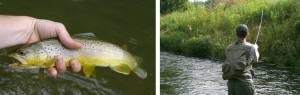 Check the DNR website at www.iowadnr.gov/trout and watch for future press releases to find out when the remaining community trout locations have been stocked. The spring community trout stockings are a great place to take kids to catch their first fish. A small hook with a nightcrawler or corn under a small bobber or small simple spinners such as a panther martin or mepps is all you need to get in on the fun. Bringing trout to cities and towns offers a “close to home” option for Iowans who might not travel to the coldwater streams in northeast Iowa to discover trout fishing.
The popular program is supported by the sales of the trout fee. Anglers need a valid fishing license and pay the trout fee to fish for or possess trout. The daily limit is five trout per licensed angler with a possession limit of 10. Children age 15 or younger can fish for trout with a properly licensed adult, but they must limit their catch to one daily limit. The child can purchase a trout fee which will allow them to catch their own limit.
Find more information about trout fishing in Iowa on the DNR trout fishing webpage.
(Radio Iowa) – This week is National Agriculture Week and Iowa Secretary of Agriculture Mike Naig says the pandemic shined a light on the important job ag producers have. I am hopeful that maybe that’s one of those silver linings that come out of what we’ve experienced the last 12 months. Is that there is an appreciation for the fact that, that food just doesn’t magically appear on the grocery store shelf,” according to Naig. He says we realize that agriculture touches us all. “We had restaurants shut down and people stopped traveling. All the meetings that we would go to and conferences where you would have food served breakfast, lunch, and dinner. Really that whole foodservice supply chain just shut down,” Naig says.
And the impact also became evident in grocery stores. “We had some situations where some of the food products we normally expect to find — and I think often times take for granted — weren’t available or weren’t available as readily as much as we normally would purchase,” Naig says. There were also shutdowns at meat processing plants brought on by the pandemic. Naig says food security remains a concern for many families who have had to visit their local food pantries and food banks for the first time during the pandemic. He says, fortunately, many Iowans, including farm and commodity organizations, food companies, and others stepped up to donate much-needed food supplies.
“That’s been one of the things I have been very proud of as I watched the agriculture community respond. And even though there’ve been challenging times and uncertain markets — they’ve stepped up to help their neighbors in need,” he says. Naig says we all need to continue to tell the story of agriculture.
(Radio Iowa) The Iowa House has voted to establish new penalties for those found guilty of trespassing to set up electronic surveillance equipment on someone else’s property to secretly capture images or video. For nearly a decade, Iowa legislators have been trying to enhance trespassing laws in response to undercover operations in large scale livestock operations. Republican Representative Jarad Klein of Keota has worked on this latest version.
“Trying to address somebody that has ill intentions, that’s just trying to get access to somewhere where they’ve not been asked to be, they don’t have a reason to be there and then trying to get a video, trying to get a picture that they can then reproduce and use in a negative or hurtful way.” The bill also establishes a new criminal charge for “unauthorized sampling” — for collecting skin or blood samples from farm animals or samples from the soil, air and water on private properties.
The bill passed on a 72-to-24 vote. Critics say the bill could be used to shield those who are mistreating animals or it could prevent reporting of unsafe working conditions in Iowa meatpacking plants. Klein says employees who have a right to be on the property could still be whistleblowers. “All we are saying is that your private property is your property, if somebody comes on without your permission to take pictures and then put it back on the internet, it’s an aggravated misdemeanor up to Class D felony because we value private property rights,” Klein says.
A 2012 state law designed to block undercover investigations of livestock confinements and other farm operations was ruled unconstitutional. In 2019, the Iowa legislature made it a crime to use undercover videos to inflict financial harm on a farming operation, but a lawsuit has prevented that law from taking effect.
New Opportunities in Guthrie County, and Guthrie County ISU Extension & Outreach, are partnering with the USDA to bring Farmers to Families Food Boxes to Guthrie County on Thursday, April 15th, 2021. As part of the Coronavirus Food Assistance Program announced in 2020, the USDA is exercising authority under the Families First Coronavirus Response Act to purchase and distribute agricultural products to those in need. These are 33-pound boxes full of fresh produce, protein, dairy, and milk and are available to anyone, no sign up required. Organizers intend to reach each town in Guthrie County to distribute boxes, distribution will begin at 2:30 pm and until supplies runs out.
Locations include:
For questions, please contact Rhonda Huggins with New Opportunities at 641.747.3845 or Krista Downing with Guthrie County ISU Extension at 641.747.2276.


 Facebook
 Twitter
 YouTube
 RSS
RSS