

CLICK HERE for the latest market quotes from the Iowa Agribusiness Network!
CLICK HERE for the latest market quotes from the Brownfield Ag News Network!


CLICK HERE for the latest market quotes from the Iowa Agribusiness Network!
CLICK HERE for the latest market quotes from the Brownfield Ag News Network!
(Radio Iowa) – The bill Governor Kim Reynolds has proposed to find out if foreigners are using a loophole to acquire Iowa farmland has cleared initial review in the Iowa Senate. Iowa’s secretary of state would be required to review land ownership records, to see if foreigners or foreign governments are involved in U-S based companies or trusts that have purchased or inherited Iowa farmland and prepare a summary.
Republican Senator Dan Zumbach, a farmer from Ryan, says the information would be presented to the governor and the legislature, but the annual report would be confidential and not released to the public.
“I think the information, when it’s all said and done, that the public would have some redated versions of that, of what’s going on,” Zumbach says, “but at this point we’re good where we’re at.” Iowa already prohibits foreigners from buying more than 320 acres of land. The bill would impose higher fines for violations.
COUNCIL BLUFFS – The Iowa Department of Natural Resources (DNR) is hosting a series of town hall-style meetings where local staff provide updates on recently completed hunting seasons, discuss possible changes to hunting rules and regulations, and address other topics as requested. Locally, the Iowa DNR will be at Bass Pro Shops, in the Green Room, 2901 Bass Pro Drive, in Council Bluffs, on Feb. 20. The meeting begins at 6 p.m.
Todd Bishop, chief of the Iowa DNR’s Wildlife Bureau, said “We want people to come out, listen to the hunting seasons reviews, ask questions and hear directly from our staff. Part of the meeting will be devoted to discussing potential rule changes and collecting feedback as we work through the rules process.”
The meetings are open to the public. Comments collected from these public meetings will be considered along with other related comments received by the Iowa DNR prior to proposing changes to hunting rules and regulations. Proposed rules will be presented to the Natural Resource Commission during a regular public meeting for consideration and additional public comment.
Any person attending the public meeting and has special requirements, such as those related to mobility or hearing impairments, should contact the Iowa DNR or ADA Coordinator at 515-725-8200, Relay Iowa TTY Service 800-735-7942, or Webmaster@dnr.iowa.gov, and advise of specific needs.
(Carson, Iowa) – Officials with the East Pottawattamie County Extension Service say a Private Pesticide applicator meeting originally scheduled for February 1, 2024 at the Carson Community building is being moved to the Oakland Community Building. The change is required due to a maintenance issue at the Carson building.
The meeting is still set to begin promptly at 6:30pm. The location has just been changed. For any questions please contact the East Pottawattamie Extension office in Oakland at 712.482.6449.
(Radio Iowa) – Governor Kim Reynolds says she’s open to considering changes in how state officials review applications for building and maintaining pipelines in Iowa, but Reynolds says it would unfair to make retroactive changes that would apply to Iowa Utilities Board’s current review of a construction permit for Summit’s carbon capture pipeline. “They made decisions based on the law that was on the books,” Reynolds says. “…It’s probably not very fair to go back and change the rules…Doesn’t seem right.” Reynolds says the rules about rerouting the proposed path for a pipeline around an unwilling landowner’s property may need an update for the next time a developer seeks state approval of a permit to construct and operate a pipeline in Iowa.
“Taking a look at some of those things so it’s not this battle that, if there is an alternate route that could work, you know, it shouldn’t have to start over on the whole process and then timeline and then all of that is just cost, eventually, too, and it just delays it,” Reynolds told Radio Iowa.
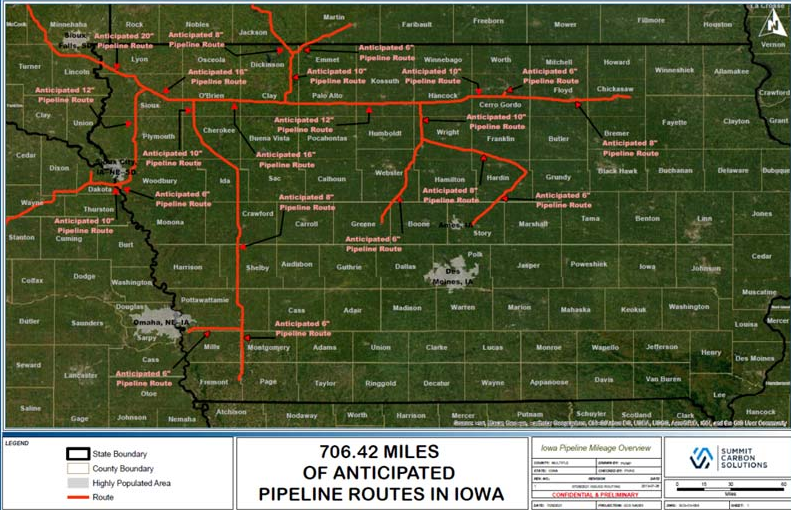 The Iowa House has attempted to put limits on the use of eminent domain to seize property from unwilling landowners along the proposed carbon pipeline route, but the Iowa Senate did not bring the House plans up for a vote during 2022 or 2023.
(Lewis, Iowa) – The Wallace Learning Center, Armstrong Memorial Research Farm, near Lewis (53020 Hitchcock Ave.), will host an “Innovation to Profit Series,” on February 13th, from 10:30-a.m. until 2-p.m. Those in attendance can expect to: receive up-to-date research opportunities to boost your profitability, productivity and sustainability; Engage with farmers to discuss challenges and opportunities in your area; and Get to know your regionally-based Iowa Soybean Association agronomists, conservation agronomists and producer services team.
The morning session will cover “Soybean Seeding Rates & Biologicals.” The presentation by Drew Clemmensen, ISA research agronomist, and Anthony Martin, ISA data analyst, will dig into the data from ISA seeding rate, long term cover crop and biological trials. Discover how seeding populations performed in different management systems to optimize seeding rates and cost savings. Attendees will take a deeper dive into the biological trial data and how it could impact local farmers.
The afternoon session is with regard to “Southwest Iowa Conservation,” and features Joseph Wuebker, ISA conservation agronomist. Crop producers will learn where they can start with conservation practices. You’ll also hear from local agronomists on the benefits, timeline planning and cost share opportunities for conservation practices specific to your area. Discussion pertaining to planting and scouting tips will follow, with fellow Southwest Iowa farmers and agronomists.
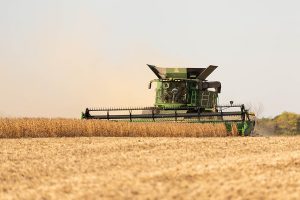
(Photo: Iowa Soybean Association / Joclyn Bushman)
The final topic is “Enhancing Nitrogen Recommendations using Data,” presented by Mitch Baum, Iowa State University postdoctoral researcher. The Iowa Nitrogen Initiative (INI) is a public-private partnership that works directly with Iowa farmers to conduct nitrogen rate research on their farm fields. In 2023, 270 trials were conducted, a 400% increase from the pilot year in 2022. In this presentation, INI researchers and staff will give a short overview of the project and present yield response data from the 2023 trials, ending with an update on decision support tool development and trials of interest for 2024.
Register today to reserve your spot. And, if you are looking to continue your education and expand your knowledge, Certified Crop Adviser (CCA) credits for the event are currently pending.
(Radio Iowa) – Fewer Iowans are donating money to the state’s Fish and Wildlife Fund on their tax returns to help wildlife conservation efforts. Last year, about 58-hundred people checked the box for the so-called Chickadee Check-off, which is only about four-tenths of one percent of Iowa’s taxpayers. Stephanie Shepherd, a wildlife biologist with the Iowa Department of Natural Resources’ Wildlife Diversity Program, says that check-off is the program’s only source of funding. “The Chickadee Check-off, the number of donors continues to decline for some reason, probably because the way people have done taxes has changed a lot over the years,” Shepherd says. “The Chickadee Check-off was placed on the tax form in 1982, so certainly things have changed a lot.”
She says the check-off funds are vital to the agency’s work to help preserve some of Iowa’s most vulnerable species. “We’re the folks that are 100% focused on all those wildlife that you can’t hunt, fish or trap, so, non-game wildlife,” Shepherd says. “That includes songbirds, bald eagles, bumblebees, frogs and toads, dragonflies, all the things, the thousands of species that you can’t hunt, fish or trap.” A few recent projects that have been supported by the check-off include investigating the nesting success of bald eagles, and determining the status of the endangered Poweshiek skipperling butterfly. “The Chickadee Check-off, when it was created, actually created our program,” Shepherd says. “It allows us to do conservation work for all those species, everything from outreach to research to habitat management projects.”
 The number of donors to the check-off has dropped by 50-percent in the past 20 years. Last year, it bought in almost 147-thousand dollars, a decline of about eight-thousand dollars from the year before. Iowans can donate as little as a dollar on their state tax form. “The tax form has changed this year. It seems like the legislature made some changes to how the tax form is set up or the Department of Revenue, so it’s in a little bit different spot,” Shepherd says. “Just make sure, if you work with a tax preparer, to remind them that you’d like to donate, and also keep an eye out if you use one of the electronic programs.”
Shepherd notes, 100-percent of donations to the check-off go directly to the program — there are no administrative fees. Also, you don’t have to donate via the tax form. You can donate directly on the D-N-R’s website: https://programs.iowadnr.gov/donations
(Iowa DNR News) – The paddlefish snagging season on the Missouri and Big Sioux rivers opens Feb. 1 and goes through April 30 (sunrise to sunset). The Iowa Department of Natural Resources says anglers fishing for paddlefish must have a valid Iowa fishing license, along with a special paddlefish license and unused transportation tag(s).
Please keep track of your catch and effort and complete the electronic survey after the paddlefish season whether you harvested a fish or not. The information collected will help the Iowa Department of Natural Resources (DNR) evaluate the success of the season and determine what potential changes/modifications may be needed.
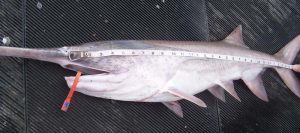
Paddlefish-DNR photo
If you catch a jaw-tagged fish (numbered band in the lower jaw), call the phone number on the tag and report the tag number, date of capture, capture location and eye-to-fork length. The Iowa DNR and other state fisheries agencies tag paddlefish to better understand and manage populations. Tagging provides valuable information to estimate population size, fish movement and growth.
Ongoing drought conditions and low river levels might affect Missouri River boat ramp access. For more information about Iowa’s special paddlefish season regulations, visit the DNR website at www.iowadnr.gov/paddlefish.
(Radio Iowa) – A state expert says the snow this month is going to be a help after months of drought. Iowa D-N-R hydrologist, Tim Hall, says there are some indications melting snow will provide some help for depleted soil moisture. “The numbers I’ve seen suggest that the ground frost is not particularly deep in the state because the really cold weather we just came through happened after we had a pretty decent snow cover on the ground, which tends to insulate the soil a little bit,” he says. Hall the ground is often frozen in January and there isn’t any seeping into the subsoil “So if we were to have a rapid melt off, most of the snow would end up in runoff off the top of the ground. So that’s not the best for soil moisture replenishment,” he says.
Hall says the snow melt will be beneficial one way or another. “That moisture is going to go somewhere, and right now whether it goes into the soil or goes into the streams, either one is a good thing for the state of Iowa,” Hall says. Snow runoff will help bring the water levels back up in rivers, streams and lakes. “Those communities that are working hard to keep up with their water demand, this will be helpful,” he says. “Now it still is the time of the year when there isn’t a lot of water demand, so we’ll just keep sticking water into the system and hopefully we can save it up to the growing season next year.” Hall says there could be some flooding if the snow melts rapidly, but he says the drought has created a lot of capacity in lakes and rivers.
“If you recall about a year ago, we were sitting on record snowpack in Minnesota in Wisconsin. And that snow melted off and we had flooding on the Mississippi River in late spring of last year. But because the overall Midwest has been so dry, that flooding came and went and the Mississippi River was back in low flow conditions by summer,” he says. Hall says that something could happen this year in Iowa if the runoff happens quickly.
DES MOINES, Iowa, Jan. 22, 2024 – U.S. Department of Agriculture (USDA) Rural Development State Director in Iowa Theresa Greenfield today (Monday) announced that USDA is investing $18,211,903 in 183 projects across the state to lower energy bills, generate new income, create jobs, and strengthen competition for Iowa agricultural producers and rural small business owners with funding through the Rural Energy for America Program (REAP).
“Producers and small businesses across the state are saving money, growing their businesses, and addressing climate change by investing in solar projects and making energy efficiency improvements through the USDA Rural Energy for America Program,” said Director Greenfield. “The Biden-Harris Administration is hard at work making sure as many Iowans as possible can access the historic Inflation Reduction Act funding to make clean energy improvements at their farms and businesses.”
Today’s projects are part of a larger nation-wide announcement for the REAP program. A list of the nationwide investments may be found online here.
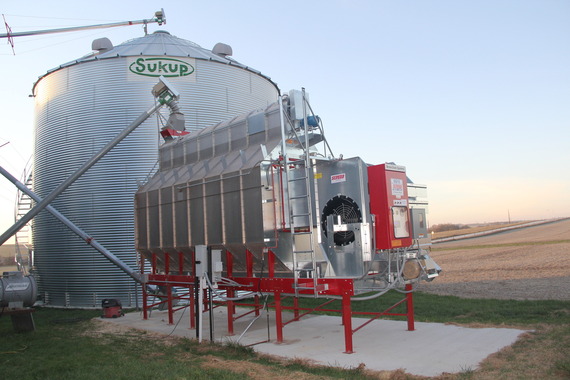
On Nov. 9, 2021, Xochitl Torres Small, USDA Rural Development Under Secretary, visited a farm in Audubon County, Iowa. She met a farmer who received a USDA Rural Energy for America (REAP) program grant and looked at the grain drying system the grant helped provide for the farm business there. USDA photo by Cecilia Lynch
Latest REAP grants in Iowa
A full list of today’s awards in Iowa is available online here and includes these five examples:
-CS Solar LLC received a $206,792 grant to help install a 29 kilowatt rooftop solar system and a 164 kW ground solar system on city property in Decorah. This project in Winneshiek County is expected to generate $40,987 per year in energy sales, which is enough electricity to power 23 homes.
–Red Lion Creston Schools Solar LLC, an electric generation company, received a $1,000,000 grant to help install solar arrays totaling 1,771 kilowatts in Creston. This project in Union County will generate 2,346,020 kilowatt hours per year, amounting to $151,822 per year. This is enough electricity to power 216 homes.
–Southwest Iowa Renewable Energy LLC received a $1,000,000 grant to install a slurry heating and reduced backset system at its dry-mill ethanol production facility in rural Pottawattamie County. This project is expected to realize $3,181,600 per year in savings and to replace 36,688,453 kilowatt hours per year, which is enough electricity to power 3,385 homes.
-Red Lion Knoxville Waterworks Solar LLC, an electric generation company, received a $800,000 grant to help install solar arrays totaling 1,056 kilowatts at six locations in Knoxville, in Marion County. This project is expected to generate 1,340,560 kilowatt hours per year, amounting to $81,499 per year. This is enough electricity to power 123 homes.
-Mara Transport Inc., a family-owned and operated over-the-road trucking business located in Marshall County, received a $21,949 grant to help install a 34.6 kilowatt solar array for business needs. This project is expected to save $5,584.67 per year and to replace 33,968 kilowatt hours—100 percent of the business energy usage—per year, which is enough energy to power three homes.


 Facebook
 Twitter
 YouTube
 RSS
RSS