

CLICK HERE for the latest market quotes from the Iowa Agribusiness Network!
CLICK HERE for the latest market quotes from the Brownfield Ag News Network!


CLICK HERE for the latest market quotes from the Iowa Agribusiness Network!
CLICK HERE for the latest market quotes from the Brownfield Ag News Network!
The first significant snowfall of the season last week had area snowmobilers out enjoying their machines and hoping for more snow to keep them active. 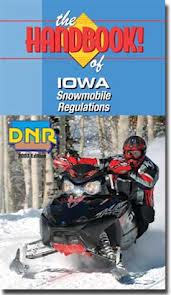 Cass County Recorder Joyce Jensen says before you begin your next adventure in the open, you should be aware the State of Iowa has made some changes in snowmobile registration, license renewal, titling and assignment of liens.
Jensen says her office uses the Recreational Vehicle and Vessel Registration, or RVVRS (pronounced “Rivers”) System. She reminds snowmobile enthusiasts that registrations for your machine or machines are due no later than the end of this month. Jensen says registrations are due by December 31st, if you want to avoid a penalty.
In addition she says, there are some new requirements when it comes to using snowmobiles on public land. Jensen says all snowmobiles, regardless of owner residency status, used on public land, public ice, and designated snowmobile trails in the State of Iowa, must display and IDNR User Permit.
User permits are required in addition to a valid registration. And, Jensen says also the State requires insurance cards or proof of insurance in order for snowmobiles to be used on the highways. There are new rules as well, regarding the use of snowmobiles for“Water Skipping.”
She says you are welcome to come into the Cass County Recorder’s Office to pick up a booklet containing information on all the new changes, which Joyce and her staff will go over with you. She says she hopes to see all snowmobile enthusiasts in her office over the next few days to get their registration up-to-date and go over the new rules.
Info on what’s going on at the Atlantic Animal Shelter.
Podcast: Play in new window | Download (4.2MB)
Subscribe: RSS
If your New Year’s resolution has something to do with gardening, don’t miss your chance to become a trained Iowa Master Gardener in 2013! Classes start Tuesday, January 15 at the Cass County Extension Office, but you must have your registration form turned in by noon on Monday January 7 to avoid a late fee, according to Extension Program Coordinator, Kate Olson.
“We need to have all our names turned in to campus by January 7 so course materials can be sent out prior to class starting on the 15th,” says Olson. “It is a fantastic program and I would encourage anyone to sign up if they have a love for gardening, a desire to learn more about the world of gardening, and a commitment to being a positive part of their community!”
Master Gardeners are members of the local community who take an active interest in any type of gardening and have a desire to share their knowledge through education and community involvement. Master Gardener trainees attend 40 hours of classes taught by Iowa State University Extension & Outreach staff and specialists on topics including lawn care, flower and vegetable gardening, ornamental trees and shrubs, fruit crops, and houseplants, insect, disease, and weed control, soil and plant nutrition, and pesticide safety.
In exchange for training, participants are asked to volunteer 40 hours of service in their local communities. The service opportunities are wide-ranging, from public educational activities to assisting with public garden spaces. Master Gardeners speak to local groups, teach youth about gardening, plant/maintain community gardens, staff plant clinics or displays, provide horticulture therapy activities for the elderly, and assist with county fair horticulture activities as judges or project coordinators, to name a few. Cass County also has an active Master Gardener group that meets regularly to coordinate volunteer and educational opportunities for members.
Classes will be held at the Cass County Extension office, located at 805 W. 10th Street in Atlantic. The first session will be Tuesday evening, January 15 from 6:30 to 9:30 pm, and will continue on consecutive Tuesday’s through March 19. There will also be three Thursday evening sessions held locally, and one Saturday in February spent on the ISU campus for hands-on training in the horticulture department. The cost for the entire program, including reference materials and all training, is just $150 per person.
Registrations must be in the Cass County Extension office by noon on January 7 to have materials available for the first training session. A $25 late fee will be charged to anyone signing up after this date. Persons interested in becoming a trained Master Gardener in Cass County are encouraged to contact the Cass County Extension office at 712-243-1132 or visit www.extension.iastate.edu/cass for information on signing up for the winter certification classes, or to learn more about Iowa Master Gardeners.
(Press Release/Cass Co. Extension)
DES MOINES, Iowa (AP) — Iowa officials are reminding ice fishing enthusiasts to be careful with newly developed ice caused by a major snowstorm last week. The state Department of Natural Resources says a minimum of four inches of quality ice is recommended for ice fishing. At least five inches of ice is recommended for snowmobiles and all-terrain vehicles. DNR officials also recommend using small baits and a light line for capturing finicky fish.
A major snowstorm dumped several inches of snow around the state last week. It also ushered in cold temperatures that covered most area lakes with a layer of ice.
DES MOINES, Iowa (AP) — Federal authorities say the number of cattle and calves in large Iowa feedlots is unchanged from last year. The U.S. Department of Agriculture says the number of cattle and calves in Iowa feedlots with capacities of 1,000 or more head totaled about 1.2 million on Dec. 1. That means inventory is unchanged from the same period last year. Cattle and calves for slaughter in the United States for feedlots with capacity of 1,000 or more head totaled 11.3 million on Dec. 1. That’s six percent below inventory from the same period last year. Another USDA report shows the number of cattle in Nebraska feedlots with capacities of 1,000 or more head contained 2.53 million on Dec. 1.
Now that Christmas is over, you may be thinking about what to do with your real Christmas tree and poinsettias. Officials with ISU Extension say there are several ways to dispose of your Christmas tree.
You can place the tree in your yard or garden for use by birds and other wildlife. The branches provide shelter from strong winds and cold. You can also prune off the tree’s branches and place the boughs over perennials as winter mulch. Chip the tree and use the chipped materials as mulch around trees, shrubs or in perennial flower beds. If you can’t use the tree yourself, contact your solid waste agency or sanitation service. Most communities have some type of Christmas tree disposal program.
If given good care to your poinsettias, they should remain active for 2-3 months. Toss the poinsettias when you grow tired of them or they become unattractive. If you enjoy a challenge, it is possible to get the poinsettia to bloom again next year. Cut the stems back to within 4-6 inches of the soil in March. They may be repotted at this time. Place the poinsettia in a sunny window. Continue to water when the soil surface becomes dry to the touch. In late May, move the poinsettia outdoors. Bring back indoors in mid-September.
If you have additional questions you would like to have answered, contact the ISU Hortline at hortline@iastate.edu or 515-294-3108.
The Iowa Department of Natural Resources says last week’s blizzard was not the way Iowa’s pheasant and quail wanted to start winter. About half of the state received 6 to 12 inches of wet heavy snow that collapsed most “grassy” cover. The cover that did not collapse was drifted full of snow from the high winds. Todd Bogenschutz, state upland game biologist for the DNR said it was “A bad storm for upland game birds.” Bogenschutz said he thinks “It’s very likely we saw some bird mortality with this blizzard.”
He says winter snowfall from December 1st thru March 31st is a good predictor of whether upland bird populations will increase or decrease the following year, and to have upwards of one foot of snow only 20 days into December does not bode well for pheasants. According to Bogenschutz, “Iowa had only 17 inches of snow last winter. Parts of Iowa are close to that total already with this first storm.”
Iowa’s pheasant and quail populations were decimated by five consecutive winters of 30-50 inches of snow from 2007 thru 2011. The winter of 2011-12 with only 17 inches of snow led to the first increase in pheasant numbers in years. Bogenschutz says “Upland bird hunters were hopeful this winter would also be dry and mild to speed a population recovery.” He added that he hopes there are no more storms like the one experienced last week, for the rest of the winter.”
On a side note: The Iowa Department of Natural Resources and Pheasants Forever chapters will meet jointly next month to discuss methods to improve winter habitat for pheasant and quail.
Iowa has 50,000 acres under a new Conservation Reserve Program called Iowa Pheasant Recovery SAFE. Landowners have the opportunity to enroll in this program first come first serve until the acres are gone. The catch is, that County FSA offices cannot enroll Iowa landowners until Congress gives USDA authority to begin enrollment under a new farm bill.
(Iowa DNR Press Release)


 Facebook
 Twitter
 YouTube
 RSS
RSS