

KJAN News can be heard at five minutes after every hour right after Fox News 24 hours a day!
Keep up-to-date with Fox News Radio, Radio Iowa, Brownfield & the Iowa Agribusiness Networks!


KJAN News can be heard at five minutes after every hour right after Fox News 24 hours a day!
Keep up-to-date with Fox News Radio, Radio Iowa, Brownfield & the Iowa Agribusiness Networks!
(Radio Iowa) – A U-S Marine and Iowa native is marking today (Wednesday) as the end of the Vietnam War 50 years ago, as nearly seven-thousand people were evacuated from the South Vietnam capital, Saigon, as North Vietnamese troops stormed in. John Morgan was a 26-year-old Iowan flying people out of Vietnam by helicopter that day. Morgan says if he hadn’t helped evacuate Vietnamese and Cambodian allies, they could have been tortured and executed.
“Now I feel proud that I served my country in the way that I did,” Morgan says, “that my missions, my actual combat missions, had to do with saving people and not hurting anyone.” Morgan was one of the many helicopter pilots on that mission. He says he pushed down his fear so his emotions would not get in the way of doing the job he needed to do.
“We landed in Saigon and came back and landed on board ship seven times,” he says, “seven times picking up people, and seven times coming back, landing on board an aircraft carrier.” Morgan says on some of his trips there were close to a hundred people in the helicopter. Morgan says he’s grateful to be alive.
In 2020, he wrote a memoir about his experiences called, “Fly the Friendly Skies of Cambodia and Vietnam.” Some 115-thousand Iowans served in the Vietnam War and 868 of them died there.
(Radio Iowa) – Governor Kim Reynolds has signed a bill into law requiring Iowa schools to enforce policies that restrict students from using smart phones when they’re in classes. “Recently schools across the country have stepped up, instituting a range of restrictions on cell phone usage during the school day,” Reynolds said, “and that includes right here in Iowa.” Reynolds praised policies at high schools in Ottumwa and Des Moines that show student performance rising as cell phone access is limited. Ottumwa Superintendent Mike McCrory says his district’s “bell to bell” policy banning cell phones from classrooms, hallways and the lunchroom has had a profound impact.”It allowed first for our students to refocus on their learning, focus on their mental health and also — and this is so important — building meaningful, face-to-face relationships with each other,” he said. “What we also saw was increased positive interactions in our hallways, in our classrooms and also in our lunchrooms.”
There was also a dramatic improvement in test scores at Ottumwa High. “Incredible growth academically because of this change and largely part to the fact of much more engaged classrooms and much more connected classrooms,” he says, “to the likes we haven’t seen for a long time.” Gabe Polich is a senior at Des Moines Hoover High School where cell phones are air pods have been banned in classes this year. He wasn’t happy about the policy at first. “Taking the cell phones away from Hoover has had a really positive impact. My grades improved a lot from last year because I’m way less distracted,” Polich says. “I used to listen to music, too, with my air pods. That was clearly a distraction because my grades shot up.” 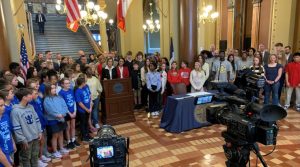
Governor Reynolds says she’s thrilled by the experience students like Polich have had with these policies. “I want to share a secret with you…My grandchildren weren’t very happen with me either for talking about taking the cell phone out of schools,” Reynolds told Polich and the large group of students attending the bill signing ceremony laughed. The no-cell-phones-in-class rule for public schools goes into effect July 1st. The governor notes the policy got bipartisan support in the legislature. “I think it’s a great example of how we can come together to support simple, common sense solutions that can make an overwhelmingly positive difference,” Reynolds says.
The law does allow for some exceptions for students who have instructional plans that require the use of a cell phone. Parents also may ask for their children to have access to their cell phones for behavior or physical health reasons.
In 2023, the division alleges, Wicks was working with patients at Nebraska Medicine’s trauma center when she charted that she had given a patient Oxycodone, which the patient later denied receiving. A subsequent audit allegedly revealed that over 15 days, there were 52 discrepancies in medication records involving 17 patients cared for by Wicks. According to division records, Wicks was fired from Nebraska Medicine and later failed to appear for a hearing on licensing charges. A hearing officer, Robert E. Harkins, revoked Wicks’ ability to practice in Nebraska, stating that her actions were “serious and constitute a significant risk to public safety.” The decision was affirmed by the chief medical officer of Nebraska’s Division of Public Health.
Wicks told the Iowa Capital Dispatch she didn’t feel the Nebraska division fairly characterized her actions at the trauma center. “They made it out to sound, like, almost like I was taking the medications — which I was not,” she said. “That was not the case.” As for the home-hospice client’s missing morphine, Wicks said, “I believe that was a set-up. I think the family took the medication and blamed it on me. I have never taken medications from a patient, ever.” Wicks said she’s currently dealing with some personal issues, but plans to resume working as a nurse soon, possibly at a nursing home in the western Iowa town of Oakland.
Court records indicate Wicks is currently facing a charge of child endangerment, which, after nine continuances, is scheduled for trial on May 27. A related charge of domestic abuse assault was dismissed and a related charge of violating a no-contact order is currently “on hold,” according to court records, pending the resolution of the child endangerment case.
(Council Bluffs, Iowa) – Officials with the Council Bluffs Police Department today (Wed., April 30), issued a report on the results of a special traffic enforcement project targeting drivers who didn’t slow down or pull over when entering work zones. Leading up to April 22nd, authorities posted several times on their social media pages, that, “In observation of National Work Zone Awareness month we would like to focus on Iowa Code 321.323A- “Move Over Law”. The law states that a driver shall change lanes when approaching a stationary vehicle with hazard or other lights flashing on the side of the roadway. If this is not possible then the driver shall reduce the speed of their vehicle as they pass. Officers will be conducting a “Move Over” enforcement project on I-80 and I-29 April 22nd in memory of Iowa DOT worker Matthew Dickerson who tragically lost his life last May in a work zone.”
In an update on the enforcement efforts, Council Bluffs Police said the department partnered with the Carter Lake P-D, Pottawattamie County Sheriff’s Office, Iowa State Patrol, and Arrow Towing to focus on “Move Over violations” and speeding, on Interstates 80 and 29, from 8-a.m. until Noon on the 22nd. “During this four-hour period, the project resulted in a total of 102 citations and warnings, where 30 were issued for failing to move over and 43 for speeding. The highest recorded speed was by the driver of 104 MPH in a 65MPH zone. Officers also arrested an impaired driver.” 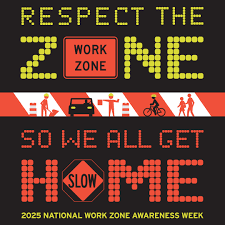
Authorities said “Despite the project, officers are still observing high speeds on the I-80 Express lanes. Therefore, we will continue to work with speed enforcement to bring those numbers down to a reasonable speed. We urge drivers to remember to Move Over when they see a vehicle on the shoulder.”
(Radio Iowa) – An acclaimed National Geographic photographer will offer central Iowans an audio-visual tour of the world’s so-called Blue Zones, places where people tend to live longer, healthier lives, often past one-hundred. David McLain has spent 15 years exploring those areas and is bringing stories of the residents to the Civic Center of Des Moines as part of its Explorer Series. McLain explains his main goal in capturing images of Blue Zone inhabitants. “I want to make them look aspirational. I feel like a lot of times, especially in America, we don’t look up to old people and in almost all of the Blue Zones, people look up to old people and they are aspirational,” McLain says, “and I wanted all of the images that I created and stories that I told to feel that way.”
McLain has studied the habits and rituals of centenarians in five geographic locations: Loma Linda, California; the Nicoya peninsula of Costa Rica; Sardinia, Italy; Ikaria, Greece; and Okinawa, Japan. “They aren’t necessarily vegetarians, but they eat mostly fruits and vegetables and a little bit of meat,” McLain says. “They all move naturally, so you’re not going to see anyone in a Blue Zone going to CrossFit, but you are going to see them constantly moving throughout the day. In fact, they only sit for about 20 minutes continuously at a time, and then they’re up and about.” While they’re oceans apart, McLain says many of these residents share common traits. “Family and community is really important and they have strong social networks,” McLain says, “and social networks in Blue Zones are not online. They are the people that are sitting around the table with you, that you see on a daily basis.”

David McLain (Photo provided by Des Moines Performing Arts)
The average Iowan lives about 78 years, but many Blue Zone residents celebrate their one-hundredth birthdays and well beyond. Through personal anecdotes and scientific research, McLain says he’ll be sharing tips on adopting some of their practices, and he says the Blue Zone assignment changed how he lives his own life. “It’s made me eat differently. I eat way more beans and greens and grains,” McLain says. “Basically, I have a giant garden which, I didn’t before this work, so it’s kind of turned me into a gardener. Gardening is not just a great way to get fruits and vegetables, it’s also a great way to get exercise.” He says he’s also worked to become more family- and community-oriented.
McLain appears Thursday night in a presentation called, “The Blue Zones: Unlocking the Secrets of Longevity,” at the Civic Center of Des Moines.
(Listen to his interview with Radio Iowa’s Matt Kelley, HERE)
(Radio Iowa) – The Iowa Department of Agriculture and Land Stewardship awarded nearly two-point-seven (2.7) million dollars in its latest round of matching grants for14 urban water quality projects. Secretary of Agriculture Mike Naig (like egg) says state grant dollars will support water quality features, like native plantings, bioretention cells and a stormwater wetland. “This is where stormwater manage meets water quality improvements,” he says. Naig made the announcement Monday at the Legacy Woods Nature Sanctuary in West Des Moines where water drains into Jordan Creek and then the Raccoon River.
“I hope it will inspire folks who spend time here to consider what they might do on their own property but also, other cities can come and see how this can be incorporated into the landscape,” Naig says. The park is adding bioretention cells to collect and filter stormwater with the help of native plants, a specific soil mix and a layer of rock. Ag Department urban conservationist Ann Seda says a stormwater wetland will collect overflow in bigger rain events. “And there again, the water will be treated to get the nitrogen uptake in that wetland before it discharges to Jordan Creek and then further downstream to the Raccoon River,” she says.
Cost-share grants through the state’s Water Quality Initiative have supported 140 projects in the last decade. Naig says they play a role in Iowa’s Nutrient Reduction Strategy goals.
(Greenfield, Iowa) – The Adair County Board of Supervisors held a brief, regular weekly meeting Wednesday (Today, April 30th). During their session, the Board set May 21st, 2025 at 9:15-a.m., as the date and time for a Public Hearing on a FY25 Budget Amendment.
In other business, the Board approved township clerk wages in the amount of $80 each, for:
(That’s) Board Chair Nathan Baier. The Adair County Supervisors also acknowledged the receipt of a manure management plan update for Iowa Select Farms.
The Board discussed an ISAC (Iowa State Association of Counties) 99-County Tour Survey. Board Chair Nathan Baier said ISAC officials are requesting a two-hour block of time for an Open House, Town Hall-style event.
The Board agreed the event should be held this Summer, most likely after a regular Board of Supervisors meeting, but an exact date was not set. Among the survey topics the Board was interesting in discussing with ISAC officials at the Town Hall, was Government Relations and NACo (National Association of American Counties. NACo is a national organization that represents county governments in the United States.
And, the Adair County Supervisors agreed to have Auditor Mandy Berg look into the suspension of taxes for a certain parcel. Adair County Treasurer Brenda Wallace explained the process…
The Adair County Supervisor’s next regular meeting is set for May 7th in their Board inside the Court House in Greenfield.
(Atlantic, Iowa) – Cass Health is hosting “Breaking Par: A Men’s Health Event” this summer on Sunday, June 29, at the Atlantic Golf & Country Club. The day will start off with a nine-hole best ball par three tournament teeing off at 9:00 am. After golf wraps up, all attendees will enjoy a steak lunch followed by a panel of healthcare professionals. Cass Health presenters will speak on topics like the importance of relationships, physical strength, orthopedics, eye care, and more. Following the panel, flight winners and door prizes will be announced to conclude the event.
Dr. Adam Verhoef, one of the presenters, says “This event is about engaging men to help them thrive in their lives and create healthier futures by connecting them to Cass Health professionals who want to help break the stigma around men accessing healthcare.” .
There are three ticket types available for Breaking Par. All tickets include lunch, program materials, gift, and door prize entries. Single tickets are $40 per person or $160 for a full foursome. Attendees can also choose to skip the golf tournament, and simply attend the lunch and panel presentation, reducing the ticket price to $15 per person. Tickets for individuals and teams are available online at casshealth.org/breakingpar.
Questions about the event can be directed to the Cass Health Marketing & Communications Department at 712-243-7487.
(Des Moines, Iowa) – Iowa’s public universities and community colleges would see flat funding for the upcoming fiscal year if proposed education appropriation legislation is passed, causing concern for some lawmakers. The Iowa Capital Dispatch reports Senate Study Bill 1231 would set fiscal year 2026 state funding for the Iowa Department of Education, Iowa Board of Regents and the institutions it governs, Department for the Blind and other individual programs. Under the bill, general university funding for the University of Iowa would stay at almost $223.5 million, Iowa State University funding would remain at more than $178.4 million and funding for the University of Northern Iowa would remain at almost $101.9 million.
While neither the University of Iowa or Iowa State University requested any general funding increases, the University of Northern Iowa asked for an additional $2.5 million for the upcoming year, which was not reflected in the bill. Sen. Cindy Winckler, D-Davenport, said Tuesday during a subcommittee meeting on the bill that data from the board of regents shows around 66% of the higher education system budget is driven by tuition, with less than 30% made up of state appropriations. Public education is incredibly important, she said, and when the Legislature keeps funding flat for state universities and community colleges — especially with national challenges all colleges must weather — the students and families paying to attend them feel the hurt of rising costs. 
Funding for community colleges is listed at close to $235.9 million, the same as last year. Katrina Holck, representing Community Colleges for Iowa, said many community colleges are concerned about the proposed funding as well. Lobbyists expressed general support for the legislation during the meeting, including proposed funding of $10 million for a health care professional incentive program and more than $2.3 million for the therapeutic classroom incentive fund for school districts.
Other funds left out of the legislation mentioned by commenters included the Iowa Tuition Grant program, $14 million for paraeducators and other civil work personnel and a $335,000 ask for a dyslexia endorsement tuition reimbursement program.
(Des Moines, Iowa) – Any communication from schools on immunization requirements would have to include information and requirements for families seeking an exemption under a bill sent to the governor Tuesday. According to the Iowa Capital Dispatch, House File 299 was passed by the Senate 32-16. The bill requires all Iowa K-12 schools, as well as child care centers, community colleges, universities under the Iowa Board of Regents as well as private universities using the tuition grant program, to include information on exemptions when communicating with students and families about vaccine requirements. For child care facilities and K-12 schools, information on vaccine requirement exemptions must also be published on their website and be included in student registration documents.
Republicans who spoke in support of the measure said it was needed because there were some reports of school staff falsely claiming that vaccines were required — with no exceptions — for students to be able to attend school.
Iowa law requires students to receive vaccinations to enroll in schools, including receiving the polio, measles, hepatitis B, varicella and meningococcal vaccines while in the K-12 school system. However, families have the ability to opt out from these requirements if vaccinating their child “conflicts with a genuine and sincere religious belief.” The law does not require families to obtain a waiver or specify their religion to claim the exemption. Medical exemptions can also be granted by a physician, physician assistant, or nurse practitioner who finds a required vaccination would be harmful to the health and well-being of the child or a member of their family.

While exemptions exist, Sen. Molly Donahue, D-Marion, said the bill “risks sending a mixed message about the importance of the safety of vaccines” by emphasizing vaccine exemptions, potentially putting students in danger by diminishing herd immunity.
As of April 24, there were a total of 884 confirmed measles cases in 29 states, according to the U.S. Centers for Disease Control and Prevention. The largest outbreak has been in Texas, where two unvaccinated children died from the disease. Though no cases have been reported in Iowa since 2019, according to state public health officials, the neighboring states of Illinois and Minnesota have reported confirmed measles cases in 2025.
The bill, which the Iowa House passed in March, goes to Gov. Kim Reynolds for final approval.


 Facebook
 Twitter
 YouTube
 RSS
RSS