KJAN Programs

Farm Bureau report: Iowa consumers worry about government-caused increases in food costs

Ag/Outdoor, News

June 19th, 2025 by Ric Hanson

(Iowa Capital Dispatch) – The Iowa Farm Bureau’s latest food and farm index found that among concerns of the high cost of groceries, the overwhelming majority of Iowa grocery shoppers surveyed are concerned about increases to food prices caused by government regulations. The Iowa Capital Dispatch says the annual survey, conducted by the Harris Poll, also found that more consumers are seeking locally grown and produced products. Latoya Guishard Welch, vice president of research for public release at the Harris Poll, said “At a time when trust in national institutions—from government to media—is at historic lows, the sustained confidence in local farmers speaks volumes about their authenticity and transparency, underscoring the strong bond and mutual respect between Iowa’s farmers and the communities they serve.”

According to the food and farm index, 80% of shoppers are concerned, and 47% are very concerned, about government regulations that increase consumer food prices. The percentage of people very concerned has more than doubled since 2021, when just 21% were more than just concerned about the role of government in increased food costs.  U.S. Department of Agriculture statistics show direct imports, or finished products ready for sale, accounted for 15% of U.S. spending on food and beverages. Foreign ingredients and supplies comprised 4% of domestic food production.  Forbes reported tariffs could have a significant impact on the cost of food and beverages at the grocery store, if imposed at their highest proposed levels.

A recent study from Farmers for Free Trade, a non-profit advocacy group, found that tariff costs for Iowa importers increased by $68 million, or 304% from April 2024 to April 2025. According to the study, imports from China had the highest tariffs, but imports from Mexico, Canada and South Korea faced dramatic increases in tariffs.  Goods imported from Mexico to Iowa in April 2024 had tariffs of 0.2%, compared to a 4.4% tariff in April 2025. Reciprocal tariffs between the U.S. and China, which are currently on a 90-day reduction agreement, would put Iowa industries at a “significant” risk. In particular, Chinese tariffs on U.S. exports would hurt Iowa pork and soybean producers especially hard. The Farmers for Free Trade study concluded the presidential tariffs, if they took effect and stayed in place, would “have major consequences” on Iowa.
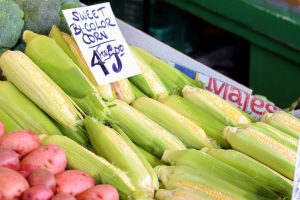
Fresh vegetables at a farmers market. (Photo by Cami Koons/Iowa Capital Dispatch)

Recent consumer price index data from U.S. Department of Agriculture shows a 23.6% increase in grocery prices from 2020 to 2024, which likely explains why price continues to be the most important factor for Iowa grocery shoppers when making decisions on which types of food to buy. Three-fourths of Iowans said meat, poultry or dairy products are part of their daily diets, and a higher proportion of Iowans say they prefer “real” meat and dairy over plant-based alternatives.

More and more, consumers are choosing to purchase these items directly from the farm. Sixty-nine percent said they have purchased groceries directly from farmers, through their online websites, farm stores or at farmers markets, and 40% of Iowa consumers look for locally made or grown labels when buying at the store. This is an increase from 2024 survey results which found around 30% of consumers sought local labels. The survey results also show that more than 90% of shoppers said they trust farmers and 49% said they place a “great deal of trust” in Iowa farmers in general. The survey also asked consumers if they felt confident farmers were caring for animals and the environment, which the vast majority, around 80% for each category, did.


Supervisors receive Cass County Environmental Health report

Ag/Outdoor, News

June 18th, 2025 by Ric Hanson

(Atlantic, Iowa) – Cass/Guthrie County Environmental Health Executive Director Jotham Arber, Tuesday morning, provided a regular monthly report to the Cass County Board of Supervisors. He said as we approach the official start of Summer, on Friday, his department has been very busy conducting septic system inspections on new and current properties.

He septic systems that were installed within the past 40-years (Mid-1980’s), are coming to the end of their useful life. The other they’re thing they’re seeing, is issues with rural water supply, given the current state of the drought in this area.

Arber says depending on the type of your well, there are different procedures to rehabilitate it.

Some of the well issues property owners may have, can be remedied through the use of U-V (Ultra Violet) lights or filters. Another option may be to hook-up to a rural water system, if that’s available to you.

More information on septic systems and well water can be found on the Environmental Health Department’s website.

(Cass County Environmental Health Office)

Posted County Grain Prices for 6/18/25 (2024 Crop Year)

Ag/Outdoor

June 18th, 2025 by Ric Hanson

Cass County: Corn $4.18 Beans $10.24
Adair County: Corn $4.15 Beans $10.27
Adams County: Corn $4.15 Beans $10.23
Audubon County: Corn $4.17 Beans $10.26
East Pottawattamie County: Corn $4.21 Beans $10.24
Guthrie County: Corn $4.20 Beans $10.28
Montgomery County: Corn $4.28 Beans $10.26
Shelby County: Corn $4.21 Beans $10.24

Oats: $3.15 (same in all counties)

June 19 Produce in the Park Celebrates Beef Night with Burgers, Dance Performances, and Baby Calves

Ag/Outdoor, News

June 18th, 2025 by Ric Hanson

(Atlantic, Iowa) – This week’s Produce in the Park (in the downtown Atlantic City Park), is being celebrated as “Beef Night.” The event takes place on Thursday, June 19th from 4:30-to 6:30-p.m.  This week’s farmers market features cow-themed fun for the whole family. Kids and adults alike will enjoy meeting baby calves and saying hello to Cass County Beef Royalty. Kids can get creative with a free cow-themed craft from Your Forte, and local beef vendor Noble Provisions will be grilling burgers for dinner. Market guests will enjoy free live performances by Dance Atlantic and sample guest chef Sloppy Joe recipes.

Two food trucks will be serving up dinner in the park June 19. In addition to Noble Provisions selling burgers, Hungry Spartan will be offering pizza.

The June 19 market includes more than 20 vendors offering farm-fresh produce like leafy greens, cucumbers, radishes, snap peas, and kohlrabi, along with local meats including beef products such as beef sticks, dried beef, and ribeyes, as well as pork, lamb, and chicken. Shoppers will find farm-fresh eggs, as well as baked goods and desserts like sourdough, Danish kringle, cinnamon rolls, muffins, cupcakes, cookies, cotton candy, bagels, and gluten-free options.

Cows and calf at Hoopy Hallow Ranch.

Beyond food, visitors will find handmade crafts, bath and body products, garden gifts, and home décor. Visiting organizations and sponsors sharing community information at the park June 19 include Cass County Tourism, Cass Health, Healthy Cass County, and the Atlantic Public Library.

Beef Night at Produce in the Park is made possible by support from June market sponsors Atlantic United Church of Christ, City of Atlantic, First Whitney Bank & Trust, Gregg Young Chevrolet of Atlantic, Cass Health, Cass County Tourism, Atlantic Area Chamber of Commerce, and Nishna Valley Family YMCA. Produce in the Park is held every Thursday evening in the Atlantic City Park from 4:30–6:30 PM through September. All are welcome, and admission is free. The market accepts SNAP/EBT and Double Up Food Bucks for all qualifying food items.

For the latest market updates, follow Produce in the Park on Facebook at www.facebook.com/ProduceInThePark and Instagram at www.instagram.com/produceintheparkatlanticia/.

Iowa House pushes for special session to override Reynolds’ veto of eminent domain bill

Ag/Outdoor, News

June 17th, 2025 by Ric Hanson

(Des Moines, Iowa/ KCCI-TV) – Republican leaders of the Iowa House say they have enough signatures from its members to convene a special legislative session in order to vote to override Iowa Gov. Kim Reynolds’ veto of House File 639. House File 639 was a key piece of legislation passed this spring by the Iowa House and Senate. Proponents said it would strengthen private property rights.

Iowa landowners have been fighting for this legislation for years, as Summit Carbon Solutions continued work on its proposed $8.9 billion, 2,500-mile carbon capture pipeline, which would run through Iowa and other states. In a statement released after vetoing the legislation, Reynolds said HF 639 was about more than eminent domain and would set a “troubling precedent that threatens Iowa’s energy reliability, economy and reputation as a place where businesses can invest with confidence.”

Immediately after Reynolds’ veto, Iowa House Speaker Pat Grassley, R-New Hartford, called for the legislature to reconvene in a special session to override the veto. The House petition collected signatures from 70 lawmakers, surpassing the two-thirds majority required to call for a special session. The Iowa Senate would also need to collect enough signatures — also a two-thirds majority — on a petition to convene the special session.

Last week, Iowa Senate Majority Leader Jack Whitver, R-Grimes, said he did not believe the Senate would “be interested in any attempt to override her veto.” Two-thirds of both chambers would need to vote for an override for the bill to become law without the governor’s approval.

The last time the Iowa legislature convened to override a governor’s veto was in 2006.

“Water Rocks” summit teaches teachers about environment

Ag/Outdoor, News

June 17th, 2025 by Ric Hanson

(Radio Iowa) – The annual “Water Rocks” summit is underway at Iowa State University for some 31 teachers representing 24 Iowa school districts. Spokesperson Ann Stout says the workshop participants range from kindergarten to high school teachers. “It’s helping to build educators’ awareness and their knowledge base of different environmental and agricultural topics, the interconnection of our water, our land, our wildlife in the state of Iowa,” Stout says. One topic they learn about is watersheds.

“So a watershed is an area of land that all drains to a common water body. So, everything that happens on that land can ultimately affect the rivers, the streams, the lakes where that water ends up,” she says. Stout says it’s something that has been at the top of the news lately with high nitrate levels in rivers that are impacting the water supply for Des Moines and surrounding cities. The event focuses first on water issues, but Stout says they also include some other environmental topics. They will have a professor from Central College in Pella teaching about the various bats in the state.

“He’s going to share some information about the exciting role of bats, the different bats that we have here in Iowa,” she says. “And then as part of that, we will also be going on a field experience and netting bats. So, he’ll be setting out large nets and we’ll be going out at dusk to be able to see what sort of bats use different habitats here in Iowa.” Stout says the goal is to give the teachers information they can use to teach their students about these topics.

“We’re not giving them a curriculum, but we’re giving them, I would describe it as enhanced learning activities that they can then put into their existing curriculum,” Stout says. The “Water Rocks” summit got underway today (Tuesday) in Ames and wraps up tomorrow.

Posted County Grain Prices for 6/17/25 (2024 crop year)

Ag/Outdoor

June 17th, 2025 by Ric Hanson

Cass County: Corn $4.20 Beans $10.17
Adair County: Corn $4.17 Beans $10.20
Adams County: Corn $4.17 Beans $10.16
Audubon County: Corn $4.19 Beans $10.19
East Pottawattamie County: Corn $4.23 Beans $10.17
Guthrie County: Corn $4.22 Beans $10.21
Montgomery County: Corn $4.22 Beans $10.19
Shelby County: Corn $4.23 Beans $10.17

Oats: $3.17 (same in all counties)

Disease carried by ticks found for first time in southeast Iowa cattle

Ag/Outdoor, News

June 17th, 2025 by Ric Hanson

(Radio Iowa) – A cattle disease carried by ticks is now confirmed in Iowa for the first time in a herd of cows in southeast Iowa. Iowa State University Extension veterinarian Grant Dewell says the Theileria parasite has slowly moved from the eastern U-S. “It’s a protozoa that infects the blood cells and causes the destruction of blood cells, so it can cause some pretty severe signs of anemia and things like that in susceptible cattle,” Dewell says. It is spread by the Asian Longhorned Tick.  “This tick doesn’t act like our other ticks we’re used to. You know, typically we may see four or five ticks on an animal and with this Asian Longhorn tick, we can see a thousand ticks and it’s obvious that they’re they’re infested with the ticks. You don’t have to look very hard, you just see all these ticks on them,” he says. “So it’s a tick that reproduces rapidly.”

He says the main prevention is tick control and getting rid of them. “We don’t have any antiprotozoal drugs that we can use in cattle, so we’re we’re pretty much, if the cattle get sick, we’re going to provide some supportive care,” he says. Dr. Dewell says the cattle are not going to want to move, so you have to keep food and water in front of them. He says for a valuable cow, like a prized bull, they might do some blood transfusions. Dewell says this tick doesn’t have a taste for human blood, and sticks to certain animals. “Like cattle, deer, sheep. And so our white tailed deer are going to be moving it around,” Dewell says. “But we don’t typically see white tailed deer go from southern Iowa to northern Iowa, so you know, they’ll spread it from farm to farm and county to county, but it’s going to be kind of a slow progression that it’s gonna occur.”

Dewell says the disease has been in Missouri for a couple of years and took that long to get to Iowa.

Crop and soil conditions stable despite ‘unsettled’ weather

Ag/Outdoor, News

June 16th, 2025 by Ric Hanson

(Iowa Capital Dispatch) – Iowa crops continue to rate well, though average rainfall across Iowa last week was less than seven-tenths of an inch and some regions suffered from damaging hail storms. While the average soil moisture conditions rate 70% adequate for topsoil and 60% adequate for subsoil conditions, some regions of the state have much drier conditions, according the crop progress and condition report prepared by U.S. Department of Agriculture.

In southeast Iowa, topsoil moisture rated 34% short and 10% very short, and subsoil moisture rated 48% short. Southwest Iowa had similar figures, topsoil moisture rated 33% short and 10% very short and subsoil rated 44% short and 11% very short. West central Iowa had topsoil moisture conditions fairly close to the average for the state, but 21% of subsoil in the region rated very short of moisture.

Despite the less than desirable soil moisture conditions, the regions were on par with the state averages for crop emergence for corn, 97% emerged, and soybeans, 93% emerged. Six percent of soybeans across the state were blooming. Corn and soybean crops continue to rate well, with both at more than 80% good to excellent condition. Hay condition was similarly rated across the state and 88% of hay acres have undergone a first cutting, and 16% have already had a second cutting. Oats also rated well with an average of 19% coloring. Pasture condition dropped slightly from the week prior to 69% good or excellent and no major livestock concerns were reported.

Corn grows along south-bound Interstate 35 on June 14, 2025. (Photo by Cami Koons/Iowa Capital Dispatch)

Northern parts of the state received the most rain during the June 9 through June 15 reporting period, but also suffered from large hail that damaged crops and trees. State Climatologist Justin Glisan said the state had an “unsettled weather pattern” with multiple showers and thunderstorms. Glisan said even though the rain was “widespread” the average precipitation was about half an inch below normal.

Iowa Secretary of Agriculture Mike Naig noted the storms during the week damaged some crops, but said the overall mix of rain and warm temperatures “helped the crops progress.” “As summer officially arrives this week, forecasts are showing warmer-than-normal temperatures and continued chances of storms and widespread showers,” Naig said in a statement.

Iowa summer food assistance program falls short on convenience, choices, critics say

Ag/Outdoor, News

June 16th, 2025 by Ric Hanson

(Des Moines, Iowa) – The Iowa Capital Dispatch reports Gov. Kim Reynolds’ “healthier and cheaper” alternative to federal summer food assistance programs is again facing criticism that it is less convenient and covers fewer food-insecure Iowans than the national program and offers families fewer choices than initially promised.

Reynolds’ Healthy Kids Iowa was announced in May after the U.S. Department of Agriculture approved the pilot program as an alternative to the federal Summer Electronic Benefits Transfer program. The federal program would have added $40 per month to a family’s Supplemental Nutrition Assistance Program card for each school-age child during schools’ summer break that can be used at retailers across the state.

The Healthy Kids Iowa program was billed in the initial release as having “more than 500 access points statewide.” Currently, there are 254 access points for the governor’s program, where families can pick up pre-made boxes of food, valued at $40, to be prepared at home.  A spokesperson for the Iowa Department of Health and Human Services said the remaining access points are summer meal sites overseen by the Department of Education, where kids can eat a meal on site.

Meanwhile, there are over 2,900 retailers across Iowa that accept SNAP benefits, according to the U.S. Department of Agriculture. Advocates for food assistance say the state’s program falls far short of Summer EBT as a way to get help to families in need. “Transportation barriers exist whether you’re two blocks away from a summer meal site or a Healthy Kids Iowa site or 20 miles,” said Luke Elzinga, board chair of Iowa Hunger Coalition.

Additionally, in the May announcement, Iowans were told they could “choose their monthly items, respecting their preferences and cultural and dietary needs.” Elzinga says that this is something his team “hasn’t necessarily seen pan out.” However, certain locations, such as the HACAP food reservoir in Hiawatha, allow families to choose from three prepackaged “menus.”

Reynolds said in an interview in late May with “Iowa Press,” the program cost the state around $9 million to administer. A more recent Facebook post from the governor’s office claims the new program cost the state $19,000 in administrative costs.

Iowa HHS contracted six Feeding America Food Banks to administer the new program throughout the state. These food banks are in charge of sourcing the food, finding distribution partners and determining areas of need throughout the state. “Well, it’s a heavy lift but we’re getting it done,” said Annette Hacker, vice president of Food Bank of Iowa. “It’s funding relief that was not available in our state the past two years, so obviously we support any effort that will get more food on the table for Iowa kids.”

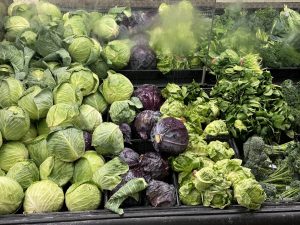
Produce at a grocery store. (Photo by Cami Koons/Iowa Capital Dispatch)

Hacker said her team had “just a little over a month to prepare.” Preliminary talks with Iowa HHS on a plan for this program began in April with a revised plan being submitted on June 3. Some Healthy Kids Iowa sites began serving food the next day. Hacker said this was made possible by the commitment of 125 of the food bank’s 700 partners, which are acting as sites for the program.

The food itself is chosen in accordance with the USDA “Thrifty Food Plan,” which focuses on foods that are “nutritious, broadly appeal to kids and/or are easy to prepare by kids and caregivers.” Eligible families are given one pre-made box of food per month, per child at one of 254 locations statewide.

Some examples of items the Food Bank of Iowa purchased are macaroni and cheese cups, pasta and sauce, 1% milk, fruit and vegetable cups, ground beef, fresh produce (including avocados, grapes, pears, clementines and apples), shredded cheese, fresh eggs, protein waffle/pancake mix, tortillas, deli meat, whole wheat crustless sandwiches made with a peanut butter alternative, and protein shakes. However, available foods vary at each site.

Despite an emphasis on fresh foods and produce, Hacker says there “shouldn’t be any concerns about perishability because everything is fresh, first run, good, nutritious food.” The team has deliberately chosen fresh foods with longer shelf life. Hacker also said Food Bank of Iowa “can stretch a dollar pretty far” because purchases are made in bulk. Hacker said Food Bank of Iowa is “gravely concerned” about the proposed cuts to SNAP under the “big, beautiful bill” and says it will have “devastating impacts” on Iowa families. The expansive budget bill would cut upward of $220 billion from SNAP, the biggest cut in the history of the program.