KJAN Programs

Camping 101 programs set for March 28th & April 18th in Cass County (IA)

Ag/Outdoor, News

March 13th, 2026 by Ric Hanson

(Lewis, IA) – The Cass County Conservation Board is set to hold two Camping 101 programs. The first program will be held at the Outdoor Educational Classroom near Massena**, on March 28th at 2-p.m. The session will focus on fire building and supplies, Leave No Trace principles, and trip planning. The second session will be held at the Campground Shelter at Cold Springs Park, on Saturday April 18th beginning at 6-p.m. That session will be all about supplies and gear. Bring your gear and stay with an optional camping night at Cold Springs park.

Both programs are FREE, and all ages welcome!

**To reach the Outdoor Educational Classroom, take Highway 148 south of Massena, turn Left on Tucson Road and follow it East for about two miles, and then turn right into the parking lot.

Posted County grain Prices, 3/12/2026 (2025 crop year)

Ag/Outdoor

March 12th, 2026 by Ric Hanson

Cass County: Corn $4.17 Beans $11.34
Adair County: Corn $4.14 Beans $11.37
Adams County: Corn $4.14 Beans $11.33
Audubon County: Corn $4.16 Beans $11.36
East Pottawattamie County: $4.20 Beans $11.34
Guthrie County: Corn $4.19 Beans $11.38
Montgomery County: Corn $4.19 Beans $11.36
Shelby County: Corn $4.20 Beans $11.34

Oats: $ 2.99          (same in all counties)

(Prices are per bushel; information is from the area Farm Service Agency [FSA] offices)

Iowa’s popular spring turkey hunting seasons only a few weeks away

Ag/Outdoor, News

March 11th, 2026 by Ric Hanson

(Des Moines, IA – Iowa DNR News) – Once easily visible in large winter flocks scratching in picked crop fields along timber edges for waste grain, Iowa’s wild turkeys will seemingly disappear into the landscape as the days lengthen and temperatures warm. The Iowa Department of Natural Resources (DNR) says driven by instinct, males will begin calling, displaying and competing against other males for the attention of the hens as part of the annual breeding season. In this arena, steps the turkey hunter – who tries to mimic the hens and frustrate the toms (mature) and jakes (one-year old male’s) to the point of investigating why she is not responding to his calls.

Jim Coffey, Iowa DNR Forest Wildlife Biologist, says “Turkey hunting is an intimate experience, calling the birds close, making it go against instinct, using your experience and skills learned from time spent in the woods to try to trick that bird to coming to you. And if everything goes right, only around 22-25 percent of our tags get filled. Even the most experienced turkey hunters make mistakes.” Last year, more than 50,000 tags were sold and hunters reporting harvesting more than 15,000 birds; the second highest total since mandatory harvest began in 2006. “We had a good turkey hatch in 2025, and that was on top of a good hatch in 2024, so we should have a good number of jakes and young toms available this spring,” Coffey said.

Considered a woodland species, turkeys can be found in grasslands, field edges and other places you don’t expect to see them. Birds were harvested in all of Iowa’s 99 counties in the 2025 spring season. Iowa’s spring turkey hunting offers four split seasons, where hunters may choose up to two seasons, with at least one being season four. Seasons spread out hunting pressure to provide positive experience. Surveys indicate that hunter satisfaction is highest when they do not run into another hunter while hunting and when they hear a lot of gobbling. With a few weeks to go till the season starts, Coffey said now is a good time to go through the equipment and gear to make sure it still works and fits, and to practice calling. “Spring weather could be finicky – it could be in the 70s or snowing,” he said. “And just a reminder, it will be tick season.”

Hunting safety reminder

  • Hunters should write out their hunting plan that identifies the hunt location, who’s on the hunt and outlines their role, describes how the hunt will unfold and when the hunters are expected to return home. Hunters are encouraged to leave a copy of the plan with someone or somewhere easy to find, in the event of an emergency.
  • Hunters are reminded to avoid wearing patriotic colors – red, white and blue – that are colors found on a male turkey head and waddle, and to not shoot at movement. Identify the target and what’s beyond it, especially with the new loads that have increased range.
  • If another hunter walks in to your area, Coffey said remain still and say in a clear voice ‘Hunter over here.’ “The person should turn and walk directly away,” he said.

Those who harvest a bird are required to report their harvest through the harvest reporting system. It is essential and mandatory to report the bird, which helps the DNR with management. “There are plenty of birds – be mindful of other hunters out there – they’re out there to have fun too,” he said.

Youth Season

Youth season is designed to be a mentoring experience, teaching the youth about turkey hunting and building skills, like learning how to call.

SEASONS

  • Youth-only – residents only, age 15 and younger – April 10-12
  • Season 1 – April 13-16
  • Season 2 – April 17-21
  • Season 3 – April 22-28
  • Season 4 – April 29 – May 17
  • Resident Archery Only – April 13 – May 17

Posted County grain Prices, 3/11/2026 (2025 crop year)

Ag/Outdoor

March 11th, 2026 by Ric Hanson

Cass County: Corn $4.17 Beans $11.33
Adair County: Corn $4.14 Beans $11.36
Adams County: Corn $4.14 Beans $11.32
Audubon County: Corn $4.16 Beans $11.35
East Pottawattamie County: $4.20 Beans $11.33
Guthrie County: Corn $4.19 Beans $11.37
Montgomery County: Corn $4.19 Beans $11.35
Shelby County: Corn $4.20 Beans $11.33

Oats: $ 2.95          (same in all counties)

(Prices are per bushel; information is from the area Farm Service Agency [FSA] offices)

Farm Credit Services of America, AgCountry Farm Credit Services Launch Grant‑Writing Support Pilot to Help Farmers Pursue Sustainable Agriculture Funding

Ag/Outdoor, News

March 10th, 2026 by Ric Hanson

OMAHA, NEBRASKA — Farm Credit Services of America (FCSAmerica) and AgCountry Farm Credit Services (AgCountry) announce the launch of a pilot program to assist producers seeking additional sources of capital for stewardship activities.

The Farm Credit Associations are partnering with Lasso, a grant-writing service, to help participating producers find and apply for publicly funded grants. Producers report strong interest in stewardship activities but face financial barriers. The Associations are piloting grant-writing services for their customers as part of a broader toolbox of products and services for on-farm improvements. The pilot is available for eligible farm projects in Iowa, Minnesota, and Wisconsin.
The program provides support to producers considering equipment upgrades, infrastructure improvements, or energy and efficiency projects who may be unsure whether grant funding is available or how to navigate the application process. Selected participants will receive Lasso’s end-to-end support, including identifying relevant grant opportunities, preparing applications, and managing post-award requirements. FCSAmerica and AgCountry will cover the majority of the cost.
“Producers are deeply committed to leaving their operations stronger for the next generation, but navigating evolving funding opportunities can become a significant hurdle,” said Myriah Johnson, Ph.D., vice president of sustainability for  FCSAmerica and AgCountry, which operate as part of a collaboration that includes Frontier Farm Credit.
“Through this pilot, we’re meeting producers where they are by supporting the projects they believe in, respecting their production choices, and removing barriers that slow the adoption of sustainable, economically viable improvements. By connecting producers with resources that make these investments more attainable, we’re strengthening both the resilience of their operations and the long‑term sustainability of agriculture across our region.”
Lasso works directly with producers to understand their needs and match projects with federal, state, regional, and local grant programs, including opportunities such as the Value-Added Producer Grant, the Agriculture Diversification & Development Fund (North Dakota), and Choose Iowa’s Butchery Innovation Grant (Iowa). Lasso reports a 90 percent success rate and has helped secure more than 70 grants, representing millions of dollars in funding for on-farm projects.
“Many farmers have strong project ideas but don’t have the time or resources to navigate the grant process on their own,” said Nicole Rojas, co-founder of Lasso. “Partnering with Farm Credit Services of America and AgCounty Farm Credit Services allows us to remove that barrier by helping producers identify the right funding opportunities and manage the grant process from start to finish, so they can focus on running their farms and investing in their operations with confidence.”
FCSAmerica has had a sustainability program since 2022 to support customer‑owners advance stewardship activities on their operations. We continually deepen our knowledge to provide the resources and insights customers seek as part of their stewardship decision-making.
Producers interested in participating in the pilot should be open to pursuing public grant funding and have an on-farm project plan with potential vendors or service providers identified.Learn more about FCSAmerica. AgCountry, and Lasso.

Remove required in-person training day for minors’ hunting classes

Ag/Outdoor, News

March 10th, 2026 by Ric Hanson

(Radio Iowa) – Under current law, Iowa youth must finish an online hunter education course AND complete an in-person “field day” before they can get a state hunting license, but a bill that’s passed the Iowa House would eliminate that required in-person gun training. Representative Jason Gearhart, a Republican from Strawberry Point, says in many parts of the state, there are very few field days where minors can fire weapons — and enrollment is limited. “Because of these barriers, my own children completed their hunters education course through North Carolina, which Iowa honored with no second thoughts,” Gearhart said.

Iowans who pass a hunter education in 34 other states are still eligible for an Iowa hunting license — and North Carolina is among the 17 states that only require minors to pass an online version. Representative J.D. Scholten, a Democrat from Sioux City, says the way the bill’s written, it’s possible a 16 or 17 year old who has never held a gun could get a hunting license and go hunting by themselves. “When I was in high school, we had hunter safety,” Scholten said. “This bill seems to take the safety part out.” Gearhart says he understands the concern. “But one field day does not replace months or years of mentorship from a parent, from an uncle, from a grandparent or an experienced hunter. That’s where real hunting safety and ethics are learned,” Gearhart said.

“House File 2335 is simple fix tha t will give parents and kids the flexibility to complete the online or in-person course on their schedule, while still keeping the in-person Field Days available for those that want them.” The bill maintains the requirement that children between the ages of 11 and 15 who are hunting be accompanies by an adult. State law requires completion of a hunter safety course before children AND adults may get a hunting license and the State of Iowa has offered the course online since 2008.

Land donors to be honored during reception in Des Moines

Ag/Outdoor, News

March 10th, 2026 by Ric Hanson

DES MOINES, Iowa – The Iowa Department of Natural Resources (DNR) reports more than 3,200 acres of Iowa land in 22 counties with an estimated value of more than $11 million was permanently protected through donations for conservation. The donors associated with 26 donations of land or land value will be recognized during a ceremony on March 24, from 1 to 2 p.m., in the first floor rotunda, at the State Capitol, in Des Moines.

Among the southwest/western Iowa landowners who will be recognized, is:

  • Marcia Buresh, who donated a conservation easement on and title to 280 acres of mixed habitat near Crescent in Pottawattamie County to Iowa Natural Heritage Foundation (INHF). Marcia wanted to permanently protect the remnant prairie, diverse bur oak woodland and Cresent Creek, which flows through the property’s southern portion. A history of organic and sustainable farming practices has improved wildlife habitat and will support ongoing ecological restoration efforts. The site will contribute to INHF’s land stewardship efforts throughout the Loess Hills.
  • Marily and Bob Caddy donated a conservation easement on 53 acres of remnant and reconstructed prairie and oak woodland in the Loess Hills in Monona County to Iowa Natural Heritage Foundation. The property has been a retreat and reunion site for the Anderson-Caddy family for decades. The Caddys have put significant work into native habitat restoration. The conservation easement ensures it will remain in its natural state for future generations.
  • Renate Harker bequeathed 20 acres of mixed habitat near Sac City in Sac County to Iowa Natural Heritage Foundation. Prairie restoration will enhance existing wildlife habitat, reduce erosion and promote water infiltration in the North Raccoon River watershed.
  • Janice Niemann donated seven acres of remnant tallgrass prairie near Underwood in Pottawattamie County to Iowa Natural Heritage Foundation. Its permanent protection provides refuge for wildlife in an area with little native habitat. Prairie seed collected from this site will be used to expand and restore other regional prairies.
  • Eric Roberts and Stephen Prime donated 10 acres of Loess Hills remnant prairie in Missouri Valley in Harrison County to Iowa Natural Heritage Foundation. The property has been transferred to Harrison County Conservation, which stewards the Hoary puccoon, ground plum, lead plant and other conservative prairie species that dot the hillsides. The property’s proximity to a population base offers potential hiking, birding, picnicking and more recreational opportunities.

Landowners who are in attendance will be honored individually for their donation. For more information about individual donations, visit the DNR website at www.iowadnr.gov/landdonors.

Grassley renews push for year-round, nationwide sales of E-15

Ag/Outdoor, News

March 10th, 2026 by Ric Hanson

(Radio Iowa) – Iowa Senator Chuck Grassley says he’ll try, try again to make the case in a Senate Ag Committee hearing this (Tuesday) afternoon for the year-round sale of the blend of gasoline that contains 15-percent ethanol. Grassley says, “We’re trying to get E-15 by law, not by presidential waiver that we’ve had for the last seven years, E-15 nationwide year-round.” The Iowa Renewable Fuels Association says E-15 is frequently sold under the name Unleaded 88, and it contains five-percent more ethanol than E-10, which is the most common fuel used in the U-S. While ethanol is made from corn, biodiesel comes from soybeans, which Grassley reminds are two of Iowa’s top commodities.

“The Office of Management and Budget is reviewing EPA rulemaking on renewable volume obligations, or what we call RVOs,” Grassley says, “and we’re hoping to get a five-and-six-tenths billion gallon mandate to get rid of biodiesel compared to four years of only three-billion in the Biden administration.” Grassley says cementing the sale of E-15 year-round would be a tremendous win for Iowa producers. “If we can get by law E-15 nationwide year-round,” he says, “Corn Growers Association economic advisors tell them it’s going to increase farm income by $14 billion.”

The Senate Committee on Agriculture, Nutrition and Forestry plans to meet at 2 P-M/Central on the topic of “Increasing Domestic Consumption of U.S.-Grown Agricultural Products.”

Posted County grain Prices, 3/10/2026 (2025 crop year)

Ag/Outdoor

March 10th, 2026 by Ric Hanson

Cass County: Corn $4.18 Beans $11.30
Adair County: Corn $4.15 Beans $11.33
Adams County: Corn $4.15 Beans $11.29
Audubon County: Corn $4.17 Beans $11.32
East Pottawattamie County: $4.21 Beans $11.30
Guthrie County: Corn $4.20 Beans $11.34
Montgomery County: Corn $4.20 Beans $11.32
Shelby County: Corn $4.21 Beans $11.30

Oats: $ 2.92          (same in all counties)

(Prices are per bushel; information is from the area Farm Service Agency [FSA] offices)

Cass County 4-H 2026 Pancake Supper and Silent Auction: Another Record-Breaking Success!

Ag/Outdoor, News

March 9th, 2026 by Ric Hanson

(Atlantic, IA) – Thanks to the unwavering support of the incredible community, officials with Cass County 4-H say they are thrilled to announce that the Cass County 4-H Pancake Supper and Silent Auction on Tuesday, March 3, 2026, was a resounding success!
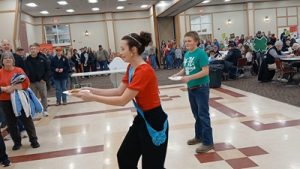
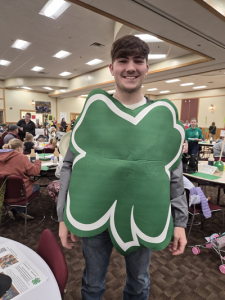
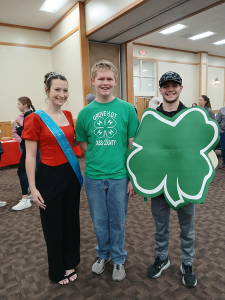
County Youth Coordinator Katie Batemen said in a news release, “We are proud to announce that the total net proceeds from the event, including pancake sales, direct donations, and the silent auction, exceeded $8,200. This is $780 above the record that was set at last year’s event. In total, 536 plates of pancakes were flipped by the Pancake Man. There were 24 silent auction items donated by community members, local businesses, and all 10 Cass County 4-H Clubs.” (Photos courtesy Katie Bateman)
The Cass County 4-H Endowment Committee extends a huge thank you to everyone who enjoyed a plate of pancakes, donated, or placed a bid in the silent auction. This outstanding community support helps us continue to follow the 4-H motto “to make the best better” ensuring our Cass County 4-Her’s have opportunities to make themselves better with 4-H.
Proceeds from the 4-H Pancake Supper directly benefit the Cass County 4-H Program.
All funds raised go to the Cass County 4-H Endowment Fund through the Iowa 4-H Foundation. The Cass County 4-H Endowment offers grants for local youth to attend 4-H camps or conferences outside of Cass County, encouraging them to take their 4-H experience to the next level. Scholarships are also awarded to graduating senior 4-Hers and funds help support programs in the county like STEM education and Clover Kids. The 4-H Program Development Fee is $40 per youth each year to enroll. Instead of having individual 4-H’ers and families take on that expense, the Cass County Extension Council and the 4-H Endowment Fund picks up that cost for all members, making 4-H available at no cost for anyone to join in Cass County.
Donations to the Cass County 4-H Endowment Fund can be made at any time of the year. If you missed the pancake supper, stop in the office at 805 W 10th Street in Atlantic for details on how to donate. Donations can also be made on the Iowa 4-H Foundation website, by selecting Cass County to receive your direct donation at https://www.iowa4hfoundation.org/make-a…/ways-to-give. Learn more about the 4-H program in Cass County by visiting www.extension.iastate.edu/cass or calling the Cass County Extension office at 712-243-1132.