

CLICK HERE for the latest market quotes from the Iowa Agribusiness Network!
CLICK HERE for the latest market quotes from the Brownfield Ag News Network!


CLICK HERE for the latest market quotes from the Iowa Agribusiness Network!
CLICK HERE for the latest market quotes from the Brownfield Ag News Network!
(Radio Iowa) – The Bridgestone tire plant in Des Moines is offering severance packages to about 130 employees, after laying off more than a hundred people last June. The factory makes tires for farm machinery. Local Steelworkers Union president Keenan Bell says the slow down at John Deere factories affects Bridgestone. Fewer tractors being made means less demand for tires, and Bell says sales forecasts predict the market will continue to slump.
Bell says many major ag businesses are tied to one another, so when John Deere experiences difficulties, Bridgestone has to make cuts, too.
Bell says 102 employees are currently interested in taking the severance package. They are eligible for a 35-thousand dollar buyout. If there aren’t enough people taking the buyout, the company will begin to look at other options, like furloughs or layoffs.
(Radio Iowa) – The two gun seasons for deer are now over and the D-N-R’s Conservation Division Administrator Pete Hildreth says the numbers are still on pace to match last year, which was 104-thousand deer. “To date, hunters have reported 87-thousand deer. And during the 2024 combined firearm season, approximately 52-thousand deer were harvested,” he says. There are still chances for hunters yet this year.
“With the two regular gun seasons now in the books, Iowa’s deer hunting shifts to a more solitary endeavor with the opening of the late muzzleloader season,” he says. The archery season also reopened and will close on Friday (January 10). There are a couple of other seasons remaining that are used to keep deer populations in check. “The final deer seasons are the two January antlerless deer only seasons,” he says. “The population management January antlerless season and the excess tag January antlerless season. Both of these seasons run from January 11 through the 19th.”
The population management January antlerless season is available only in Allamakee, Appanoose, Decatur, Lucas, Monroe, Wayne and Winneshiek counties. Hunters may use bows, muzzle loaders, handguns, shotguns, crossbows or rifles in that .223 caliber. The excess tag. January antlerless season is available in all counties with unsold county antlerless tags on January 11th, but license sales will only be available over the counter and not online until the quota is filled.
Hunters participating in the excess tag January antlerless season can only use .223 caliber to .500 caliber rifles. Hildreth made his comments during the Iowa Natural Resources Commission meeting.
(Atlantic, Iowa) – Specialists with Iowa State University Extension and Outreach are once again teaming up with Iowa State Ag and Biosystems Engineering specialists to bring planter equipment expertise to farms across the state. Planter University workshops are set for Feb. 3-7 and 11, 2025. The series begins in Southwest Iowa, with a session in Atlantic set for Monday February 3rd at the Cass County Community Center. The workshops are an opportunity for farmers, agricultural service providers, equipment and precision ag dealers, and others to gain insight into how planters function; how to optimize settings for individual seed, field and equipment needs; and improve understanding of planter wear and calibration.
“Planter University goes far beyond a typical planter clinic and provides attendees direct access to specialists with expertise in planter technology and settings,” said Meaghan Anderson, field agronomist with ISU Extension and Outreach. “We are excited to host these workshops across the state again this February.” Specialists from the Iowa State Digital Ag group will lead each workshop and focus on small-group, hands-on learning with row units representing a variety of technologies currently available for planters. The Digital Ag group is renowned for its key industry partnerships and unique expertise in equipment development and precision agriculture. Meetings will also offer continuing education credits for Certified Crop Advisers.
“Former participants overwhelmingly enjoyed the workshop approach and stated the workshop improved their ability to confidently make adjustments during planting season,” said Levi Powell, Iowa State ag and biosystems engineering program specialist. “We are going to help attendees better understand the physics behind traditional and high-speed planters and how to evaluate planting performance, because every planter, operator and operation is different. This event will focus on how to dial in the right settings for you and your operation,” added Ben Covington, Iowa State ag and biosystems engineering program specialist.
The training will be offered at six locations. Attendance will be limited to maintain small group sizes and allow for hands-on activities. Registration for each location is $100 and closes seven days ahead of each meeting. There is no on-site registration available. Registration is now open online , and closes on Monday January 20th for the Atlantic location. A registration link is available on the Cass County Extension website at www.extension.iastate.edu/cass or by visiting https://go.iastate.edu/planter.
Registration includes lunch, refreshments, reference materials, seed depth tool, closing wheel hold up bracket and CCA credits. Registration check-in opens at 8:30 a.m. and the program begins at 9 a.m. The program concludes at 3 p.m. at the following dates and locations:
Feb. 3 – Cass County Community Center, Atlantic
Feb. 4 – Northwest Research and Demonstration Farm, Sutherland
Feb. 5 – Northern Research and Demonstration Farm, Kanawha
Feb. 6 – Heartland Acres Agribition Center, Independence
Feb. 7 – Crystal Creek Enterprises, 2457 Highway 30, DeWitt
Feb. 11 – Alliant Energy Ag Innovation Lab, 3800 University Boulevard, Ames
Additional Winter Agronomy Education Offerings:
Registrations are still open for the 2025 Crop Advantage session on January 21 in Atlantic, with an opportunity for farmers and crop advisers to hear current research and crop production information from Iowa State University. The meeting includes catered lunch and continuing education credits for Certified Crop Advisers (CCA). Private pesticide applicator continuing education will be available and will require a separate fee payable at the location. The Atlantic Crop Advantage meeting will be held at Cass County Community Center (805 West 10th Street., Atlantic, IA) on January 21, 2025. Registration check-in opens at 8:30 AM and the program runs from 9:00 AM to 5:00 PM. Program highlights include a 2025 weather outlook, a deep dive into nitrification inhibitors, short corn research, DOT regulations for agricultural use, and managing waterhemp.
This meeting is part of a series being held at multiple locations across the state throughout the month of January. For more program details and registration information, for Atlantic or other Crop Advantage locations, including dates, times, and program details visit: https://go.iastate.edu/cropadvantage. Early registration for each location is $75; late registration completed less than seven days prior to the meeting, or on-site, is $100. Early registration for the Atlantic location closes at midnight on January 14th.
CropsTV online learning is also returning for a fifth season, providing the convenience of crop production education at home, office or anywhere there’s an internet connection. Watch the episodes on-demand, on your schedule. The CropsTV program contains topics selected to best fit an online learning environment with supplemental materials and links to resources. Many topics are unique to CropsTV. Instructors are Iowa State University faculty, staff, extension specialists and guest presenters from around the Midwest. This program is exclusively on-demand and episodes will be available for viewing from Jan. 7 through April 15 for subscribers. CropsTV features 25+ episodes that cover a variety of topics selected from the Integrated Crop Management Conference, Crop Advantage Series, or are exclusive to CropsTV. Registration and viewing for CropsTV Season 5 is now open online for a $100 subscription fee at https://go.iastate.edu/cropstv.
For Planter University or Crop Advantage registration questions, please reach out to Registration Services at registrations@iastate.edu or 515-294-6222. For all other questions, email crops@iastate.edu or contact local extension field agronomist Aaron Saeugling at clonz5@iastate.edu.
(Radio Iowa) – The U-S Fish and Wildlife Service proposes a critical habitat zone to protect endangered freshwater mussels along part of Iowa’s southeastern border. The plan to protect “spectaclecase” mussels covers four-thousand miles of rivers in 17 states, including a portion of the Mississippi River from the Quad-Cities to Keokuk. Agency biologist Nick Utrup says the designations are critical for the recovery of the mussel species, but they won’t change agency operations much.
Utrup says, “It gives us another tool in the toolbox, so to speak, so we can look at these specific areas and say, ‘What can we do here in this one very specific critical habitat unit to help recover the species?'” Setting up what’s referred to as a critical habitat zone for the mussel means any federally funded projects in the area must first be approved by U-S Fish and Wildlife. Utrup says mussel harvesting for button manufacturing in the late 1800s was one of the biggest reasons for their population decline in the Mississippi. 
“That was a huge problem,” Utrup says. “Once you knock back a species like that, it takes a long time to recreate the numbers and to bring them back to where they used to be.” The agency is taking public comments on the proposal until February 11th, though Utrup said the proposal may not be approved until fall.
(Radio Iowa) – The Iowa Department of Natural Resources is investigating after the contents of a semi-trailer were spilled in a fire at the I-80 eastbound rest area near Adair Tuesday. The D-N-R says the semi owned by World Way Freight Transport was hauling poly totes of lactic acid when the driver noticed the trailer tires were smoking and pulled over at the rest area. D-N-R Environmental specialist Alison Manz says they realized the environmental problem after the fire was out.
The majority of the trailer and its contents were on-fire by the time firefighters arrived. It is estimated that approximately 550 gallons of lactic acid were lost. The acid and water used to fight the fire flowed through two storm drains and into tile intake that runs into an unnamed tributary of the South Fork Middle River. No dead fish were found as of Wednesday. Manz says private crew is cleaning up.
Manz says the landowner moved his cattle offsite and recommends anyone downstream to do the same. The rest area will remain closed until clean-up is complete. Contaminated soil will be excavated or treated on-site.
(Radio Iowa) – Iowans who bundle up to brave the evening chill will be able to see a relatively rare event in the January night sky, what some are calling the Parade of Planets. Allison Jaynes, a physics and astronomy professor at the University of Iowa, says Venus, Mars, Jupiter and Saturn are all shifting into near-alignment, and two more planets — Uranus and Neptune — will join the celestial conga line later this month. “What we can see in the sky changes all the time, and there are often up to four planets visible at once. The big deal about this thing coming up in the 21st through 25th or thereabouts, is that we’re technically going to be able to see six planets at the same time,” Jaynes says, “although two of them are too faint, really, to be seen with just your eyes, so people will need to use something like binoculars.” While you can’t believe everything you read on the internet, Jaynes says it’s true the six planets will be appearing in the same region of the sky, but they will not be in a tight, straight line.
“Some people have been spreading misinformation, it seems, about how those planets will be aligned, like there’s pictures showing them sort of lined up, one on top of each other, like they’re in a line from the Earth to the Sun, and that’s not going to happen,” she says, “but it makes for a nice graphic, so I think people have been sharing that on social media as a result.” Budding backyard astronomers can quickly orient themselves among the stars above with the help of a few key websites or free applications for their smartphones.

NASA Sky Chart
“EarthSky.org is one of my favorite websites to go to look for celestial events,” Jaynes says, “but on your phone, there’s an app called Stellarium, and it uses your geographic coordinates as well as the angle that you’re holding your phone at at the moment to sort of give you a map as you’re pointing your phone around the sky of what you should be seeing at that moment.” From solar and lunar eclipses to the Star of Bethlehem, rare celestial events over the centuries have been interpreted various ways, both as signs of good fortune or impending peril. It should be noted that this Parade of Planets will be best viewed the same week a new administration takes over the White House.
“People like to use these types of events to reinforce their already-held beliefs,” she says, laughing. “So if they’re upset about what’s going to happen at the end of January, this will be a harbinger of doom, and if they’re happy about it, this might be a cause for celebration.”
(Radio Iowa) – The Iowa Department of Natural Resources is taking applications now for a tree planting program that’s designed to benefit disadvantaged schools across the state. Chip Murrow, an urban forestry program specialist at the D-N-R, says more than 100-thousand dollars is available through the program, with grants of five-thousand dollars per public or private school. “The way a school applies for them is they’re either in what’s considered a disadvantaged community in Iowa, which there’s 621 of those,” Murrow says, “or they have 25% or more free and reduced lunch programs.”
The grant money can be used to purchase trees, mulch and supplemental watering when school is not in session. “We work with the schools to plant the trees using container-grown trees, so anything from a number five to a number 10, they’re the sizes that we look at,” Murrow says. “Those are good, sturdy trees. They’re big enough that they take up a little bit of landscape to start with, but not so big that kids can’t plant them.” Murrow says schools do not need to put up matching funds for these grants, so it’s a win-win. 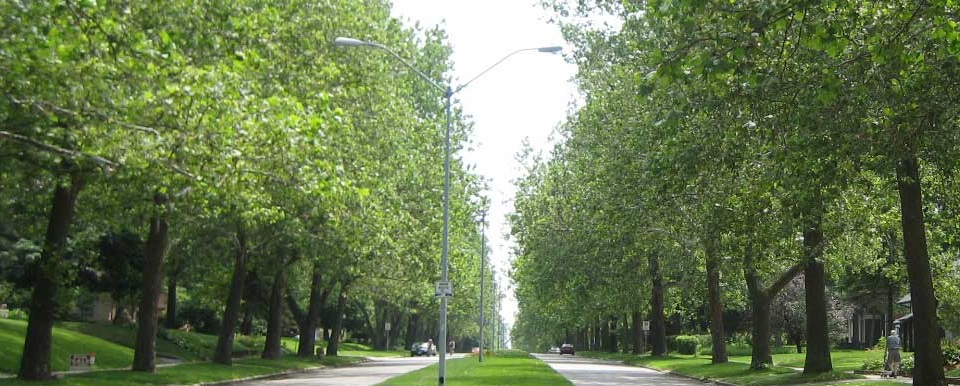
“Between the economic benefits of shading for cooling, and also wind protection in the winter to help with heating costs, there’s a lot of other benefits,” Murrow says. “We find that schools that have trees, children are more at ease and they test better.” He says students are encouraged to get out in the schoolyard and help with the process of planting the trees. “The foresters love coming out because that’s part of the program. We try and get a forester out there to help with the planting, do a planning demonstration and work with the kids. It’s a lot of fun,” Murrow says. “It also gives kids a chance to see what those of us at the DNR do in the forestry division, so they can ask us questions and talk to us about that.”
The program is being made possible through the DNR, the USDA Forest Service, and the National Association of State Foresters 2023 Inflation Reduction Act. The application and requirements are available online at www.iowadnr.gov/urbanforestry.
(Radio Iowa) – More farmers reported higher levels of stress last year compared to 2022 in the latest Iowa Farm and Rural Life Poll, which surveyed nearly 950 farmers statewide. Most of the respondents were men and 66 years old, on average. J-Arbuckle, an Iowa State University extension sociologist, led the poll. “There was a very big shift in the level of personal stress that was reported,” Arbuckle says. “I think that also kind of aligns with the decline in economic conditions leading up to the to the survey time.” Nearly half of the participants said they had medium-level stress, while 17-percent said they had high or very high stress levels. Arbuckle says the ratings can help indicate mental health needs in the state.
Arbuckle says, “We had probably some of the strongest ratings of past farm financial performance and really high ratings of job satisfaction.” He says job satisfaction is an important marker for mental health, but farmers also reported higher stress and were more pessimistic about their economic prospects for the next five years. “Sixty-two-percent indicated that they thought they would be worse,” he says, “and that’s the highest that we’ve ever recorded by a long shot.” 
Farmers were surveyed last February and March when crop prices and farm sector forecasts were declining after historic highs from 2021 to mid-2023. The I-S-U survey about farmers’ quality of life, finances and conservation was first conducted in 1982.
(Massena, Iowa) – The Cass County Conservation Board (CCCB) will hold a Cabin Fever Escape program near Massena on January 18th, from 1-until 4-p.m. The program/open house will take place at the Outdoor Educational Classroom outside of Massena. It is FREE, and all ages welcome.
You’re invited to cure your cabin fever by spending some time outside with family friendly FUN! Bring your mugs, sleds, dress for the weather, snowshoes, and cross country skis will be available! If you get cold, warm and tasty drinks and a movie will be playing inside our lodge! There will be no snow activities planned as well! 
The Outdoor Educational Classroom can be found by taking Highway 148 south of Massena. Turn Left on Tucson Road and follow it East for about two miles. Then, turn right into the parking lot. The CCCB hopes to see you there, on January 18th.

 Facebook
 Twitter
 YouTube
 RSS
RSS