

CLICK HERE for the latest market quotes from the Iowa Agribusiness Network!
CLICK HERE for the latest market quotes from the Brownfield Ag News Network!


CLICK HERE for the latest market quotes from the Iowa Agribusiness Network!
CLICK HERE for the latest market quotes from the Brownfield Ag News Network!
DES MOINES – Iowa Secretary of Agriculture Bill Northey today said Iowa is entering prime strawberry picking season and growers across the state are ready to welcome customers. The late spring has slightly delayed the berries this year, but with the recent warm weather growers around the state are reporting a good crop. Northey said “Fresh strawberries are delicious and when they are in season you get the best flavor, prices and nutritional value. Strawberries have one of the shortest harvest seasons, so don’t delay in visiting a farm or shopping for fresh berries at your local farmers market.”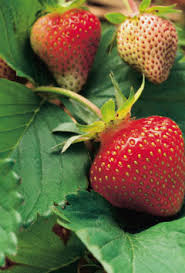
It is good to call or check the farm’s website before going to a “You Pick” farm to make sure strawberries are ready to be picked and that conditions are favorable. To get the “berry” best pick, look for berries with their green caps intact. Strawberries will not continue to ripen after they are picked and are best when eaten within a few days.
To store strawberries put unwashed berries loosely covered with plastic wrap in the coldest part of your refrigerator for no more than 3 days. Do not wash berries until you are ready to eat them. Remove the green cap after you have washed them.
Iowa-grown strawberries are a delicious part of a healthy diet at only 45 calories per serving. Strawberries are low in calories but full of vitamin C, fiber, and magnesium, all of which helps with better digestion, lower blood pressure, and stronger bones.
Check out the harvest of other Iowa products by going to the website: http://www.iowaagriculture.gov/AgDiversification/pdf/FINAL3281IowaFVmagnet.pdf
Are you a woman military veteran interested in a career in farming? Women, Food and Agriculture Network invites you to a fun and informative evening with other like-minded women on Tuesday, June 17th at Easter Seals Iowa Camp Sunnyside (401 NE 66th Ave, Des Moines), or Wednesday, June 18 at the Veterans Memorial Coliseum (50 2nd Avenue Bridge), in Cedar Rapids.
These free networking events begin at 6 p.m., and will feature local foods appetizers and drinks, and an introduction to WFAN’s Iowa Female Farmer Veteran Network project. The veterans are welcome to bring their families. You can learn more about the project at this link: http://wfan.org/opportunities-for-veteran-farmers/
The event will also offer a free screening after the social gathering of Terra Firma, a new one-hour documentary featuring three female veterans who are now farming. One of the featured veterans, Sonia Kendrick, is a Cedar Rapids resident and will be present at the June 18 event. WFAN is partnering with the Veterans Memorial Commission of Cedar Rapids and Easter Seals Iowa to offer these events. Funding is provided by a grant from the Newman Family Foundation.
In order to have the right amount of food available, we ask that you pre-register for the events. You can register for the Cedar Rapids event online at https://womenfoodagnet.wufoo.com/forms/cedar-rapids-women-veteran-networking-event/, and for the Des Moines event at https://womenfoodagnet.wufoo.com/forms/des-moines-women-veteran-networking-event/. You may also call WFAN at 515 460 2477 and leave your name. Please call the same number or email info@wfan.org with any questions.
Iowa is home to 17,835 women vets. The rate of unemployment for women vets is higher than that of men. WFAN was one of 7 organizations in the US to receive funding for veteran support from Newman’s Own Foundation in 2014 to provide career development and other support services to US veterans.
Women, Food and Agriculture Network is a non-profit, educational organization formed in 1997 to provide networking, information and leadership development opportunities to women involved in all aspects of sustainable agriculture. Learn more at www.wfan.org, or by calling 515-460-2477.
Iowa pheasant hunters may have fewer targets when the next season rolls around. Due to the cold, snowy winter and the wet spring, forecast models predict much of Iowa will see the pheasant population stagnate or fall. Todd Bogenschutz, a wildlife biologist for the Iowa Department of Natural Resources, says some parts of the state may see a boost in the bird numbers, while other areas will drop. “The patterns we’re seeing aren’t necessarily uniform across the state,” Bogenschutz says. “The western third of the state really was fairly mild this winter compared to the rest of the state and actually, they didn’t have as much rain in that part of the state during nesting either, compared to the rest of the state.”
The nesting forecast will be updated with the D-N-R’s August roadside survey, which he says is the best gauge of what pheasant hunters can expect to find in the fall. Despite the weather, Bogenschutz says he’s encouraged by passage of the new Farm Bill and actions earlier this week to boost preservation of pheasant habitat with landowners enrolling in the Conservation Reserve Program, or C-R-P. “Monday, the USDA began taking CRP sign-ups under the continuous program,” he says. “We have a new pheasant recovery practice under the continuing CRP. They refer to it as SAFE, State Acres For Wildlife Enhancement.”
With high commodity prices and the growing demand for ethanol, Bogenschutz says many farmers have been converting former grassland bird habitats to farm fields. The D-N-R says hunters shot roughly 158-thousand pheasants in Iowa last year. Back in 2011, about 109-thousand pheasants were harvested in Iowa, the lowest number since the state began keeping track in 1962.
(Radio Iowa)
DES MOINES, Iowa (AP) – Storms last week brought with them some peril in the form of wind and large hail but they also delivered enough rain to significantly relieve drought conditions in Iowa and Nebraska. The latest U.S. Drought Monitor report released Thursday shows Iowa’s remaining drought is mostly confined to the northwest and southeast corners of the state. About 40 percent of the state has some drought down from nearly 56 percent a week earlier.
In Nebraska, the drought area has been reduced to 63 percent of the state from nearly 70 percent the week before. Extreme drought was removed from central Nebraska. About 30 percent of the 50 U.S. states and Puerto Rico have moderate drought or worse, compared with 31 percent a week earlier.
Officials with the ISU Extension Service say the 7th Annual Western Iowa No-till (WIN) Demonstration Field Day, scheduled for June 17th at the Carstens 1880 Farmstead south of Shelby, will address a wide variety of topics for local producers interested in learning more about the practical application of no-till production practices and management of soil heath and fertility. Registration opens at 8-AM with coffee and rolls available. Local agribusinesses will be on hand to visit with producers in the morning and showcase their services/equipment.
The field day program begins at 9 AM with a weather and market outlook from Bryce Andersen with DTN. At 10 AM, rotating breakout sessions will cover nitrogen rate calculation and the evolution of cover crops in corn production. The breakout sessions will be followed by a lunchtime discussion on understanding soil biology and improving soil health. After lunch, keynote speaker Barry Kusel will share his experiences using cover crops successfully in his row crop farm in Carroll County.
Anyone with an interest in the practical application and impact of no-till production, whether looking for ideas to begin adopting no-till practices or a long-time no-till producer looking to improve production results, is encouraged to attend this field day. Nearly 200 ag producers and ag professionals attended the 2013 event, learning about effective soil stewardship strategies. In addition to the educational sessions at the 2014 WIN Field Day, there will be plenty of time for farmers to visit informational displays, vendor exhibits and network with other producers. 5 hours of CCA Credits have been approved, and will be available at no cost for Certified Crop Advisors needing additional continuing education units this year.
There is no charge to attend this event, but pre-registration is requested to ensure a lunch will be available. A free steak sandwich lunch with sides and dessert will be provided to all attendees, with steaks cooked by the Shelby County Cattlemen. Registration can be completed by e-mailing csgorham@iastate.edu or by calling the Harrison County Extension Office at 888-644-2105. More information is available at many local ISU Extension and NRCS offices, or can be found online at www.extension.iastate.edu/cass. Walk-In attendees are also welcome on the day of the event, but no lunch will be guaranteed.
The field day is brought to you by NRCS, ISU Extension and the Soil and Water Conservation Districts (SWCD) in Harrison, Pottawattamie, Cass and Shelby Counties, along with many local supporting agribusinesses. 2014 Business Sponsors include Farm Bureau in East & West Pottawattamie, Shelby, Cass & Harrison Counties, Brokaw Supply Company, Sorensen Equipment Co., HTS Ag, Iowa Soybean Association, Iowa Corn Growers Association, Shelby County State Bank, United Bank of Iowa and Bartlett Grain Co.
(Press Release)
Cass County: Corn $4.22, Beans $14.33
Adair County: Corn $4.19, Beans $14.36
Adams County: Corn $4.19, Beans $14.32
Audubon County: Corn $4.21, Beans $14.35
East Pottawattamie County: Corn $4.25, Beans $14.33
Guthrie County: Corn $4.24, Beans $1437
Montgomery County: Corn $4.24, Beans $14.35
Shelby County: Corn $4.25, Beans $14.33
Oats $3.20 (always the same in all counties)
DES MOINES, Iowa (AP) – The nation’s wheat crop is smaller than earlier was predicted due to drought. But corn and soybean crop expectations have changed little in the latest report from the U.S. Department of Agriculture.
The monthly update released Wednesday shows farmers producing 1.38 billion bushels of winter wheat, down 2 percent from a month ago and 10 percent from last year. Hard red winter wheat, the type used to make bread, is down 3 percent from last month’s estimate to 720 million bushels.
Farmers are expected to produce a record 13.9 billion bushels of corn and 3.6 billion bushels of soybeans, both unchanged. A cool wet start to planting season improved as May progressed and the USDA says corn crop conditions are better than any time since 2007 in the Corn Belt.
The Iowa Pork Industry Center and Iowa State University Extension and Outreach are teaming up to provide training for pork producers and others who need certification in the Pork Quality Assurance Plus version 2.0 (PQA Plus v2.0) and/or Transport Quality Assurance program. The certification sessions have been set for Thursday June 19th, 2014 at the Cass County Extension office in Atlantic Iowa.
Updated in June 2013, the revised in PQA Plus® v2.0 provides a framework for significant, relevant food safety standards and improved animal well-being. Pork producers pride themselves on the commitment to continuous improvement and the PQA Plus is regularly revised to increase its effectiveness, incorporate new research information, and ensure the program’s validity.
ISU Extension Swine Specialist Matt Swantek will be offering the TQA training from 12:30 – 3:00 p.m. and the PQA Plus® v2.0 training from 3:15 – 6:00 p.m. Training sessions are limited to 30 persons, but requires at least 5 participants are needed to hold the training sessions.
All training events are sponsored by the Iowa Pork Producers Association and are free for all Iowa pork Producers. Pre-registration is requested to lclemenson@iowapork.org or (800) 372-7675.
There is an on-line re-certification option for those who have current PQA Plus® certification. Contact Matt Swantek (mswantek@iastate.edu) or any other PQA Plus® v2.0 certified Adviser for additional information and setting up the ability to test on-line. New certification or producers with expired certification will require a face-to-face training.”
DES MOINES, Iowa (AP) – A nonprofit network of investors, companies and public interest groups says in a new report that manufacturers depending on U.S. corn and other commodities must send strong signals to farmers to help preserve water and soil. The Boston-based group called Ceres is working with several companies, including food giants General Mills and Unilever. Both of those have adopted sustainability programs suggested by Ceres that set specific goals for suppliers and farmers.
The report calls for the establishment of corporate policies setting specific goals for suppliers that reduce environmental impacts, procurement contracts requiring that crops be sustainably grown, and efforts to identify areas of high water stress, groundwater pollution and overuse of fertilizer.
Ceres also recommends companies substitute other grains for corn where environmental benefits are well-demonstrated.
(These quotes remain unchanged from Tuesday)
Cass County: Corn $4.27, Beans $14.37
Adair County: Corn $4.24, Beans $14.40
Adams County: Corn $4.24, Beans $14.36
Audubon County: Corn $4.26, Beans $14.39
East Pottawattamie County: Corn $4.30, Beans $14.37
Guthrie County: Corn $4.29, Beans $14.41
Montgomery County: Corn $4.29, Beans $14.39
Shelby County: Corn $4.30, Beans $14.37
Oats $3.24 (always the same in all counties)


 Facebook
 Twitter
 YouTube
 RSS
RSS