

CLICK HERE for the latest market quotes from the Iowa Agribusiness Network!
CLICK HERE for the latest market quotes from the Brownfield Ag News Network!


CLICK HERE for the latest market quotes from the Iowa Agribusiness Network!
CLICK HERE for the latest market quotes from the Brownfield Ag News Network!
Cass County: Corn $3.50, Beans $9.37
Adair County: Corn $3.47, Beans $9.40
Adams County: Corn $3.49 Beans $9.36
Audubon County: Corn $3.45 Beans $9.39
East Pottawattamie County: Corn $3.53, Beans $9.37
Guthrie County: Corn $3.52, Beans $9.41
Montgomery County: Corn $3.52, Beans $9.39
Shelby County: Corn $3.53, Beans $9.37
Oats $2.57 (always the same in all counties)
This year, 10 Iowa communities, including Atlantic, will participate in a public inventory of their trees through a U.S. Forest Service grant called Sustainable Urban Forestry Training and Assistance (SUFTA). The grant will fund training to municipal staff, non-profits and interested citizens, so communities can complete a public tree inventory, prepare for emerald ash borer and create a sustainable urban forestry program.
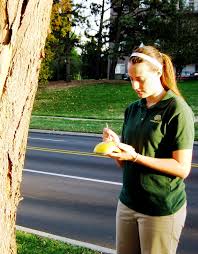
A volunteer participates in the Iowa Tree Inventory.
The eight-session training, administered by the DNR forestry bureau, will include tree identification, risk assessment, forest pest identification, technology training, tree planting, pruning/maintenance and inventory data collection.
Attendance at all eight training sessions is mandatory to take part in the community tree inventories. Interested individuals, civic groups and clubs are asked to contact the local coordinator at the respective phone number for further details. In Atlantic, the training sessions begin Feb. 24th. For more information or to participate, call John Lund at 712-243-4810.
For more information about the Sustainable Urban Forestry Training and Assistance (SUFTA) grant program, contact Laura Wagner, grant coordinator at 515-725-8456 or laura.wagner@dnr.iowa.gov.
Time is running out for landowners in Iowa’s 46 best pheasant counties to secure funding to restore pheasant habitat in Iowa’s core pheasant range. The Iowa Pheasant Recovery – State Acres for Wildlife Enhancement (SAFE) program is for Iowa landowners who want to restore top notch pheasant habitats to their property. It is a new USDA continuous CRP practice designed to restore native grasslands and wetlands where they will be the most beneficial for ring-necked pheasants.
Iowa received 50,000 acres split between the 46 primary pheasant counties (37,500) and the 31 secondary pheasant counties (12,500). The 31 secondary counties enrolled all 12,500 acres before the 2014 pheasant season opened. An estimated 20,000 acres remain in the 46 primary pheasant counties.
Todd Bogenschutz, upland wildlife biologist with the Iowa Department of Natural Resources, says “We are getting a lot of pressure from landowners in the secondary counties to release these acres so they can make offers to enroll. Landowners in primary pheasant counties who are interested in this program shouldn’t wait to contact us because acres may be shifted to the secondary counties.”
Primary pheasant counties include (locally): Adair, Adams, Audubon, Carroll and Cass. Pheasant and other grassland birds are particularly vulnerable to harsh winters and wet springs. Restoring top quality winter and nesting/brood-rearing habitat will help pheasant populations recover and could boost annual harvest by 100,000 roosters.
CRP rental rates are at an all-time high in Iowa. Landowners should contact the Iowa Department of Natural Resources Wildlife Bureau private lands staff to discuss eligibility and cost share assistance. A map of DNR staff contacts and a factsheet on the Iowa Pheasant Recovery program is available at www.iowadnr.gov/habitat
DES MOINES, Iowa (AP) – A group representing farmers is calling on the state to toughen oversight and penalties related to pesticide use. The Iowa Farmers Union said Tuesday that members have petitioned the state to change rules governing pesticide drifting through the air. They say chemicals typically used on conventional crops can drift and damage organic produce grown nearby.
Union President Jana Linderman says the group would like the state to require commercial pesticide users to notify some nearby farms 48 hours before spraying. Other changes they seek include increasing fines for operations that repeatedly break the pesticide rules.
A spokesman for the state Department of Agriculture said officials would meet with the group Thursday and will consider the request.
Cass County: Corn $3.46, Beans $9.40
Adair County: Corn $3.43, Beans $9.43
Adams County: Corn $3.43 Beans $9.39
Audubon County: Corn $3.45 Beans $9.42
East Pottawattamie County: Corn $3.49, Beans $9.40
Guthrie County: Corn $3.50, Beans $9.43
Montgomery County: Corn $3.48, Beans $9.42
Shelby County: Corn $3.49, Beans $9.40
Oats $2.56 (always the same in all counties)
One of two Cass County men suspected of illegally possessing more than 100 sets of deer remains has been cited in the matter. 23-year old Sean Chamberlin, of rural Atlantic, is charged with 111 counts of illegal possession of deer remains, plus one count of illegally transporting deer, illegally killing a raccoon, illegally killing a badger, unlicensed harvesting of fur and failure to report a harvested deer. He had earlier been ticketed for littering. State Conservation Officer Brian Smith told the Daily NonPareil Sean’s father, 47-year old John Chamberlin, Jr., also of rural Atlantic, will be cited later this week.
John Chamberlin Jr., will be cited on suspicion of 111 counts of illegal deer possession, according to Smith. The citations for illegal possession of wildlife remains are simple misdemeanors and can result in thousands of dollars in civil penalties.
Authorities began investigating the father and son after a Dec. 29th report of someone dumping litter on the side of a rural road northeast of Atlantic, near the home of John Chamberlin. Responding deputies found the hides of four deer, a raccoon and a badger carcass. According to court documents, a deputy spoke to the two men about the remains. Sean Chamberlin said he dumped the remains along the road. The deputy asked Sean Chamberlin how he obtained the deer. Chamberlin said the deer were found dead, were roadkill or were shot in hunts.
But the story didn’t make sense when investigators compared the Chamberlins’ licenses to the animals that had been harvested, according to court documents. The next day, law enforcement officers were allowed onto John Chamberlin’s property, where antlers from at least 111 deer and other animal remains were discovered. In addition to the fine of $195 per set of dead animal remains, liquidated damages for an individual animal could be as much as $2,500, plus 80 hours of community service, or $5,000 in lieu of those hours.
COUNCIL BLUFFS, Iowa (AP) — Agriculture officials say an increase in corn and soybean profit is bringing young Iowans and Nebraskans back to the farm. Charles Wiiest, market president of the Nebraska-based Arbor Bank, says young people are now more likely to start their own farm or join their family’s farming business. Wiiest credits this influx to improved profitability in the agriculture industry in recent years.
The Council Bluffs Daily Nonpareil reports corn currently can bring in up to $4 per bushel and soybeans $10 per bushel. Wiiest says these numbers show significant profit growth from when he graduated college in the late 1990s. Wiiest says expanding career opportunities in the agriculture industry has also attracted the younger generation. He says chemists and veterinarians are among new careers in high demand.
One of the stranger looking fish in Iowa waterways will once again be a target of anglers in March on the Missouri and Big Sioux Rivers in western Iowa. D-N-R fisheries biologist, Van Sterner, says it will be the first time you can legally go after paddlefish on those two rivers since 1986 when fishing was cut off out of concern for their survival. “The Missouri River has undergone a lot of changes over the last several decades with the channelization for commercial barge traffic, the construction of the reservoirs.
The river experienced some very dramatic habitat loses and changes in habitat diversity and that sort of thing,” Sterner says. “So, the thinking back then was the paddlefish population would have difficulty, was in jeopardy, because of these changes.” The fish has a flat front that looks kind of like a paddle. They are referred to by many as a spoonbill, it’s got a long nose or rostrum that measures out to 15 inches sometimes, it’s a scaleless it actually has not bones as well, it’s skeletal system is all cartilage. So it is a unique looking fish,” Sterner explains.
He says the fish now found in the Missouri River will range between 15 and 20 pounds at a length of 30 to 40 inches. There is a length limit on the fish. Fish between 35 and 45 inches have to be immediately released to protect their ability to reproduce. Sterner can’t say how the fish uses its unique nose. “Nobody knows for sure. There’s been some things speculated that it has something to do with finding prey species, speculation that it gives the younger fish some protection from predation by making them appear larger than they are, but nobody is certain,” Sterner says. He says there should be some good areas of habitat for the fish.
Sterner says the fish seek out deep and slow waters as they strain plankton from the water and often can be found in the calmer water behind the many wing dikes that line the Missouri River. It’s a unique fish and it’s not caught in the standard method of baiting a hook and tossing it in the water to wait for the fish to bite. “The method is actually snagging, where you pull a treble hook through the water hoping to actually snag the fish in the body, hoping to retrieve it that way,” Sterner says. He says those who find a keeper paddlefish will enjoy a good meal.
“They’re very good to eat, a good firm white flesh,” Sterner says. “When you clean this fish, there will be a little bit of red meat right below the skin, and you’ll want to trim that off and get down to the good white stuff.” A special license is required for the paddlefish on the Missouri and Big Sioux rivers, but they can be caught on the Mississippi and Des Moines rivers without a license. Sterner says they learned some things about the fish through a program that tags some of the western Iowa fish.
“We put that into the lower jaw…part of it is for a mark and recapture population estimate, so recovering those tags is important for us actually getting a population estimate, it also gives us interesting information on movement. We’ve had tagged fish recovered down in Memphis, and also up in South Dakota. It’s a highly mobile, migratory fish,” Sterner says. He asks anyone who catches a fish with a tag to report it to the D-N-R.
(Radio Iowa)
MANNING, Iowa (AP) — Veterinarians are working hard to monitor a virus that killed millions of baby pigs in the United States last year. The Sioux City Journal reports Iowa veterinarian Michelle Sprague is president of the American Association of Swine Veterinarians.
Sprague says keeping track of the porcine epidemic diarrhea virus means more paperwork for veterinarians and more testing. The number of cases of the virus is down this winter, but it is still early.
Sprague says the industry is better prepared to respond to the virus than it was when the disease first showed up.
Cass County: Corn $3.46, Beans $9.58
Adair County: Corn $3.43, Beans $9.61
Adams County: Corn $3.43 Beans $9.57
Audubon County: Corn $3.45 Beans $9.60
East Pottawattamie County: Corn $3.49, Beans $9.58
Guthrie County: Corn $3.48, Beans $9.62
Montgomery County: Corn $3.48, Beans $9.60
Shelby County: Corn $3.49, Beans $9.58
Oats $2.60 (always the same in all counties)


 Facebook
 Twitter
 YouTube
 RSS
RSS