

CLICK HERE for the latest market quotes from the Iowa Agribusiness Network!
CLICK HERE for the latest market quotes from the Brownfield Ag News Network!


CLICK HERE for the latest market quotes from the Iowa Agribusiness Network!
CLICK HERE for the latest market quotes from the Brownfield Ag News Network!
The U-S-D-A’s first crop update for the 2015 growing season says nearly 75-percent of Iowa’s cropland has adequate-to-surplus soil moisture. It also finds almost one-third of the state’s fields are short-to-very short of moisture for the upcoming growing season. Iowa State University agronomist Aaron Saeugling, who covers 14 southwest Iowa counties, says many Iowa farmers are starting their field work in preparation for planting.
“We’ve been busy applying fertilizer this spring,” Saeugling says. “A little bit of tillage, very little seeding has occurred at this point in the growing season. As moisture goes, I would say this is one of the drier springs that we have experienced here as of late, although the forecast is for precipitation all week, so hopefully we can get some measureable precipitation out of that.”
Joel DeJong, a field agronomist with the Iowa State University Extension based in Le Mars in northwest Iowa, says the dry conditions during March helped many growers to check off their pre-planting chores. DeJong says a little rain could help, but soil conditions are okay. He says he’s optimistic about the chances of growers getting the needed moisture to recharge the soil once they begin seeding.
Right after planting, he says farmers will need water to re-wet that top surface so the seeds will get started and get those root systems growing down to where that water is stored.
(Radio Iowa)
COUNCIL BLUFFS – A public meeting will be held regarding the River Valley OHV (Off Highway Vehicle) Park in Council Bluffs on April 15th, from 6-7 p.m., at the Western Historic Trail Center. The center is located at 3434 Richard Downing Ave. in Council Bluffs. The meeting is being held to discuss temporary closing of the park due to hazardous
trees, plans to remove the trees and the time frame for reopening the park.
Information will be presented on the proposed forestry plan, environmental review,
proposed logging, timber sale and removal of invasive tree and plant species at the
park.
Public comments and questions will be taken following the informational portion of
the meeting. Those unable to attend can submit comments to David Downing, DNR OHV program manager at David.Downing@dnr.iowa.gov.
DES MOINES, Iowa (AP) — Drought conditions are expanding across a large section of the U.S., from California to the Great Plains. The National Drought Mitigation Center at the University of Nebraska says the area covered by moderate drought or worse expanded by nearly five percentage points to 36.8 percent during March.
The drought monitor shows dry conditions broadened in the Midwest with 22 percent of the U.S. corn production area and 18 percent of the soybean area in some degree of drought. That’s up sharply from early March when just 6 percent of the corn growing area and 5 percent of the soybean region were in drought conditions.
Dryness worsened during March in Colorado, Kansas, Minnesota, Nebraska, North Dakota, South Dakota and Wisconsin. Two-thirds of California is in extreme to exceptional drought.
A central Iowa photographer is using her talents to document the important role that women play in agriculture. Marji Guyler-Alaniz launched the Farm-Her organization and website in 2013. The Grimes resident takes photos of women farmers and ranchers as they go about their daily chores. “In a way, it empowers them to say there’s all these other people out there like you and you are a super important part of agriculture…and of your farming operation or ranching operation and let’s shine a light on that,” Guylur-Alaniz says.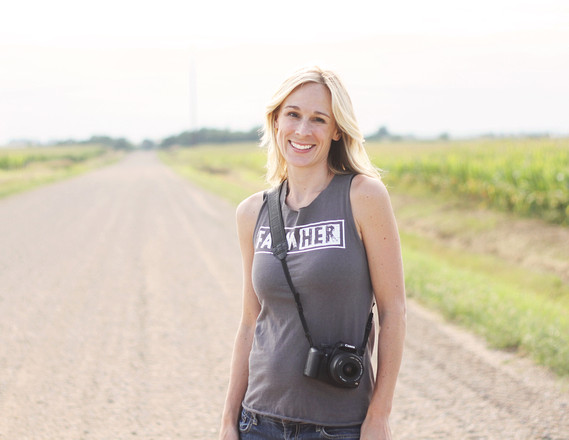
The latest Census data shows women are the principal operators of roughly 14-percent of the farms in the U.S. That’s up from 5-percent in the 1980s. Guyler-Alaniz hopes her photos will inspire more young women to become farmers and ranchers. “We think about ways to bring young people into agriculture, into actively farming and ranching, showing them that there are already women in these super strong roles is a really, really important thing,” Guylur-Alaniz says.
Back on March 18th, Guylur-Alaniz was in Washington, D.C. as a FarmHer photo exhibit was featured at a National Ag Day event.
(Radio Iowa)
SHELDON, Iowa (AP) — Ag Partners feed mill plant in northwest Iowa is planning an expansion with $7.2 million in improvements to increase the plant’s ability to make livestock feed. The Sioux City Journal reports that Ag Partners officials announced the expansion on Thursday. Officials say construction will begin immediately and is expected to be complete in 2016.
The first phase will include the addition of a 140-foot pellet mill tower, a 60-ton-per-hour pellet line and a 6-ton mixer. The additions will increase capacity to 600,000 tons of meal feed annually and 300,000 tons of pellets. Ag Partners officials say the expansion will meet an increased demand in the marketplace.
A future second phase will include a second 60-ton-per-hour pellet line to double pellet capacity to 600,000 tons.
The annual Prairie Chicken Festival is underway today (Saturday) in central Iowa at the Kellerton Grasslands Bird Conservation area near Des Moines. The festival begins before dawn and puts the mating behavior of the prairie chicken on display. Pat Schlarbaum, a wildlife diversity technician with the Iowa Department of Natural Resources, says patrons can expect quite a show.
“They’re stamping their feet, they’re spinning, they’re leaping, basically doing everything they can to get the female’s attention,” he says. The second part of the free festival moves to Blank Park Zoo in Des Moines, where the Yankton Nation of Greenwood, South Dakota — a Native American group — will present its version of the Prairie Chicken Dance. Schlarbaum says prairie chickens were once all but gone from Iowa’s prairies but they’ve been brought back.
“We have been actively relocating prairie chickens from Kansas to Iowa because they were extirpated or they were lost to the Iowa landscape back in the 1950s.” Schlarbaum says he and his team work to protect populations of animals, like prairie chickens, which he calls a “keystone species” of the grasslands.
(Radio Iowa)
AREA COUNTIES:CRAWFORD–MONONA-HARRISON-SHELBY-POTTAWATTAMIE-MILLS & SAC; 321 AM CDT SAT APR 4 2015 
DANGEROUS FIRE WEATHER CONDITIONS TODAY! TEMPERATURES WILL RISE INTO THE UPPER 60S TO LOWER 70S THIS AFTERNOON WHILE RELATIVE HUMIDITY VALUES FALL TO AROUND 15 TO 20 PERCENT. COMBINED WITH GUSTY SOUTHWEST WINDS AND DRY FUELS, EXTREME FIRE DANGER IS EXPECTED TODAY FROM LATE MORNING THROUGH THE AFTERNOON HOURS.
A RED FLAG WARNING WILL BE IN EFFECT FROM NOON TODAY UNTIL 8 PM, FOR WIND AND LOW RELATIVE HUMIDITY FOR EASTERN NEBRASKA AND PORTIONS OF SOUTHWEST IOWA.
* AFFECTED AREA…ALL OF EASTERN NEBRASKA AND MUCH OF SOUTHWEST IOWA.
* WINDS…SOUTHWEST 15 TO 20 MPH WITH GUSTS UP TO 30 MPH. * RELATIVE HUMIDITY…AS LOW AS 16 PERCENT.
* IMPACTS…CONDITIONS THIS AFTERNOON WILL BE FAVORABLE FOR EXTREME FIRE BEHAVIOR…WITH A HIGH POTENTIAL FOR OUT OF CONTROL BURNS.
PRECAUTIONARY/PREPAREDNESS ACTIONS… A RED FLAG WARNING MEANS THAT CRITICAL FIRE WEATHER CONDITIONS ARE EITHER OCCURRING NOW…OR WILL SHORTLY. A COMBINATION OF STRONG WINDS…LOW RELATIVE HUMIDITY…AND WARM TEMPERATURES CAN CONTRIBUTE TO EXTREME FIRE BEHAVIOR.
Officials with the Iowa West Foundation say local artist Charley Friedman used community input to help create signage for Council Bluffs’ biggest park. The “I” in the new Big Lake Park signage is officially dotted. The majority of the new signage was installed last month, but just recently a fish that serves as a nod to nature as well as the “I” in “Big” completed the look.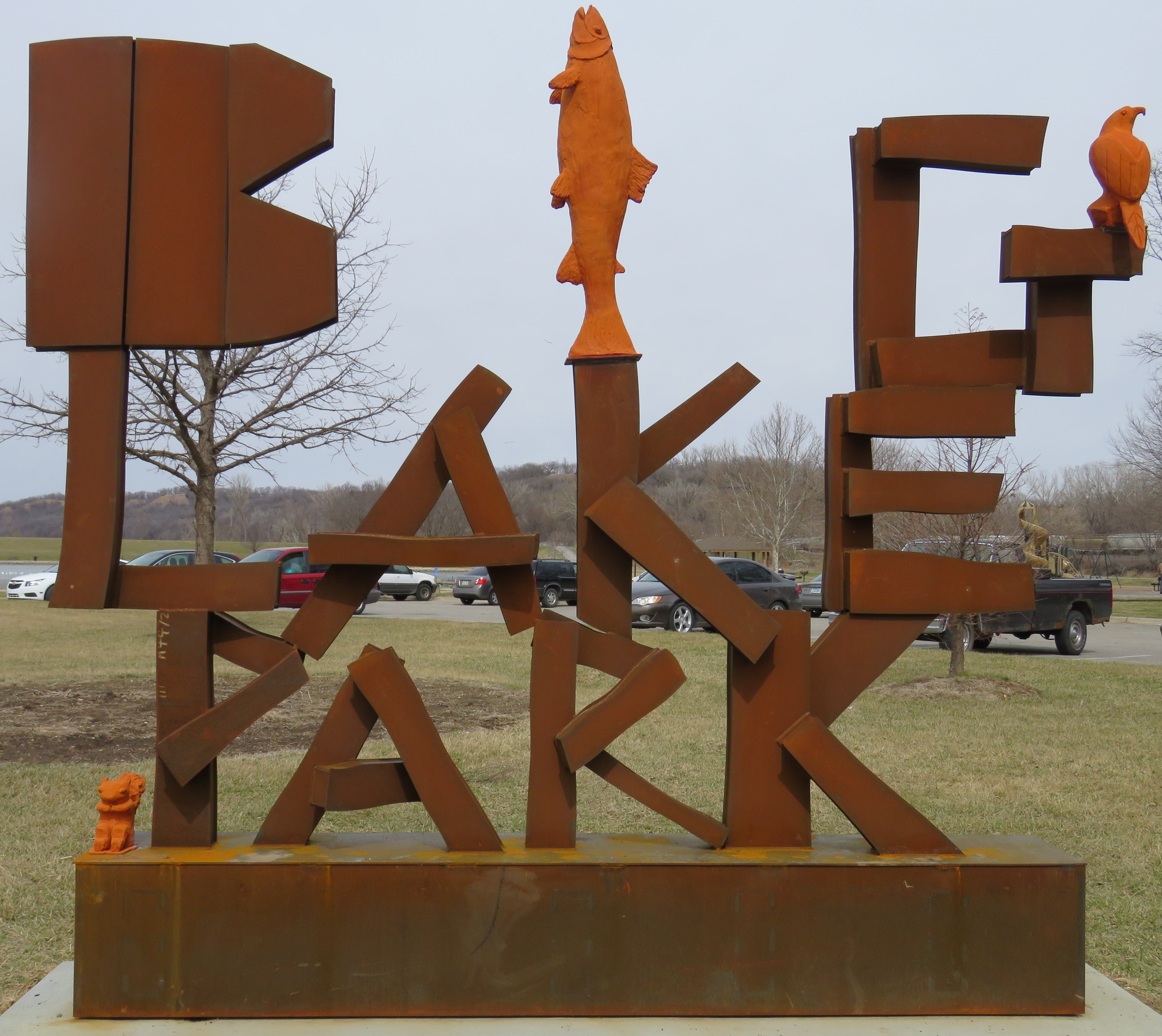
One of Council Bluffs’ largest parks, Big Lake Park stretches 200 acres around a bend in the Missouri and rests in the shadows of the Loess Hills. It contains four lakes, one large one to the north and three smaller ones to the south. The south side also includes two playgrounds, a large covered picnic shelter, a fishing dock, a baseball diamond, a soccer field and jogging/biking trails. The lakes are stocked with trout, bluegill, bass and catfish.
Big Lake Park is just one of the local parks receiving new signage as part of the Iowa West Foundation’s “Art in the Park” Initiative.” Funded in 2014, the $200,000 initiative allows for the replacement of weathered park identifications signs in six community parks. All signs were designed by local artists, as a way for them to showcase their work to the region.
Pete Tulipana, President and CEO of the Iowa West Foundation, said “The park signs were also designed using input from the community. They contributed concepts and ideas at public meetings that the artists took to heart and it reflects in the Big Lake signage.”
Charley Friedman, of Lincoln, Neb., is the artist who fabricated the sculpture with naturally rusting COR-TEN steel and cast aluminum animals. Friedman said “Art and nature are two sides of the same coin in that both inspire creativity and imagination. Signage can be droll, but the signs that I’ve seen by the other artists give a specificity and individuality to each park.” Friedman said also, “I wanted the Big Lake sign to have a Jellystone Park/Yogi Bear kind of esthetic.”
Of the other five parks, Roberts Park (1000 N. 25th St.) and Kirn Park(100 ½ 5th Ave) signs were completed in July and August, respectively. Larry Foster, Director of Parks and Recreation for the City of Council Bluffs, said he expects Cochran Park (100 S. 21st St.) and Westwood Park (1200 S 35th St.) signs to be complete in April.
The last park sign to be completed will be Sternhill Park (1031 N. 8th St.). “Art in the Park” is coordinated by the Council Bluffs Parks, Recreation and Public Property Department, with assistance from the City Public Art Commission, and overseen by art curator Joel Damon.
In an update to our story this past Wednesday, officials with the Iowa Dept. of Natural Resources say the location for the April 9th Natural Resource Commission meeting has been changed to 8:30-a.m. in the Harlan Fire Department meeting room at 906 Cyclone Ave., in Harlan.The NRC was set to have met at the Nishna Bend Recreation Area. The presentation and tour departure location remains the same.
On April 8, local DNR fisheries and state parks staff will give commissioners a presentation at the Nishna Bend Rec Area, 516 Maple Road, Harlan, before departing for a field tour of Prairie Rose State Park and the lake restoration project. The field tour and presentation will take place between 11:30 a.m. and 4 p.m. The meeting, presentation and tour is open to the public.
For more information, click on this link: http://www.iowadnr.gov/InsideDNR/BoardsCommissions/NaturalResourceCommission.aspx
Iowa Agriculture Secretary, Bill Northey, says there are indications demand for soybeans in China may not be increasing as much as previously thought. Northey just returned from a trade mission to China with the Iowa Soybean Association. “Historically we’ve always heard how much the feed business is going to grow — and it has over the last 15-years between 10 and 15-percent every year — double digit growth,” Northey says. “This time we heard a little more reticence. Folks saying that they think that there is an opportunity for the feed business to grow, but that it won’t grow as fast as it has in the past.”
Northey says China is a huge market for Iowa soybeans which are used for feed or oil for human consumption. “That still will probably be there, there’s not reason for that to back down. But, I think it’s unlikely that we’ll see as big a growth as what we have in the past,” Northey explains, “and that was part of what led to some pretty strong years recently in prices. Not only short supply, but big demand from China. We may not see that kind of increasing demand that we’ve seen in the last few years.” He says some of the drop in demand for soybeans to feed hogs could be offset by use in aquaculture.
“I think we’ll see less growth in the pork business, and some would say maybe even a slight shrinkage in the next few months or year or so. But, continued growth in the aquaculture side where there’s demand not only domestically but internationally for more fish products and farm-raised fish,” Northey says. Northey says the trade mission provided valuable information while also bolstering Iowa’s relationship with a key trading partner.
“It’s important to let them know about U-S dependability and supply. That we are going to have production here that they can depend on. We’ve got ports that work — South America has had some issues — although we had issues in the west, we didn’t have issues with our Gulfport shipments from the U-S to China. It’s important to keep those relationships good as well as learn what the future opportunities are.” Northey says they traveled mostly in the southern part of China, and visited two of the country’s largest feed manufacturers.
(Radio Iowa)


 Facebook
 Twitter
 YouTube
 RSS
RSS