

CLICK HERE for the latest market quotes from the Iowa Agribusiness Network!
CLICK HERE for the latest market quotes from the Brownfield Ag News Network!


CLICK HERE for the latest market quotes from the Iowa Agribusiness Network!
CLICK HERE for the latest market quotes from the Brownfield Ag News Network!
(Radio Iowa) – A bill that would legalize the sale of raw milk in grocery stores and at farmers markets in Iowa has cleared a House subcommittee. Representative Representative Bobby Kaufmann of Wilton led passage of the 2023 Iowa law that has allowed unpasteurized raw milk to be sold on dairy farms where it’s produced and he’s sponsoring the bill to expand its sale to other sites.
“I believe that people should have the opportunity to consume this should they choose,” Kaufmann says. “I don’t believe I need the government…telling me what is and is not safe. We are perfectly capable of making that decision on our own.” Farmers selling raw milk directly to consumer say they’re concerned about expanded retail sales. Lakaya Tenley and her husband of Mechanicsville have 10 Jersey cows and she says they couldn’t shift to selling their raw milk elsewhere. She asked legislators to instead address state regulations that are going to limit their on-the-farm expansion plans.
“We are opening a retail farm store on our location in Mechanicsville this summer and I feel like there’s some friction to sell our USDA inspected meat in the same building as raw milk,” Tenley said. Abby Costello raises dairy cows and sells raw milk, butter and cheese from a small store in Linn County called A-B-C Acres. “I’m 100% for raw milk, but I’m undecided about the changes that are being proposed,” she said. “When you throw in a grocery store in the middle, growth of bacteria and different things could expand and potentially make a consumer sick and then who’s responsible? The farmer or the middle man?”
Costello supports the move to allow raw milk sales at farmers markets since it would be a transaction between the farmer and the consumer. Robert Horst, a farmer from Bristow, is president of the Iowa State Dairy Association. He says pasteurized milk is heavily regulated and one of the safest products sold in a grocery store and there should be safety standards for raw milk, too, to guard against food-borne illnesses. “We cannot afford any black eye for…the industry where the margins are so thin to begin with,” Horst says, ” and it is a very hard industry to survive in as it is.”
Dr. Kenneth May, president of Iowa Veterinary Medical Association, says the organization has safety concerns about expanding the sale of raw milk to farmers markets and grocery stores — especially now that bird flu has been detected in Iowa dairy herds. “That virus is super concentrated in the milk in cattle,” Dr. May said. “What is the possibility of that jumping to our species? And raw milk is the avenue that that virus couldn’t ask for anything better.”
Others who testified at Tuesday’s subcommittee hearing said Iowans should be able to decide for themselves whether to buy raw milk, while a doctor who’s also a legislator said there are known risks from consuming raw milk. According to the Association of Food and Drug Officials, there were nearly 450 confirmed cases of illnesses in Canada and the United States that were linked to raw milk between 2007 and 2020. Twenty-eight percent of the patients had to be hospitalized and five died.
(Atlantic, Iowa) – The Cass County Grow Another Row Committee is hosting a free event at Mollett Park (1020 E. 3rd Street Place, in Atlantic) on Tuesday, April 29th at 5:30 pm. “Spring into Growing” is a chance for local residents to learn about spring gardening in small spaces. Participants can plant greens and herbs in pots to keep on their porches or patios. This free educational gardening event will help participants learn how to plant, care for, and harvest early-season plants to enjoy this spring.
Participants are welcome to bring their own pots; otherwise, pots can be provided. The Grow Another Row Committee will provide seeds and soil. Extra pots will be available if needed, and attendees can also plant an extra pot to donate to the local food pantry. We’ll be planting lettuce, spinach, and herbs including basil, oregano, cilantro, and dill. Learn about seeds and planting tips for pots, raised beds, and other small food gardening spaces. Bring your own gloves and diggers if you have them, or we will have extras.
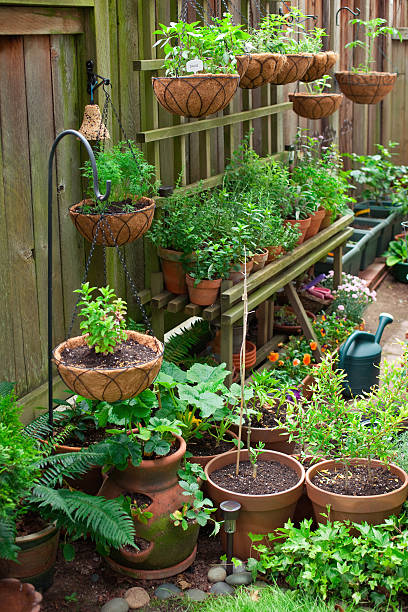
Container gardening is a way for people to enjoy the benefits of gardening. Shown here is an example of an herb and vegetable garden.
To get to Mollett Park, follow Mulberry Street north until it curves east (3rd St. Place), and proceed to the end of the cul-de-sac. All ages are welcome. There is no cost to attend due to local sponsorships. A “Seed” mix (trail mix) snack will be provided, along with a water cooler.
If you are interested in attending, registration is strongly encouraged by Monday, April 28. This will ensure that we have enough supplies. Please register by contacting Kate Olson at the Cass County Extension Office by email at keolson@iastate.edu or by phone at 712-243-1132.
Cass County: Corn $4.53 Beans $9.88
Adair County: Corn $4.50 Beans $9.91
Adams County: Corn $4.50 Beans $9.87
Audubon County: Corn $4.52 Beans $9.90
East Pottawattamie County: Corn $4.56 Beans $9.88
Guthrie County: Corn $4.55 Beans $9.92
Montgomery County: Corn $4.55 Beans $9.90
Shelby County: Corn $4.56 Beans $9.88
Oats: $3.06 (same in all counties)
FREMONT COUNTY, Iowa (IOWA CAPITAL DISPATCH) – Iowa farmers made headway planting corn, soybeans and oats early last week, but were slowed by storms that caused destruction in southwest Iowa, according to the Iowa crop progress and condition report. The report, covering April 14 through April 20, shows Iowa has 68% of oats planted, 18% of corn and 11% of soybeans. Planting rates for all three of these crops are ahead of the five-year average.
Topsoil and subsoil moisture conditions improved slightly from the week prior, though both have more than 60% rated as adequate moisture. Soil moisture conditions are slightly better than last year at this time. Soil temperatures measured at a depth of four inches show the ground has warmed up, with most counties measuring in the upper 40s to low 50s. Other field activities for the period included tiling, building waterways and spraying.
Average precipitation for April 14-20 was 0.35 inches across the state, though several areas measured more than an inch and up to nearly 2.5 inches following thunderstorms April 17. Some counties observed hail as large as 4 inches during the storms and two tornadoes touched down, one in Fremont County near Tabor, and the other moved across Fremont and Page counties. 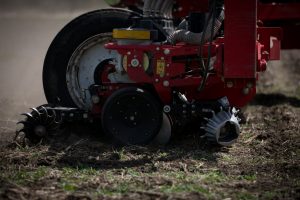
According to State Climatologist Justin Glisan, hail and wind damage was reported in Sioux City, Storm Lake and Waverly, in addition to the counties that saw tornadoes. Iowa Secretary of Agriculture Mike Naig visited some of areas hit by the storms. “I visited southwest Iowa over the weekend, where I saw firsthand some of the damage caused by the tornadoes and large hail,” Naig said in a statement. “My heart goes out to all the Iowans who were impacted by these storms.”
Precipitation predictions for the coming week suggest Iowa will have above average rainfall across most of the state, which Naig said might slow spring planting progress as it did the week prior. “While more delays may occur, the rain will help replenish soil moisture, which would be a welcome development in many areas,” Naig said.
(Atlantic, Iowa) – The Cass County Conservation Department says one of the best sites to view woodland wildflowers is right here, in Cass County, just outside of Atlantic, and the Cass County Conservation Board is holding a Wildflower Walk this Saturday, April 26th, so you can check them out!
The program will be held at the Pellett Memorial Woods, beginning at 9-a.m. on the 26th. Those interested in partaking in the walk will meet at Pellett Memorial Woods at 63066 Troublesome Creek Road, or about one-half mile north and three-quarters of a mile east, of KJAN. 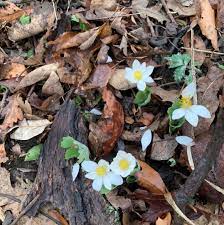
You’re invited to walk through the early spring wildflowers with Cass County Naturalist Lora Kanning. Along the way you’ll learn the names, uses and history of the Wildflowers on display in their natural setting.
(Iowa DNR News) – Early spring paddling can provide solitude, exercise and an opportunity to see amazing wildlife. Officials with the Iowa Department of Natural Resources say extra precautions are needed to stay safe with unpredictable spring weather and fluctuating temperatures and river levels.
After heavy rains, water levels can rise quickly and produce strong and fast current. Stay away from strainers and sweepers—wood or branch piles—deadly hazards that can pull a paddler under or pin them underwater. These are usually found on outside river bends where currents are strongest. Review these simple safety tips before you head out on the water.
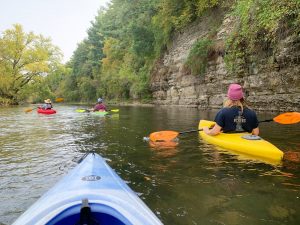
Travel Iowa photo
Get tips for planning a fun and safe paddling trip on the DNR webpage at www.iowadnr.gov/planyourtrip.
WEST DES MOINES, Iowa—April 18, 2025— The Iowa Farm Bureau Federation (IFBF) has awarded 106 scholarships to Iowa high school seniors and college students who are continuing their education in agriculture-related fields. This includes 27 first-time recipients and 76 students who had their IFBF scholarships renewed for 2025.
Scholarships are renewable for up to four years, or $10,000, for students pursuing a two- or four-year degree at an accredited higher education institution, including community colleges and technical schools. Eligibility is based on Farm Bureau membership, academic achievement, financial need, community and extracurricular involvement, letters of recommendation and demonstrated commitment to rural Iowa.
*********
(Area) First-time scholarship winners (listed alphabetically by hometown), parent names and future or current college are listed below.
Griswold: BrookLynne Peterson, Lea Anne Peterson, University of Iowa
Malvern: Ailey Marburger, Philip & Jenny Marburger, Nebraska College of Technical Agriculture
Missouri Valley: Mason Herman, Brad & Carey Herman, Iowa State University
Panora: Arilyan Steenblock, Ryan & Arianne Steenblock, Creighton University
Red Oak: Kennedy DeVries, David & Tamara DeVries, Iowa State University.
FORT MADISON, Iowa (KCRG) – It was standing room only at Fort Madison’s City Hall with Iowans looking to get answers from Iowa Senator Chuck Grassley on Tuesday. At times, it got heated with people shouting over one another. KCRG-TV reports one focus was the impact of tariffs and President Trump’s trade war with China that’s left farmers caught in the middle.
Several accused Congress of letting President Trump’s power go unchecked – pointing to the wrongful deportation of a man to a brutal prison in El Salvador and the White House now ignoring an order to bring him back. Several others called on Senator Grassley to “stand up for average Americans,” with a woman from Mt. Pleasant saying (in essence) the rich are getting what they need but the average American is struggling, and no one is paying attention to them.
Grassley defended Republican platforms as helping the economy and taxpayers – pointing to Iowa as an example. KCRG reports he said “It’s very clear that the policies of the last 15 years of Republican governors is much better for the taxpayer, getting taxes lowered, having balanced budgets, not having across-the-board tax cuts like we did when we had 12 years of democratic governors.”
Some expressed their doubts about whether things would change, and less confidence in Senator Grassley’s ability to affect change.
(Iowa News Service) – The pollen count in Iowa is approaching high levels over the next few weeks. Unusually warm spring weather means allergy triggers like pollen and grasses are in full bloom. Allergens trigger chemicals in your brain called histamines. People who suffer from seasonal allergies typically take antihistamines to control the runny nose, itching and watery eyes that the histamines create.
With all its trees, grasses and farm fields, Iowa is a hotbed of allergens. Dr. Gregory Carnevale, chief medical officer for UnitedHealthcare, said at least 100 million Americans suffer from seasonal allergies, many of whom are children and have not built up immunity to these allergens. “Three to 6 years old, more seasonal allergies, again, that repeated exposure that’s needed over time,” Carnevale explained. “Then finally, if you’re predisposed to developing pulmonary symptoms associated with allergies, it would be asthma.”
He pointed out UnitedHealthcare has an online tip sheet for how to handle seasonal allergies, which affect nearly a quarter of adults and one in five children in the United States. Allergy symptoms can usually be controlled with over-the-counter medications like antihistamines but Carnevale noted, especially in children, allergy-induced asthma can turn into a far more life-altering condition.

Tree pollen is among the biggest triggers for Iowans who suffer from seasonal allergies.
“A lot of these children and teenagers, they’re more active in sports, and if you see them struggling, you might have cause for concern,” Carnevale advised. “They’ll be oftentimes coughing, short of breath. They might even have an audible wheeze. So, any of those symptoms certainly warrant evaluation by a health care professional.”
He also recommended limiting time outdoors to avoid seasonal allergy triggers and paying attention to the times of day when pollen counts are the highest.
(Atlantic, Iowa) – Over 30 food and craft vendors are registered for Produce in the Park’s EGG-cellent Spring Celebration Market this Saturday, April 19, from noon to 3:00 PM at the Nishna Valley Family YMCA (1100 Maple St. Atlantic, IA 50022). The market is scheduled the day before Easter so shoppers can buy fresh baked goods and desserts and other local food and treats to enjoy at Easter celebrations. This year’s Spring Celebration Market is all about eggs, to highlight the farm-fresh eggs sold by multiple market vendors.
Spring Celebration Market attendees will get to see a live Easter bunny, enjoy a free bounce house and playland thanks to the YMCA, and hear tunes from the Squeezy Pease Accordion Duo. Additionally, Pim’s Thai Food Truck and Lucky Wife Wine Slushies will be parked outside the YMCA during the market.
Vendors at the spring farmers market will offer local vegetables including fresh greens and carrots, as well as local beef, pork, lamb, chicken, honey, and farm-fresh eggs. Shoppers will also find lots of baked goods and desserts including gourmet cupcakes, cookies, kringle, pies, soft pretzels, and other sweet breads. Craft vendors will be selling candles, wax melts, soaps
and other bath and body products, and more. Lastly, plant vendors will be selling both potted plants and plant starts.
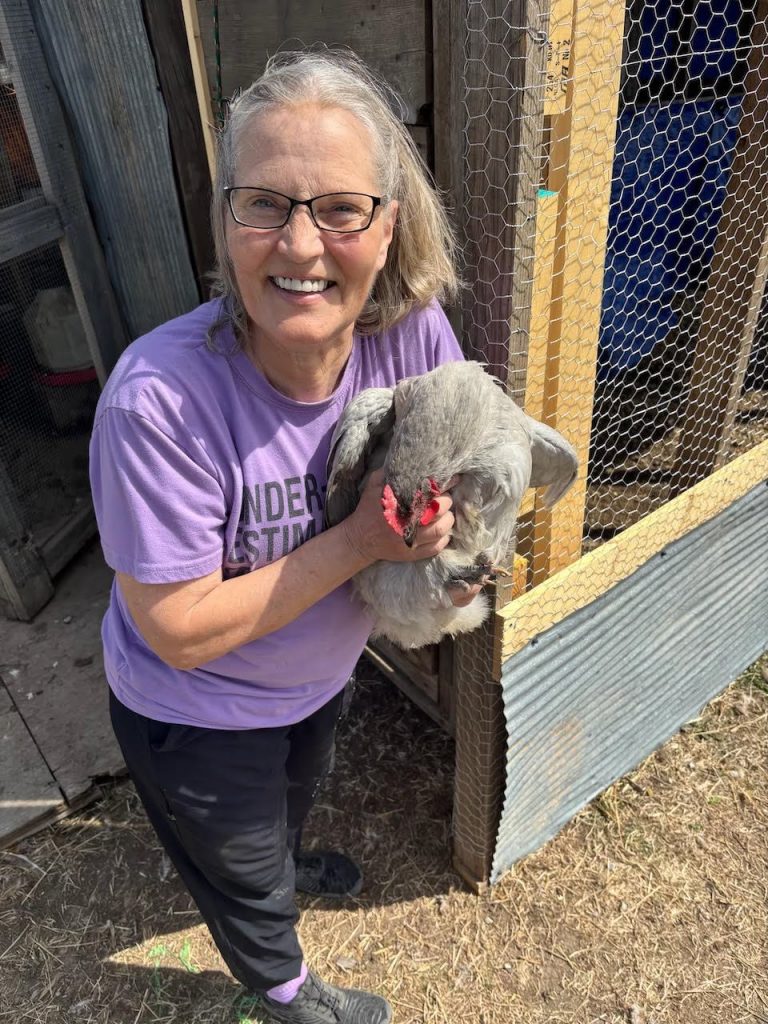
Jan Renander of Renander Farms will be at Spring Celebration Market with farm-fresh eggs and a variety of baked goods including soft pretzels
EGG-cellent Spring Celebration Market Vendor Lineup:
● Food Trucks (outside YMCA): Pim’s Thai Food Truck, Lucky Wife Wine Slushies
● A Witch Crafts- artwork, crafts
● Barn N Back – reclaimed barnwood shelves
● Bridgewater Farm – EGGS, spinach, spring greens, bok chop, carrots, beets
● Brun Ko Farm- EGGS, butternut squash, sweet potatoes, onions, garlic, spinach,
spring mix
● Creekside Crystal & Crafts – Crystals, crystal jewelry, custom pens, and wristlets
● Denton Farms Soapery, – handmade soap, lotion, sugar scrubs, body butter, lip
butter, wax melts
● Dragonfly Creations – candles, wax melts, soaps, crafts, artwork
● Fancy Faces Facepainting – Easter and egg-themed face painting
● Frosting, Inc.- gourmet cupcakes, cookies, and a few pies
● Hall House Freeze Dried- freeze dried candy
● Heavens Hands Crochet – crocheted toys, home decor, household items, and
clothing
● Hoopy Hallow Ranch – lamb and beef
● Imagine at Zellmer Century Farm – houseplants, fairy gardens, gifts, and garden
decor
● It Makes Total Scents – artwork, crafts, holiday decorations, car freshies
● Juj’n Juj’n and Mike Souder Original Art – art and leatherwork
● Mystic Dawn Creations- greeting cards and 3D printed items
● Noble Provisions – all the beef
● Oak Hill Honey – honey
● Paige’s Pieces – keychains, earrings, car hangers, signs, and more
● Pat’s Bats Birds and Squirrels – bird houses and feeders, squirrel feeders, bat
houses
● Renander Farms – EGGS, chicken calendars, baked goods including Swedish Rye
Bread, cinnamon rolls, soft pretzels, sweet breads, cookies, and peach cobbler
● Resin for Reason – resin art, keychains, magnets, jewelry, trays
● Robin’s Unique Boutique – up-cycled denim jackets, tops, and more
● Rolling Acres Greenhouse – cool-weather garden plants including lettuce, broccoli,
cauliflower, cabbage; perennials like grasses and clematis, and sage; plants for
hanging baskets, and more
● Soyer Designs – embroidered apparel, cups, hair accessories, etc.
● Studio Samantha – prints, art, laptop/iPad cases, baby/toddler clothing, greeting
cards, drinking glasses, and sticker sheets
● Sweet Vale Creations – soy candles, wax melts, car diffusers, and more
● Ter-Bear Honey – honey
● The Bee & The Butterfly – candles and bath and body products
● The Kringleman Pastries – Danish Kringle, pastries, eclairs, krispies, letters, cream
horns
● Your Forte – specialty candles
Additional Activities
There is no cost to enter the farmers market, and local organizations–including Cass County Tourism and Healthy Cass County–will be at the market sharing information on various community happenings and resources. As the theme of the market is eggs, visitors will find a 4-H poultry exhibitor sharing information and offering a free egg art craft, and Cass Health Dietitian Sarah Andersen sharing information on the benefits and nutrients of eggs. Cass County Extension will be sharing information on raising chickens, and artist Sarah Selders will be offering Easter-themed face painting featuring
Easter eggs.
All Produce in the Park farmers markets accept SNAP EBT, otherwise known as food stamps, for all qualifying food items. Spring Celebration Market Market 2025 is sponsored by Atlantic Area Chamber of Commerce, Cass County Tourism, Cass Health, City of Atlantic, First Whitney Bank & Trust and Nishna Valley Family YMCA.
For the latest information on all Produce in the Park markets, follow Produce in the Park on Facebook (www.facebook.com/ProduceInThePark) or Instagram (https://www.instagram.com/produceintheparkatlanticia/)


 Facebook
 Twitter
 YouTube
 RSS
RSS