

CLICK HERE for the latest market quotes from the Iowa Agribusiness Network!
CLICK HERE for the latest market quotes from the Brownfield Ag News Network!


CLICK HERE for the latest market quotes from the Iowa Agribusiness Network!
CLICK HERE for the latest market quotes from the Brownfield Ag News Network!
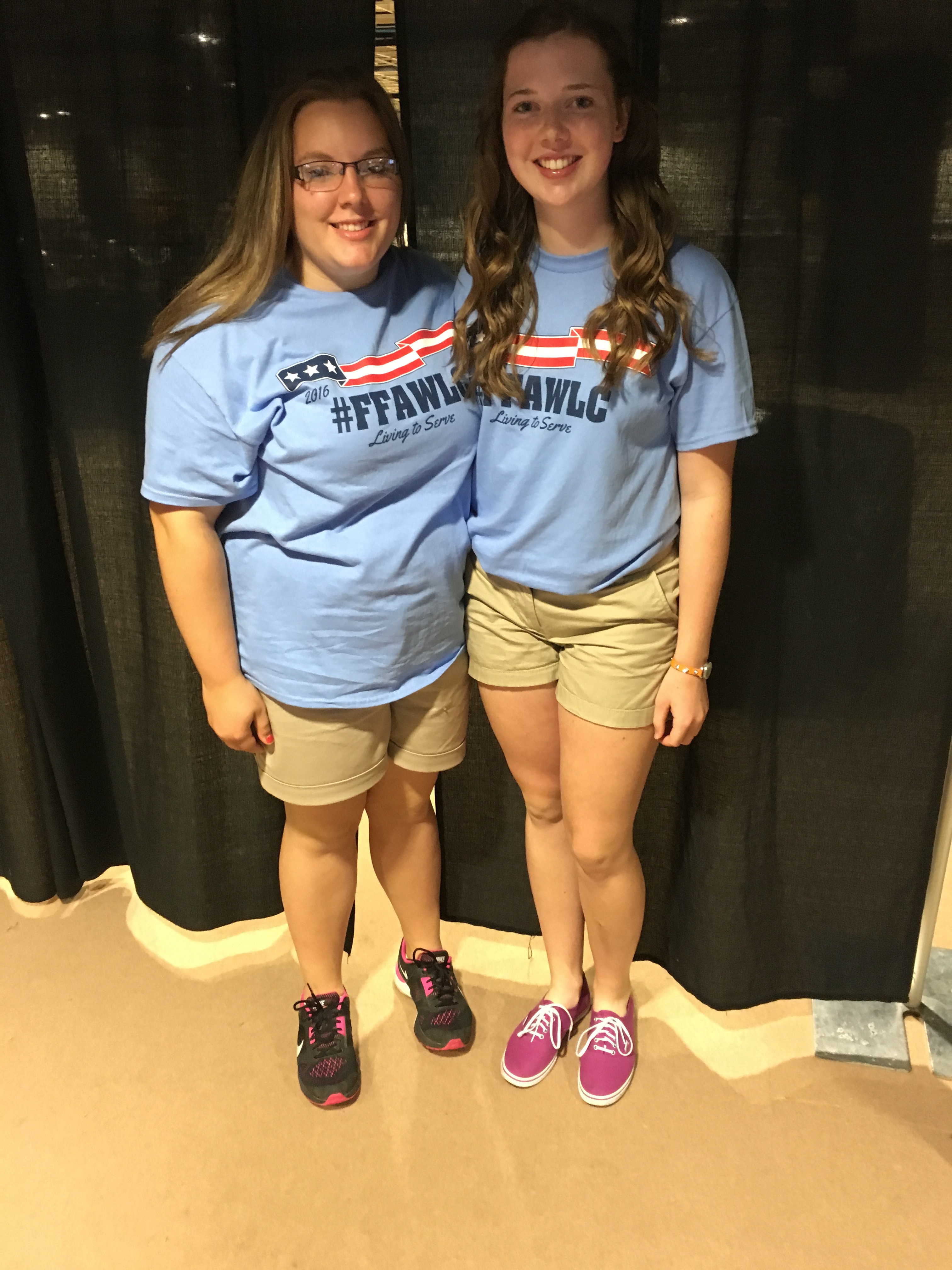
Alexis Boes & Emily Sauegling
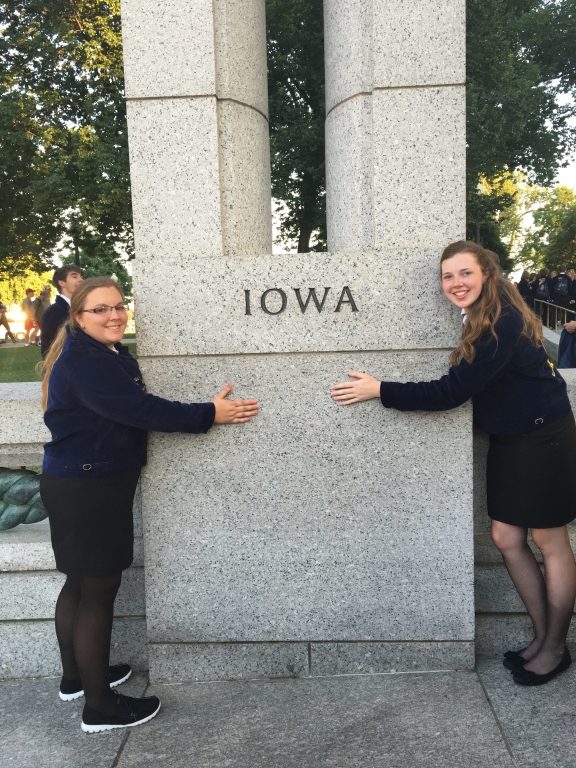
Alexis & Emily
Alexis Boes and Emily Saeugling had the most amazing opportunity attending Washington Leadership Conference June 20th-26th, made possible by many generous donations from our community. Their experience in Washington D.C. was filled with memories that will last a lifetime and knowledge that will aide them in and out of the FFA organization. Alexis and Emily were able to meet new people and explore new places while gaining new information and leadership skills from the WLC facilitators and sessions at the conference. Washington Leadership Conference is a one of kind opportunity and while they can give you a glimpse into the week they had in Washington D.C., to get the full story, one must experience it for themselves.
At the beginning of their week, Alexis and Emily each loaded onto one of the two buses filled with other Iowa FFA members who would also be attending the conference. Roughly 24 hours later they stepped off into Washington D.C. with a huge group of new friends and an appreciation for real beds, clean clothes, and a shower. Their first evening in DC would be spent waiting for hotel rooms, meeting their roommates, experiencing their first meal with complete strangers from around the country, and finally a quick introduction session. They were then split into community groups. Alexis ended up in the “Patriots” with facilitator, Sarah Rutledge, while Emily was a part of the “Campaigners” with facilitator Jake White. After that it was finally lights out.
Each day the members were presented with a theme: Tuesday was Citizenship, Wednesday was Purpose, Thursday was Diversity, Friday was Advocacy, and Saturday was Live A Legacy. These themes were presented in their large group sessions and were more deeply discussed in community groups. Alexis said, “I could see these themes as we traveled throughout D.C. on tours. I loved that they could incorporate our theme into our entire day.” This allowed both Emily and Alexis to actually put the material covered in the sessions to work in a more real circumstance. On the first day each attendee was given a book that they would use throughout the week in order to learn and figure out what each theme meant to them. Alexis and Emily still have their books and use it to remind themselves of the people they want to be and the impact they want to make.
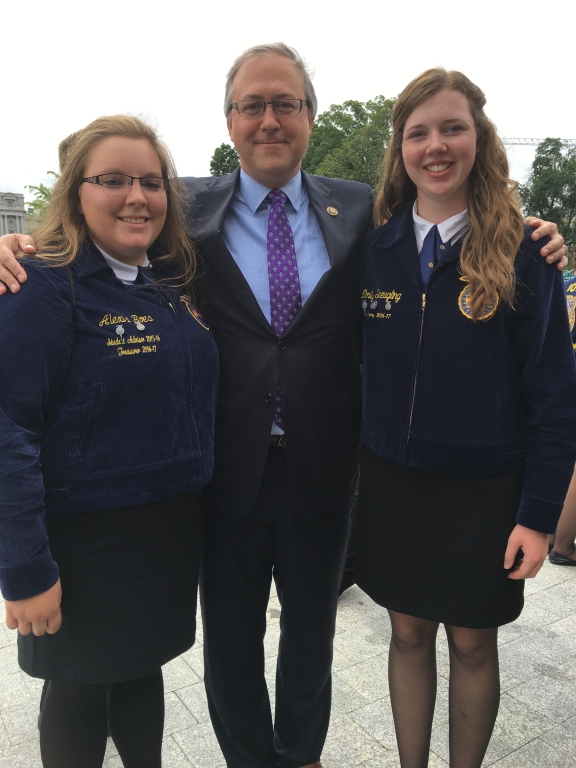
Alexis & Emily with Congressman David Young
Although both girls were at the exact same conference, Alexis and Emily both had entirely different perspectives on each session, tour, and moment at WLC. One of Emily’s favorite places they visited in DC was the Newseum. She loved looking at the headlines that she’d learned about in history class and seeing how those historical events and the way they were presented to the public could impact our nation. Emily stated, “Every place you visit in DC seems to have historical significance whether it be standing where MLK gave his “I Have a Dream” speech or walking around the capitol where so many impactful decisions are made every single day.” Alexis said, “We traveled by Metro to Arlington National Cemetery. There we were given the opportunity to see the changing of guards at the Tomb of the Unknown Soldier. Wednesday night we took charter buses around DC to monuments. My favorite monument was our last stop, the Marine Corps War Memorial, where we held reflections for Wednesday. It was quiet and dark but the light underneath the memorial was on and it showed those six men propping up the American Flag. It’s a feeling I can’t describe, but one I will never forget.”
On Thursday they traveled to the Capitol building where they took a group photo with everyone from Iowa. They also had the opportunity to meet Representative David Young and Senator Joni Ernst from Iowa. They spent two hours touring buildings near the Capitol, and learning about our nation’s government. That afternoon was spent in sessions talking about how diversity affects us every day and how we can relate to each other even if everyone is different.
Friday afternoon they spent planning and perfecting what is called a Living to Serve Plan. Each conference attendee created one and each “LTS plan” was different. Alexis said “I am still developing mine but I have seen members of my community group fulfill theirs and it is awesome to see the impact they made.” Friday night they experienced what is called a poverty dinner, and both encourage all who haven’t experienced this to try one sometime.
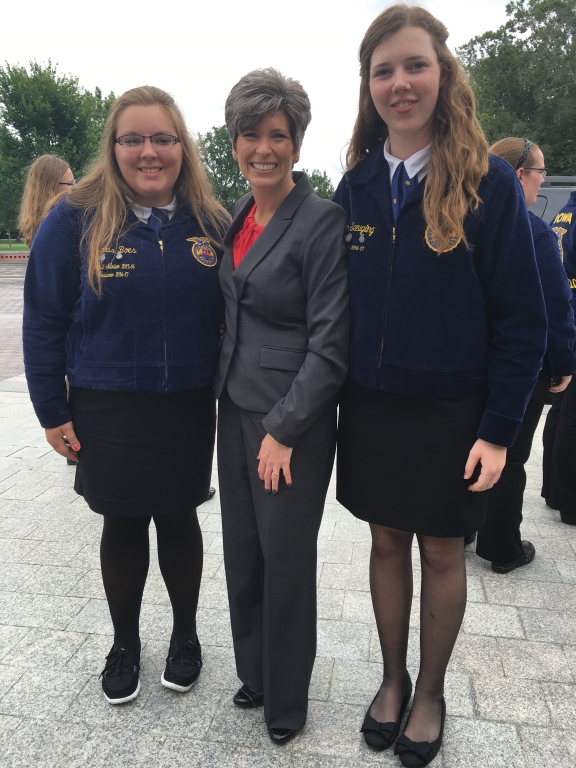
Alexis & Emily with Senator Joni Ernst.
Each session was designed to challenge FFA members into thinking about the future impact they can have in their home and how that impact could change someone else’s life. The session that especially impacted Emily involved facilitators throwing tubs of bouncy balls on the floor. Each bouncy ball had a different significance such as a teenager dropping out of high school, a child who can’t read, or someone who doesn’t have enough food to eat. The group was told that each person could pick up only one bouncy ball at a time to “fix” these issues. Together they began to pick up all of the balls. Sometimes the group would fill a container up only to have it poured out again and other times specific people would be given permission to pick up handfuls at a time. This was a great opportunity to see the importance of teamwork and how using one’s strengths for issues they are passionate about can impact the world around us.
The last day, Saturday, all of the participants of WLC worked together on a service project to pack more than 61,000 meals for those in need. After lunch they traveled into the city for some free time before their time at WLC ended. Alexis, along with a group of Iowa participants spent the afternoon at The White House and the Museum of Natural History. Alexis said, “These places were breathtaking. I have been to DC before and experienced seeing the White House before, but this time was different because I was older and I was more aware of what was going on. Even though it was my second time it was so much fun! I can’t wait to travel back to Washington D.C. and see everything when I have more time and see how things will change.”
“Nothing can compare to meeting 390 individuals who were very different from myself, but also shared the same passion for the FFA organization that I have,” said Emily Saeugling. They met so many amazing individuals, many of whom they still talk to on a regular basis. Alexis and Emily are so grateful that they had this opportunity – the people they met, the skills and knowledge they gained, and the memories they made will last a lifetime.
The Iowa Farm Bureau Federation (IFBF) Young Farmer Advisory Committee elected new officers, and welcomed three new district representatives to their committee at their summer meeting last weekend. Among the new Advisory Committee officers is Leanne Kading, of Adair County, who serves as Vice-Chair.
Leanne lives on a farm between Adair and Casey in Adair County with her husband Phillip and their three children. Formerly involved in the hotel industry, she is now active in the day-to-day challenges of raising young children and contributing to their family’s corn, soybeans, oats and hay farm.
The IFBF Young Farmer Program, available for Farm Bureau members ages 18-35, provides leadership and participation opportunities to nurture the prosperity of young farmers and their families. The program advisory committee plans various events around the state each year, including an annual statewide conference each January that has doubled in attendance over the past four years.
Three area Producers that hold niche markets in the Ag Sector, were honored at an event held Tuesday evening, at Sunnyside Park, in Atlantic. The awards were presented during the Cass-Atlantic Development Corporation’s Annual Membership Meeting held at the Sunnyside Park Kiddie Korral. The meeting began with a 6:30-p.m. supper catered by The Downtowner, followed by a brief business meeting. CADCO’s Russell Joyce prefaced the awards and recognition portion of the meeting by acknowledging agriculture’s role in the local and state economy. He said agriculture is the Number One economic driver in the State of Iowa and Cass County.
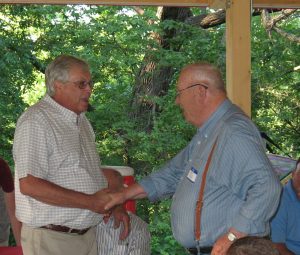
CADCO Executive Dir. Russell Joyce congratulates Dave Nichols
First up to receive an award during the recognition ceremony, was 77-year old Dave Nichols, with Nichols Farms near Bridgewater, a well-known national and international producer of superior beef genetics for over fifty years. Nichols was inducted last year into the Saddle and Sirloin Portrait Gallery, which is the highest honor bestowed on a producer in the livestock industry. And, while he has won numerous awards, three things are more important to him: His faith, his family and his friends.
A-to-Z is a diverse cattle and livestock commercial feed enterprise that specializes in breeding, feeding, and marketing “ Wagyu Beef “ a Japanese breed of beef that has a high end marketability.
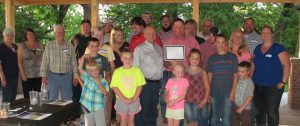
Allen Zellmer (Center, holding award) and his family and staff.
Allen and Brenda Zellmer, of rural Atlantic, are the owners of the company. They started with 36 head on feed and within two years were asked to have over 1,000 head on feed. Currently, the herd numbers are approaching 10,000 head on feed. Zellmer’s beef products end up all over the world, because of the demand for lean protein. And, like Dave Nichols, Alan also spoke of the importance his family and associates plays in the success of his company.
Also honored at the CADCO event, was Kelly and Christie Cunningham of “Milk Unlimited,” of rural Atlantic, a Grade-A dairy that is one of Iowa’s premier dairy operations.
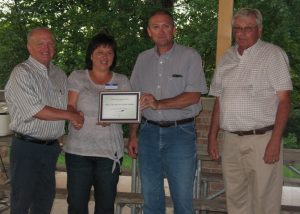
Christie and Kelly Cunningham (Center).
They have 33 employees. Christie Cunningham said 2016 has been a great year for milk production, and they’ve made some new records. Kelly Cunningham spoke of how their product supplies a major dairy in the State.
He said their average cow produces about 10-gallons of milk per day. About five semi loads of milk are trucked to the Andersen-Ericksen Dairy each day, meaning about one-third of the milk the company uses, comes from Cass County. Cunningham said a tanker trailer is filled every 4 ½-to 5-hours, is sent to Des Moines and turned into an A&E product that will be one the shelves within three days.
DES MOINES, Iowa (AP) — More acres of corn and soybeans were planted than initially estimated this year, prompting the U.S. Department of Agriculture to boost the fall harvest expectations for both major crops.
The agency said in its monthly update Tuesday that farmers are expected to bring in 14.5 billion bushels of corn, which would break 2014’s record of 14.2 billion bushels. Farmers planted 94.1 million acres of corn, about a half-million acres more than first projected.
The soybean harvest is estimated at 3.88 billion bushels on a record 83.7 million acres planted, 1.5 million more acres than projected. Prices for both crops are up compared to earlier this month, because the USDA says soybean exports are higher than expected and corn exports will rise since drought-stricken Brazil produced less than projected.
Swimming, canoeing and floating the river on tubes is a summertime tradition in Iowa. But as relaxing and enjoyable as a river float is, it does come with an element of risk.
Iowa rivers are dynamic systems in a constant state of change and can hide obstacles just beneath the water surface. Todd Robertson, with the Iowa Department of Natural Resources Water Trails Program, said river users can enjoy the scenery while keeping an eye downstream to avoid any hazardous surprises.
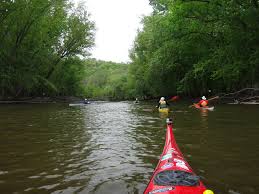 “We’ve had some reports of trees being blown over during the recent storms and blocking parts of different rivers. We would encourage paddlers and tubers to watch for fallen trees and other hazards that can pull you in and suck you under the water,” he said. “This is the busy season for floating our rivers. When we have consistent hot weather, there is an increase in the number of paddlers and tubers and we want everyone to be mindful that our rivers are in a constant state of change.”
A farm financial health survey is being sent to farmers and ranchers in Iowa, Nebraska, Kansas and Missouri. Mat Habrock, Nebraska’s assistant state ag director, says they’re working with the Ag Economics Department at the University of Nebraska-Lincoln on the regional survey. “All of us are trying to get a feel for how things are looking in the countryside financially with the restricted ag economy,” Habrock says. “Also, we’re looking at putting together that data that can be used not only by the states but also federal agencies as we think of some opportunities to support the needs of the countryside.”
The survey asks a variety of questions about farming operations, including purchasing decisions. Habrock says all responses will be kept confidential. “A lot of the questions are looking at changes in how producers are handling things year over year compared to years past,” he says. “Are they making any changes to their operations, delaying purchasing decisions, making changes in crop rotations or equipment purchases, land leases, things like that.”
Habrock says they’re hoping for a large response to get the most valuable information possible. Responses are due by July 24th. If you don’t receive one in the mail, farmers can access the survey online at “bit.ly/farmhealth“.
(Radio Iowa)
DES MOINES, Iowa (AP) — Corn and soybean crops in Iowa and Nebraska continue to make good progress and plant development remains ahead of the five-year average for this point in the growing season. The U.S. Department of Agriculture’s weekly crop update says corn in Iowa and Nebraska is rated at nearly 80 percent good to excellent while soybeans are around 78 percent good to excellent.
Storms last week brought rain to both states missing south-central and southeast Iowa and leaving western and southwestern Nebraska without much new moisture. Iowa Secretary of Agriculture Bill Northey says some Iowa farmers have reported isolated crop damage from high wind.
Nebraska farmers reported high wind knocked some corn plants over and snapped off some stalks in a number of eastern counties.
The “Farmers Market Scavenger Hunt” is an activity which was offered to all farmers markets by the Iowa Department of Agriculture (IDALS). The purpose is to help kids learn more about locally grown fruits and vegetables and the farmers in their community. Markets could choose to be included.
Youth participants use a form with a list of questions to hunt through the market. What is the smallest fruit or vegetable you see? What is a fruit or vegetable which grows underground? What was your favorite part of the market? They are also asked to check a list of all of the items they saw and to visit with a farmer.
Produce in the Park has been offering the activity each Thursday evening beginning June 2nd. Completed forms are sent to IDALS twice a month and they are entered in a state drawing for prizes. One local person has been a winner. Tammy Stotts of IDALS says more entries have been received from Produce in the Park than any other market. Additional prizes will be available locally.
Kids may participate every week they attend. Forms and pencils are available at the Cass County Food Policy Council table in the center of the Park. Duane McFadden, Council member, is heading up the local activity.
Officials with the Iowa Department of Natural Resources say a woman was fatally injured in southern Iowa Saturday, when the horse she was riding fell and landed on her shortly before 2 p.m. The accident happened in Stephens State Forest, southwest of Lucas. The woman, whose name has not yet been released, was airlifted to a hospital in Des Moines where she later died.
The Chariton Fire and Rescue and the Lucas County Sheriff’s Department assisted at the scene. The incident remains under investigation by the Iowa Department of Natural Resources.
|

 Facebook
 Twitter
 YouTube
 RSS
RSS