

CLICK HERE for the latest market quotes from the Iowa Agribusiness Network!
CLICK HERE for the latest market quotes from the Brownfield Ag News Network!


CLICK HERE for the latest market quotes from the Iowa Agribusiness Network!
CLICK HERE for the latest market quotes from the Brownfield Ag News Network!
|
ALVORD, Iowa (AP) — Officials in the northwestern corner of Iowa say about 40 head of cattle have died after eating from a feed wagon that contained a ground-up battery. Sioux City television station KTIV reports the Lyon County Sheriff’s department is investigating the incident at the Alvord, Iowa farm.
Farmer Joel Moser says around 100 head of cattle have been affected by the tainted feed. He says as of Friday night, about 40 had died. He plans to bury the cattle starting this weekend. A toxicology report from Iowa State University showed extremely high levels of lead poisoning.
Sheriff Stewart Vander Stoep says only one farm has been affected by the incident. Investigators are trying to determine whether the incident was accidental or foul play.
SERGEANT BLUFF, Iowa (AP) – A 320-foot-tall structure that shoots flames into the air has been put into service at an Iowa nitrogen fertilizer complex. The Sioux City Journal reports CF Industries announced Thursday that the flare stack has been placed into service during commissioning of its new ammonia and urea plants at Port Neal. The stack is designed to safely combust gases during certain times at the plant. Flames can extend as far as 200 feet beyond the tip of the stack, when it’s ignited.
Officials say the stack will be used intermittently, but will burn continuously for a couple of weeks as the new plants come online and production begins. The company is nearing completion of a $2 billion expansion.
Shelby County Conservation Board Director Nick Preston says trick or treating will take place this Saturday, Oct 15th at the Nishna Bend Recreation Area from 4:30 p.m. to 6:30 p.m. All campsites are already reserved so no walk in campers will be allowed.
DUE TO THIS EVENT, NO HUNTING OF ANY KIND WILL BE ALLOWED UNTIL MONDAY OCTOBER 17th. Campsites will be decorated. The public is invited to bring their kids and go trick or treating at the campsites. The Board and staff will be serving hotdog, chips, lemonade, and s’mores in the shelter house for a free will donation. All proceeds will go to support environmental educational efforts. Over 40 prizes have been donated that will be handed out to kids with the best costumes. Rain date will be Sunday, October 16 from 11:00 a.m. to 1:00 p.m.
Cass County Conservation Department Director Micah Lee provided his quarterly report this (Friday) morning, to the Board of Supervisors. Lee said they spent a lot of time mowing this past quarter, but they were also able to complete a few projects, including the horseshoe pits and campground electrical site renovations at Cold Springs State Park.
All that remains he says, is grading for the camper pads for most of the sites. The park will be closing in a couple of weeks for the season, but everything looks ready to go for next spring. As for the Nodaway Recreation Area, Micah says the entrance road is in bad shape, and they’ve explored ways to fix it, but he questioned if it’s that important to do right now.
He says they don’t have the equipment to tear up the road and fix it. The best they can do is some occasional blade work. Most of the other sites across the county have seen general maintenance and ground work throughout the summer.
The new addition to the enclosed lodge at the Outdoor Classroom near Massena, according to Lee, has resulted in the building seeing a lot of use this fall.
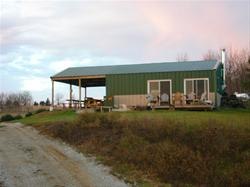
The Iowa Department of Natural Resources has found the source of runoff that caused the water in Bear Creek to turn red west of Larrabee in northern Cherokee County. The D-N-R’s Tom Roos says it was traced to a feedlot. “We found a field that had been recently applied with cattle manure from an earthen basin that had flowed off a field down a waterway and into Bear Creek,” Roos says. He says the cattle feedlot is owned by Nathan Tentinger of Tentinger Farms.
The Cherokee County Sheriff’s office reported the stream contamination Wednesday afternoon after it was noticed that the runoff turned the water red in Bear Creek as it ran down to Mill Creek. “I would say the plume was about a mile long of red water,” Roos says. He says the red plume is probably due to whatever was in the cattle lot basin. “Each cattle lot has a little bit of a different color to them…but it definitely matched the color of the water that was in the basin,” according to Roos. He says no dead fish were found and that could be because the Bear Creek ran into Mill Creek.
“Both streams are extremely high right now — so it definitely helped the dilution,” Roos says. Roos says this is an example of why producers need to be careful about spreading manure, especially when there are wet conditions in fields. “It’s important that those producers pay close attention to those pumps and irrigation at this time of year, because if you leave it unattended, things like this can happen,” Roos says. He says the D-N-R will consider any appropriate enforcement action once it wraps up its investigation.
(Radio Iowa)
Police in Creston say a rural Creston resident reported the theft of tools from his tractor. The tools were stolen from a tractor that was on Park Street. The theft happened sometime between 11-p.m. Wednesday and 7-a.m. Thursday. The loss was estimated at $150.
DES MOINES, Iowa (AP) – An Iowa Department of Natural Resources commission has advanced restrictions on the state’s turtle trapping. The rules approved Thursday by the Natural Resource Commission would limit trappers to catching six or fewer turtles a day and bar trapping during a six-week period in late spring. The Des Moines Register reports that the rules now will go through a series of public hearings and administrative steps. If approved along the way, they are expected to be in place by early February.
Lawmakers passed a measure during the last legislative session that requires the department to set a trapping season and daily catch limit. Iowa is one of a small number of states that allows trappers to take unlimited numbers of certain turtles throughout the year.
DES MOINES, Iowa (AP) — A panel of state budget experts has lowered Iowa revenue projections for the current fiscal year, though there are no immediate plans to cut spending. Citing a slowdown in agricultural income and economic uncertainty from a divisive presidential race, interest rates and international trade the Revenue Estimating Conference Thursday predicted the state will take in about $49.3 million less than anticipated in March.
The new revenue estimate, based mostly on individual, business and sales tax receipts, is $7.31 billion for the fiscal year that began July 1. That’s still a 5.6 percent increase from the previous year. The three-member group estimated next year’s revenue will grow 4.1 percent to $7.61 billion. The group updates the estimates again in December and those figures are the basis for next year’s state budget.
Shelby County Emergency Management officials today (Thursday), upgraded the County Fire Danger Index to “High.” Precipitation at the start of the week had caused the field and grassland fire danger to be reduced to “Moderate,” but now, with the killing frost and drying conditions increasing rapidly, the potential is increasing for any controlled burns to spread rapidly out of control.
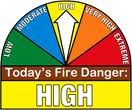 When the Fire Danger rating is “High,” burning of any kind is restricted in Shelby County unless approval is received from local Fire Chief. Controlled burns that are not reported will result in Fire Department being dispatched, and Fires extinguished if determined to be un-safe. Please call 712-755-2124 with questions


 Facebook
 Twitter
 YouTube
 RSS
RSS