

CLICK HERE for the latest market quotes from the Iowa Agribusiness Network!
CLICK HERE for the latest market quotes from the Brownfield Ag News Network!


CLICK HERE for the latest market quotes from the Iowa Agribusiness Network!
CLICK HERE for the latest market quotes from the Brownfield Ag News Network!
Sam Clovis, the former Morningside College professor who served as national co-chair of the Trump presidential campaign, has asked the president to withdraw his nomination to serve as the top science officer in the U-S-D-A. Clovis sent President Trump a letter, saying “the political climate in Washington has made it impossible for him to receive balanced and fair consideration” for the U-S-D-A job. Court documents released this week show Clovis was the campaign supervisor of volunteer foreign policy advisor George Papadopoulus. Papadopoulus has pleaded guilty to lying to the F-B-I about his contacts with Russians. Clovis, in his letter to the president, said attacks on Trump and his team are increasing every day and have turned into a “blood sport.” Clovis said didn’t want to be a distraction to Trump’s agenda.
Clovis concluded his letter by saying he remains a devoted and loyal supporter — and will continue to serve as a senior White House advisor in the U.S. Department of Agriculture. Clovis was a radio talk show host in Sioux City before running for the U.S. Senate in 2014. He joined the Trump campaign in August of 2015.
(Radio Iowa)
Shelby County Emergency Management officials say as the winds subside, and precipitation is in the forecast for Friday, they will change the Fire Danger Level in the County to the MODERATE category, until Monday. They caution Fire Chiefs, however, that the air mass will be in place with very little venting which means smoke from controlled burns will remain in the area for extended time frame. If someone wants to do a larger controlled burn that could cause some visibility and health issues adjacent to the burn area. 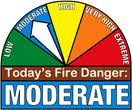
Ron Corbett — the Republican who’s challenging Governor Kim Reynolds — is urging Iowans to call in and complain about the roadblock preventing Iowa Ag Secretary Bill Northey from taking a new job. “As you may know, Bill Northey’s nomination to the USDA is being held hostage by ‘big oil’ interests in some sort of political payback,” Corbett says.
Corbett, who is the mayor of Cedar Rapids, has recorded a phone message that’s being sent by an automated system to thousands of Iowans. Corbett recites the office phone number for Texas Senator Ted Cruz — who is blocking a senate vote on Northey’s nomination. “If you’re like me, you’re sick and tired of the dysfunction we have in politics. When a good, qualified and honorable man like Bill Northey is being held up, the DC swamp is winning,” Corbett says. “Join me in calling US Senator Ted Cruz and tell him to stop the political games and let Bill Northey’s nomination go through.”
Governor Reynolds told Iowa reporters she is disappointed in Cruz’s action, but will rely on Iowa Senators Chuck Grassley and Joni Ernst to lobby Cruz directly. Cruz has told reporters in D-C that he’s waiting for the Trump Administration to meet with him and other oil-state senators. Cruz and eight other senators from states with oil refineries want to air their concerns about the federal production mandates for ethanol and biodiesel.
Last month 30 Midwestern senators successfully pressured the E-P-A’s administrator to back off a plan that may have reduced the biofuel production mandate.
(Radio Iowa)
Iowa’s furbearer season opens Nov. 4, and the outlook for 2017 is good as populations are stable to increasing statewide. Vince Evelsizer, furbearer biologist for the Iowa Department of Natural Resources, said that while prospects for a good season are there, the number of participants usually follows the fur market. “When prices are good, we have higher participation. When the market is forecasted to be down, like it is again this year, so is participation. But that lack of competition provides an opportunity to introduce someone new to trapping or someone who’s been out of the sport for a while to come back,” he said.
The recent peak in trapping came in 2013 when nearly 21,000 Iowans purchased a furharvester license. In 2016, about 14,500 furharvester licenses were sold. Evelsizer expects participation in the 2017 season will be similar to 2016. “This is another opportunity to enjoy the outdoors, enjoy trapping, even if the market isn’t great,” he said.
Furharvester population trends and market forecast
Muskrats – Population, particularly in northern Iowa, is doing well. Prices likely similar to 2016.
Raccoons – Population is strong, but market forecasts are low. Best opportunity is for large adults in prime condition – from Thanksgiving through December.
Coyotes – Population and price is steady. Coyote fur price has been buoyed by the international trim trade.
Beaver – Population is trending up slightly but varies by region
Mink – Population is steady.
Bobcats – Population is expanding in western and eastern Iowa and increasing in numbers. Prices are similar to 2016.
Otters – Population is stable to slightly increasing. Prices are similar to 2016.
Regulations and Ethics
There are no new regulations for 2017. Furharvesters must have a valid furharvester license and habitat fee to hunt or trap all furbearers except coyotes and groundhogs. Coyotes and groundhogs may be hunted with a hunting or furharvester license. Furharvesters are reminded to respect private property, property boundaries, and the 200 yard separation distance from occupied dwellings or driveways. All traps must be checked every 24 hours, except those which are placed entirely underwater and designed drown the animal immediately.
Otters and bobcats
Furharvesters are required to contact a conservation officer within seven days of taking an otter or bobcat to receive a CITES tag which must remain with the animal until it is sold. They are also asked to turn in the lower jaw or skull of all otters and bobcats harvested to the Iowa DNR, which is used for a population and harvest monitoring.
Coyotes versus wolves
While there are no known wolves currently in Iowa, an occasional wolf will wander through. The Iowa DNR has information at http://www.iowadnr.gov/Conservation/Iowas-Wildlife/Occasional-Wildlife-Visitors showing how to distinguish coyotes from wolves. “Wolves are state and federally protected. If it looks too big or something doesn’t look right, take a second or third look before pulling the trigger,” he said. “Be sure of the target before taking the shot.” While wolves are protected, bears and mountain lions are not. “We encourage anyone who comes across a bear or mountain lion to enjoy the incredible experience but leave them alone unless there is a safety threat,” Evelsizer said.
Farming remains one of the most dangerous jobs in the U.S. due to the potential for PHYSICAL injury. However, the occupation can also take a toll on a person’s MENTAL health. Doctor Michael Rosman of Harlan is a farmer who also works in the field of agricultural behavioral health. He says most people are well aware of hazards on the farm like heavy machinery and confined spaces, but another risk often goes unnoticed.
“The psychological injuries that occur in farming are less well understood,” Rosman says. “It isn’t what the farmer has done, but conditions that are beyond our control that make farming so perilous. Like weather events, change in agricultural policy or market conditions – those kinds of factors.”
A recent study by researchers at the University of Iowa found the suicide rate among farmers is now 50 percent higher than during the peak of the farm crisis in 1982. Rosman says many farmers allow stress to compound and spiral out of control.
“Most of us can handle two stressors, but when we get to three, they overwhelm us,” Rosman says. “We initially try to overcome the stresses by working even harder. But, when we do that, we usually deprive ourselves of sleep, adequate recreation, and we begin to become overly distressed.”
As stress sets in, Rosman says so do biological factors associated with depression. There’s help for anyone experiencing a stress overload, including farmers. “If we seek treatment or assistance, such as medications and counseling to deal with the stresses, we can restore perspective,” Rosman says. “But, sometimes we avoid seeking help because we’re so bent on trying to take care of things ourselves.”
A program operated by Iowa State University Extension and Outreach is designed to give farmers and all Iowans access to stress counselors and other resources at no charge. The Iowa Concern Hotline is active 24 hours a day, 7 days per week at 1-800-447-1985.
(Radio Iowa)
(Update) NEW VIENNA, Iowa (AP) — Authorities are blaming a manure runoff from a dairy farm for killing about 60,000 fish in eastern Iowa. The farm is situated about 3 miles (5 kilometers) east of New Vienna. The fish kill was reported Oct. 9 after fish carcasses were spotted in two creeks downstream in Dyersville. The Iowa Natural Resources Department has issued a notice of violation to the owner, John Hoefler, and is expected to seek restitution for the fish. Among the dead were minnows, white suckers and creek chubs.
A coalition of more than 60 farm and commodity groups is asking federal lawmakers to double the funding for agricultural research in the next Farm Bill. Johnathan Hladik (LAW-dick), the policy program director with the Center for Rural Affairs, says that additional money is needed for research to be able to help feed a growing world population. “When you look at the landscape, you look at the charge of agriculture in the coming years, we need to feed more and more people, in some cases, with less land and fewer resources,” Hladik says. “What’s going to get us there is sound research and good science. We took this opportunity to express our support for making sure we have the dollars and support from the federal government there to get this done.”
The requested doubling of federal research funding would take the figure to six-BILLION dollars. “It sounds like a significant chunk of change,” Hladik says, “but this is the type of research that pays off for generations to come and it’s smart to make that investment now, upfront, rather than trying to catch up later on and dealing with what could end up being a significant food shortage.” He says private companies in the U-S have contributed to ag research but the advantage in federal funding is that the research tends to be unbiased. “Over the past decade or so, it’s private companies really stepping up and filling that gap and that could be a really big positive but in a lot of ways that can also tailor the research in a certain direction or limit its scope,” Hladik says. “When you have more general non-partisan dollars that are going to work, it can open up the amount of issues you can look at.”
Hladik says the U-S should look at the commitment China has made to ag research. China is now the world leader in such funding, passing the U-S — which is now in second place. The Center for Rural Affairs is based in Lyons, Nebraska.
(Radio Iowa)
The Shelby County Emergency Management Agency says “Due to the winds today , lack of precipitation in the forecast, and a considerable amount of available fuels,” the HIGH Fire Danger category will be in effect until at least Thursday. At that time authorities will issue another Local update. No outdoor burning is allowed without a permit from your local fire chief. Any fires that are lit are likely to spread out of control, rapidly.
The Iowa Department of Natural Resources fall trout stocking program is underway. Northeast Iowa Regional Fisheries Supervisor, Mike Steuck (Steyek like bike) says they stock the trout in water bodies that are within 15 to 20 miles of the state’s largest cities. He says the goal is to be in the urban areas and create some excitement and get people out to go trout fishing. Steuck says they hope people will enjoy the trout and then use their trout stamp to fish some of the trout streams in northeast Iowa. Steuck says the trout thrive in the cool streams in northeast Iowa and that’s why they wait to stock them in other areas until the fall.”They can’t survive in temperatures higher than 60 to 70 degrees — so we wait until October or November or even through the ice to stock them — when the waters in those ponds are cold enough to support the trout,” Steuck says.
He says they have a complete list of the lakes and ponds that will be stocked on the D-N-R website. Steuck says many of the communities are hosting events in conjunction with the trout stocking, but he says if you miss an event, you should still be able to find fish. “We stock between 15-hundred and two-thousand fish,” he says. Steuck says you can fish for the stocked trout throughout the fall and even into the ice fishing season. “And it doesn’t take anything special to catch them either,” Steuck says, “any old ice rod, or if it’s open water, all you need is a little spinner and some line on your fishing pole. Cast it out there and you are going to catch trout.” The stocked trout are ready to bring home. “They’re 10 to 12 inches in size and so they’re going to be a half a pound a piece. They should be more than big enough to eat,” Steuck says.
You need a valid fishing license and must pay the trout fee to fish for or possess trout. The daily limit is five trout per licensed angler with a possession limit of 10. Children age 15 or younger can fish for trout with a properly licensed adult, but they must limit their catch to one daily limit. The child can purchase a trout fee which will allow them to catch their own limit.
(Radio Iowa)
CLARINDA—Staff from DNR’s Atlantic field office confirmed that cleanup is complete from a manure spill that occurred Oct. 24 northwest of Clarinda. Contractors worked Wednesday and Thursday to remove approximately 236 tons of manure-contaminated soil from a ditch near the Lee Brooke confinement site. The mix was land applied to crop fields. Commercial manure applicator Jason Sickles will continue to work with Page County to restore the ditch.
A stuck pump valve Tuesday evening caused about 7,000 gallons of manure to pool at the confinement site, and in roadside and drainage ditches that flow into an unnamed tributary of East Tarkio Creek. The DNR says it will consider appropriate enforcement action.
(12:40-p.m. News)


 Facebook
 Twitter
 YouTube
 RSS
RSS