

CLICK HERE for the latest market quotes from the Iowa Agribusiness Network!
CLICK HERE for the latest market quotes from the Brownfield Ag News Network!


CLICK HERE for the latest market quotes from the Iowa Agribusiness Network!
CLICK HERE for the latest market quotes from the Brownfield Ag News Network!
The Iowa Department of Natural Resources is in the middle of its annual Canada goose banding effort across the state.
Geese that nested and had young are currently flightless, allowing staff and volunteers to capture the waterfowl, collect some demographic information, and place a metal band on their leg before being released. 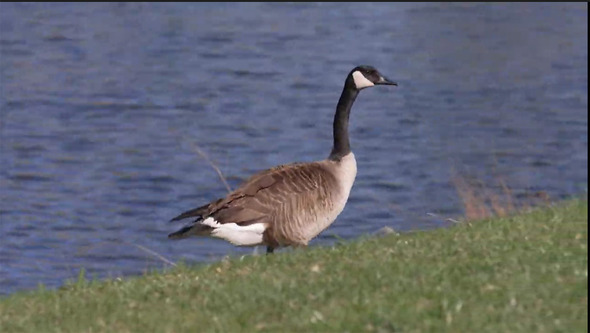
“This is one of the best sources of information on Canada geese – it allows us to monitor where the birds are captured, where they are recovered, either by hunter or by the general public who can report the band, which provides important estimates for demographic rates, such as survival rates, recovery rates – and that’s really the fine scale information that allows us to manage the population,” said Orrin Jones, state waterfowl biologist with the Iowa DNR.
To learn more about the Canada goose banding project, go to the DNR’s YouTube channel
The Iowa Department of Natural Resources (DNR) is looking for help with the annual wild turkey production survey. During the months of July and August wild turkey sightings are recorded to estimate this year’s nesting rates and nest success.
Participation is easy – just note the date and county in which the turkey was seen, if it was an adult female or adult male – males have beards on their breast – and if and how many poults (baby turkeys) were present. The survey is available online at www.iowadnr.gov/turkey, then click on Wild Turkey Survey. 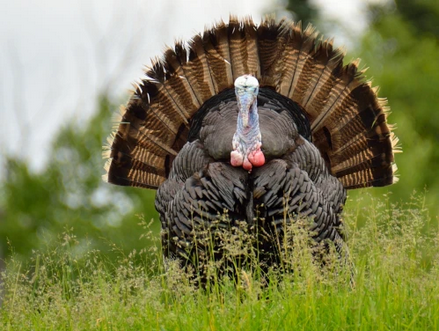 There is also an identification guide on documenting wild turkey broods on the survey webpage, that provides tips on how to determine males from females, and different flock scenarios with poults of different ages.
Annual population surveys conducted by the DNR are an important component of managing the wild turkey. Turkey populations can fluctuate annually across all regions of the state. All participation is appreciated.
Cass County: Corn $4.00 Beans $9.91
Adair County: Corn $3.97 Beans $9.94
Adams County: Corn $3.97 Beans $9.90
Audubon County: Corn $3.99 Beans $9.93
East Pottawattamie County: Corn $4.03 Beans $9.91
Guthrie County: Corn $4.02 Beans $9.95
Montgomery County: Corn $4.02 Beans $9.93
Shelby County: Corn $4.03 Beans $9.91
Oats: $3.29 (same in all counties)
(Des Moines, Iowa) – The Iowa Department of Natural Resources (DNR) is seeking informal comments on administrative rules for ginseng harvesting and sale. Executive Order 10 (EO10), signed by the Governor on January 10, 2023, requires all state agencies to identify which administrative rule chapters will be retained or rescinded. The EO10 process includes public engagement with the opportunity for meaningful input. The Iowa DNR has reviewed 571 Iowa Administrative Code (IAC) Chapter 78 titled Ginseng Harvesting and Sale. This chapter has been revised to eliminate redundancies, improve efficiency, and provide clarification and consistency with federal rules as managed by the US Fish and Wildlife Service.
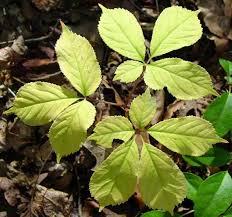
Ginseng in autumn color with the minimum “3 prongs” required for legal harvest (ISU Ext. photo)
The public is invited to provide informal comments on the proposed rule changes. DNR will accept written comments through July 16, 2025. Written comments or questions regarding the proposed rule should be submitted to: Karmin.Klingenberg@dnr.iowa.gov. Comments should be made to specific portions of the rule. After receiving and reviewing informal comments, the DNR will create a draft Regulatory Analysis and draft Notice of Intended Action. The DNR will host a formal public comment period for these drafts, followed by a public hearing in September 2025.
Drafts of the rule, including a “clean” copy and a version showing revisions, can be found on the DNR webpage: www.iowadnr.gov/eo10.
(Radio Iowa) – A member of the Iowa Soybean Association’s board of directors says the Trump Administration’s proposed 2026 production mandate for biofuels should spur production this year. Dave Walton, a farmer from Wilton, runs all of his farm equipment on soybean-based biodiesel.
“In Iowa we have a number of biodiesel plants that are either shut down, slowed down or running at far less than their capacity,” Walton says, “so this should send a signal to the marketplace that they need to get those plants turned on again and start using soybean oil.” There are 10 biodiesel plants in Iowa and industry experts say up to five have been shut down.
“Those plants employ about 1600 folks,” he says. “You want to talk about economic impact and keeping our people here and in rural Iowa, there’s a direct link between keeping those biodiesel plants up and running and keeping our rural communities energized.” Walton says production should ramp up due to growing demand from trucking companies for B-99 — the highest blend of biodiesel.
“In the past that hasn’t been possible because of the equipment,” Walton said. “Now we have companies like Optimus Technologies that are making that bolt-on that you can put on virtually any semi to be able to run B99 year round without any other modification.”
The E-P-A is proposing that at least five-point-six billion gallons of biomass-based diesel be produced next year. That exceeds the amount the biodiesel industry was lobbying for. The Renewable Fuels Standard production levels for all biofuels will become final after a public comment period and the E-P-A has the authority to adjust its recommendation based on that feedback.
(Radio Iowa) – Despite outcries about high grocery prices, an American Farm Bureau Federation survey finds the cost of a typical Independence Day meal for a family of ten fell slightly from last year. Christopher Pudenz, an economist with the Iowa Farm Bureau, says they based the study on an array of foods many of us will be enjoying on a picnic table beside the grill this weekend. “There are about a dozen items total, things to make hamburgers, hamburger buns, cheese, ground beef. There’s some items for desserts,” Pudenz says. “There’s some side items like chips, potato salad, things like that, and of course, you’ve got to have your lemonade for your July 4th cookout.” While some items are more expensive than during the 4th of July weekend last year, the prices on others have dropped.
“The price this year for ten people total was $70.92,” Pudenz says. “That comes out to $7.09 per person, and that is the second highest that they have registered since 2013, when the American Farm Bureau started doing this informal survey.” That total is down 30-cents from last year, which was the highest priced meal at $71.22. Tariffs impacted the costs on some items this year, while other market influences brought more price stability. “There were several items that had year-to-year increases,” Pudenz says. “Fewer cattle available meant beef prices were higher. Steel and aluminum tariffs caused the price on canned goods, specifically pork and beans, to be higher. Some of the items that went down though, greater pork availability meant that the pork chop was cheaper this year than last year.”
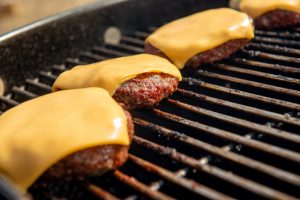
Iowa Farm Bureau Federation photo
The price also fell from last year on potatoes and wheat, meaning the prices for potato salad and buns were cheaper. He notes how higher prices at the grocery store don’t necessarily translate to farmers making more money. “It’s important to keep in mind that the share of the retail food dollar, so the dollar spent at the grocery store, only about 15 cents of that makes it back to the farmer,” Pudenz says. “There are lots of other components that get a little bit of that dollar along the way.” Despite that, he says Iowa farmers remain resilient, continuing to meet demand and provide a stable food supply.
The Iowa Department of Natural Resources (DNR) reminds all boaters and anglers to check for unwanted hitchhikers on their boats and equipment this Fourth of July to help protect Iowa lakes and streams.
Aquatic invasive species move from one water body to another by hitchhiking on boats, in bait buckets and on other equipment used in the water. They can create serious problems for Iowa waters and negatively impact the quality of outdoor recreation experiences.
“Aquatic invasive species can reduce native species and make lakes and rivers unusable for boaters, anglers and swimmers, “said Kim Bogenschutz, aquatic invasive species coordinator for the Iowa DNR.
These invasive species often grow quickly and spread fast when brought to another lake or stream due to a lack of natural predators or competitors.
Boaters and anglers can help prevent the spread of aquatic invasive species to new water bodies by cleaning, draining and drying their boats and equipment after each time on the water.
These steps are not only recommendations; they are the law. It is illegal to possess or transport aquatic invasive species, transport any aquatic plants on water-related equipment, and transport boats with drain plugs intact in Iowa. It is also illegal to introduce any live fish or plants, except for hooked bait, into public waters.
Learn more about aquatic invasive species, including a list of infested waters in the current Iowa Fishing Regulations or at www.iowadnr.gov/ais.
DES MOINES – The Fourth of July holiday weekend draws thousands of people to Iowa state parks, beaches, lakes and rivers. Follow these tips and precautions to keep you, your friends and family safe this holiday weekend.
Beach & Swimming Safety
Water is refreshing and fun, but it’s essential to know how to stay safe in and around water to prevent accidental drownings. Stay safe wherever you choose to swim, whether it’s a backyard pool, a pond or lake, or a public pool.
Boating Safety
State Park and Forest Campground Safety
The Fourth of July is one of the busiest times to visit a state park as people enjoy beaches and outdoor activities in the summer sun.
Paddling Safety
Whether it be tubing, kayaking or canoeing, paddlers are enjoying the splash of the water, scenic views, and wildlife viewing from Iowa’s rivers, rapids and streams. Many new paddlers are getting out on the water for the first time this summer.
Fireworks Safety
Fireworks are a spectacular and traditional way to celebrate the Fourth of July.
Cass County: Corn $3.99 Beans $9.85
Adair County: Corn $3.96 Beans $9.88
Adams County: Corn $3.96 Beans $9.84
Audubon County: Corn $3.98 Beans $9.87
East Pottawattamie County: Corn $4.02 Beans $9.85
Guthrie County: Corn $4.01 Beans $9.89
Montgomery County: Corn $4.01 Beans $9.87
Shelby County: Corn $4.02 Beans $9.85
Oats: $3.34 (same in all counties)
CEDAR RAPIDS, Iowa (July 2, 2025) – In a filing with the Iowa Utilities Commission, Alliant Energy announced plans to add up to 1,000 megawatts (MW) of wind energy generation in Iowa. In a news release, the company says it needs additional generation “to meet demand and ensure reliable, affordable energy for customers.” Alliant says their announcement is a major milestone for the company in advancing its “all-of-the-above” approach to energy generation.
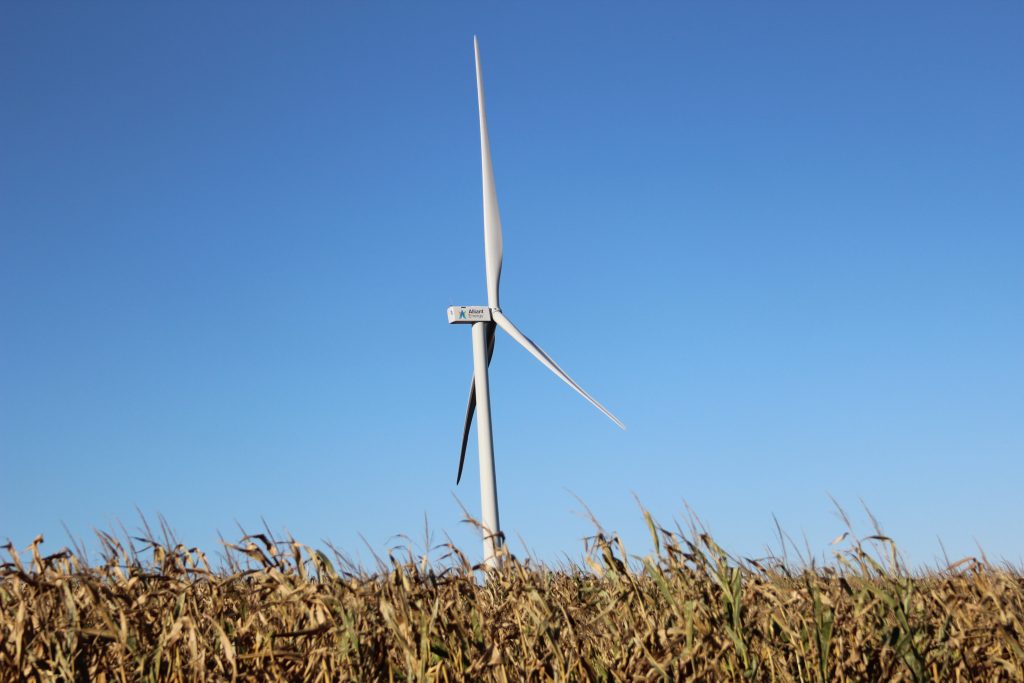
Alliant Energy (Photo)
Alliant’s President says “By expanding our wind energy portfolio, we’re reinforcing our ability to meet customer demand while delivering reliable and cost-effective energy for customers.” Alliant Energy will own and operate the projects once operational, retaining its position as one of the top five largest utility owners and operators of regulated wind in the United States. The new wind projects, according to the company, will create construction jobs, deliver payments to landowner partners and increase tax revenue for their counties.
Alliant Energy anticipates a decision from the IUC in the first quarter of 2026.


 Facebook
 Twitter
 YouTube
 RSS
RSS