

CLICK HERE for the latest market quotes from the Iowa Agribusiness Network!
CLICK HERE for the latest market quotes from the Brownfield Ag News Network!


CLICK HERE for the latest market quotes from the Iowa Agribusiness Network!
CLICK HERE for the latest market quotes from the Brownfield Ag News Network!
DES MOINES – The Fourth of July holiday weekend draws thousands of people to Iowa state parks, beaches, lakes and rivers. Follow these tips and precautions to keep you, your friends and family safe this holiday weekend.
Beach & Swimming Safety
Water is refreshing and fun, but it’s essential to know how to stay safe in and around water to prevent accidental drownings. Stay safe wherever you choose to swim, whether it’s a backyard pool, a pond or lake, or a public pool.
Boating Safety
State Park and Forest Campground Safety
The Fourth of July is one of the busiest times to visit a state park as people enjoy beaches and outdoor activities in the summer sun.
Paddling Safety
Whether it be tubing, kayaking or canoeing, paddlers are enjoying the splash of the water, scenic views, and wildlife viewing from Iowa’s rivers, rapids and streams. Many new paddlers are getting out on the water for the first time this summer.
Fireworks Safety
Fireworks are a spectacular and traditional way to celebrate the Fourth of July.
Cass County: Corn $3.99 Beans $9.85
Adair County: Corn $3.96 Beans $9.88
Adams County: Corn $3.96 Beans $9.84
Audubon County: Corn $3.98 Beans $9.87
East Pottawattamie County: Corn $4.02 Beans $9.85
Guthrie County: Corn $4.01 Beans $9.89
Montgomery County: Corn $4.01 Beans $9.87
Shelby County: Corn $4.02 Beans $9.85
Oats: $3.34 (same in all counties)
CEDAR RAPIDS, Iowa (July 2, 2025) – In a filing with the Iowa Utilities Commission, Alliant Energy announced plans to add up to 1,000 megawatts (MW) of wind energy generation in Iowa. In a news release, the company says it needs additional generation “to meet demand and ensure reliable, affordable energy for customers.” Alliant says their announcement is a major milestone for the company in advancing its “all-of-the-above” approach to energy generation.
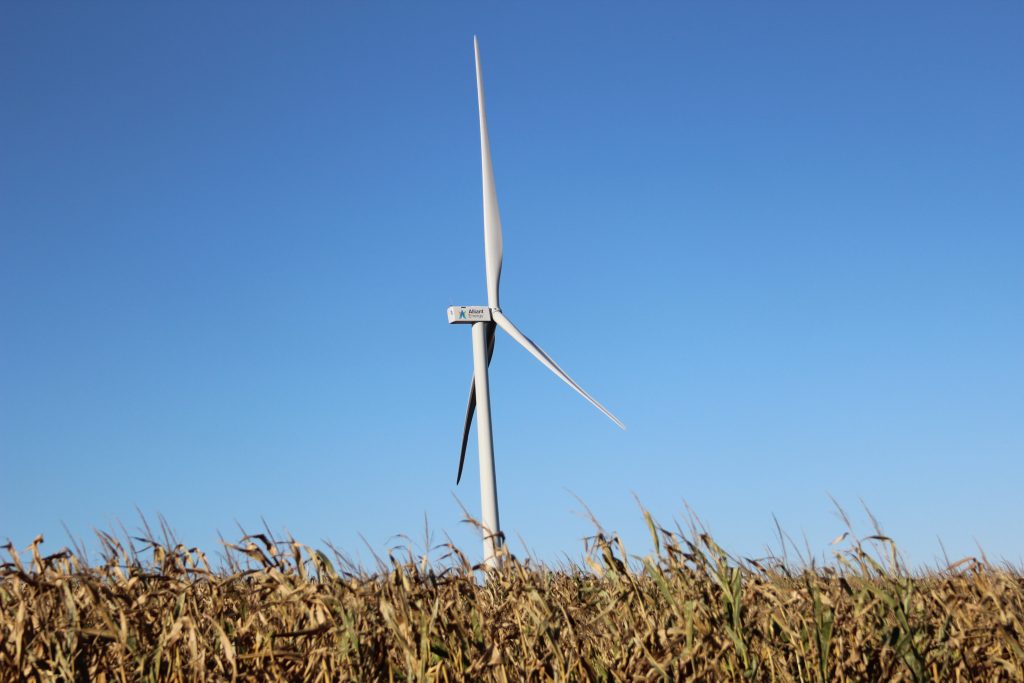
Alliant Energy (Photo)
Alliant’s President says “By expanding our wind energy portfolio, we’re reinforcing our ability to meet customer demand while delivering reliable and cost-effective energy for customers.” Alliant Energy will own and operate the projects once operational, retaining its position as one of the top five largest utility owners and operators of regulated wind in the United States. The new wind projects, according to the company, will create construction jobs, deliver payments to landowner partners and increase tax revenue for their counties.
Alliant Energy anticipates a decision from the IUC in the first quarter of 2026.
(Radio Iowa) – Many Iowans will try to beat the summer heat with a boat ride, but if they’re also sipping suds while zipping around on the water, there could be legal — and lethal — consequences. Nate Carr, an Iowa D-N-R conservation officer, says the state’s annual Operation Dry Water will get underway later this week, as the busy 4th of July holiday weekend begins. “Operation Dry Water is a national outreach and enforcement campaign aimed at raising awareness about the dangers of boating under the influence,” Carr says, “and just removing impaired operators from our nation’s waterways.”
During the statewide operation last year, the D-N-R and its partners stopped nearly 13-hundred boats carrying more than five-thousand boaters, resulting in a total of 477 warnings or citations for boating under the influence. “It is an issue, and it’s an issue we see here in Iowa, especially on some of our our bigger, more popular waterways,” Carr says, “but it goes down all the way to the smallest waterways, too.” Carr says alcohol use is the leading contributing factor in recreational boating deaths, as intoxicated passengers can easily slip and fall overboard or suffer other life-threatening incidents. “Anytime you’re operating with a blood-alcohol concentration of .08 or higher, just like driving, that is illegal in the state of Iowa,” Carr says. “Obviously, alcohol can impair boaters’ judgment, balance, vision and reaction time, which are all things that you really need when you’re operating a boat on a waterway.”
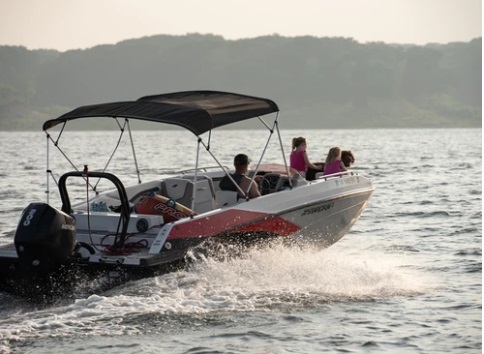
Iowa DNR photo
The D-N-R says one-third of all boating fatalities nationally involve alcohol, and many of those victims are innocent bystanders.
Cass County: Corn $3.99 Beans $9.85
Adair County: Corn $3.96 Beans $9.88
Adams County: Corn $3.96 Beans $9.84
Audubon County: Corn $3.98 Beans $9.87
East Pottawattamie County: Corn $4.02 Beans $9.85
Guthrie County: Corn $4.01 Beans $9.89
Montgomery County: Corn $4.01 Beans $9.87
Shelby County: Corn $4.02 Beans $9.85
Oats: $3.32 (same in all counties)
(Iowa Capital Dispatch; Washington-D.C.) – President Donald Trump hinted Tuesday that he may share good news for farmers at his July 3 event in Iowa. In a social media post, Trump shared information on his upcoming trip to the Iowa State Fairgrounds scheduled for Thursday. He is slated to speak at the America250’s Kick-Off Celebration launching a year of festivities leading up to the 250th anniversary of the country’s founding on July 4, 2026.
While inviting people to RSVP for the event, Trump praised Iowa for supporting him in the past three presidential elections, writing that Iowans “love my Policies for our Wonderful Farmers and Small Businesses.” He also wrote there will be information shared about his current administration’s work on issues impacting farmers in his Thursday remarks.
“I’ll also tell you some of the GREAT things I’ve already done on Trade, especially as it relates to Farmers,” Trump wrote. “You are going to be very happy with what I say — Should be a BIG Crowd!”

President Donald Trump, shown here in a July 2023 file photo, promoted his upcoming Iowa visit on July 1, 2025.(Photo by Jared Strong/Iowa Capital Dispatch)
Some farmers, agricultural producers and other business owners in Iowa and worldwide expressed concerns about Trump’s tariff plans earlier this year, when he had announced plans to set a baseline 10% levy on all international imports beginning in early April. Though he set a 90-day pause shortly after the announcement on many of these tariffs, that break is set to expire July 9.
The window before tariffs are set to go back into place was meant to give time to countries that have said they are open to negotiating new trade deals. The president has said this deadline could be extended, but has not offered additional details on timelines or ongoing negotiations.
While tariffs have not been finalized for many countries, Trump’s “Liberation Day” announcement and levies on certain goods already in place caused massive economic unrest earlier this year. In Iowa, many local business owners and farmers said the tariffs could cause disruptions to their businesses, and lead to higher costs for consumers. A study from the nonprofit advocacy group Farmers for Free Trade found tariff costs for Iowa importers increased by 304%, roughly $68 million, from April 2024 to April 2025.
There are also agricultural producers who say tariffs have not significantly impacted their business outlooks. In the pork industry, where 25% of U.S. pork production is within the export market and 55% of exported U.S. produced pork going to China, some business owners and producers said profitability is up despite trade war concerns.
ATLANTIC, IA (July 1, 2025) Produce in the Park is kicking off holiday weekend celebrations this Thursday, July 3, with “America’s Pre-Party” at Produce in the Park, 4:30 to 6:30 PM at the Atlantic City Park. This week’s farmers market features a Civil War-style cannon, free bounce house, live music, and a patriotic gnome craft.
More than 20 vendors will be selling at the July 3 farmers market. Shoppers will find fresh produce including cherry tomatoes, cucumbers, and snap peas, along with a variety of meats including beef, pork, chicken, and lamb. Farm-fresh eggs, sourdough bread, kringle, cookies, 4th-of-July themed cupcakes, and freeze-dried treats will also be available at the park this
Thursday. Craft and gift shoppers can browse patriotic garden and and home decor, along with other crafts including candles, artwork, leather goods, and planters.
**Food trucks at Produce in the Park July 3 include Zemog’s Mexican Kitchen, and Firehouse Family Food serving a variety of smoked meats, as well as sides including mac and cheese and coleslaw. 
Cass Health Registered Dietitian Sarah Andersen will be serving as guest chef, preparing a fresh Feta & Dill Salad using ingredients available at this week’s market such as cucumbers and tomatoes. Visiting organizations sharing community information at the farmers market this week include Cass County Conservation, Healthy Cass County, Cass Health, A.R.I.S.E., and the Atlantic Public Library.
America’s Pre-Party at Produce in the Park is made possible by support from July market sponsors the City of Atlantic, First Whitney Bank & Trust, Gregg Young Chevrolet of Atlantic, Cass Health, Cass County Tourism, Atlantic Area Chamber of Commerce, and Nishna Valley Family YMCA.
Produce in the Park is held every Thursday evening in the Atlantic City Park from 4:30–6:30 PM through September. All are welcome, and admission is free. The market accepts SNAP/EBT and Double Up Food Bucks for all qualifying food items.
**= Updated information
For the latest market updates, follow Produce in the Park on Facebook at www.facebook.com/ProduceInThePark and Instagram at www.instagram.com/produceintheparkatlanticia/
(Radio Iowa) – University students from across the country recently met in Ames for the annual CyberTractor Challenge where they tried to make tractors do things they’re not supposed. John Deere global chief information security officer James Johnson started the CyberTractor Challenge four years ago as the need for cybersecurity has grown alongside precision agriculture. “The more dependent we are on technology, the bigger the challenge that we’re going to have as a company,” he says. The technology includes G-P-S guidance, internet-connected sensors and other data-driven technology in tractors and other machines. Johnson says it’s not just about John Deere.
“It’s about, how do we make the industry more resilient and more secure because our customers might drive a John Deere tractor and pull a red planter or a blue planter,” he says.
Johnson says attracting more talent to cybersecurity benefits manufacturers, farmers and the national food supply. Students tried to hack into the machine’s operating systems. John Deere’s Carl Kubalsky says precision agriculture can make farming more efficient, but it can also open more points of attack for cyber criminals.
“The work that these students are doing and the careers that they’ll go on to do is important for all of us, whether it’s John Deere or C-N-H or another manufacturer,” he says Students from seven universities across the country attended the CyberTractor Challenge.
(Iowa Capital Dispatch) – State Climatologist Justin Glisan said the June 23 through June 29 reporting period was the “wettest” of the season, with precipitation totals 2-4 inches above normal in some areas. While the rain hindered some field work, it was overall beneficial for Iowa crops which continue to rate highly according to the crop progress and condition report from the U.S. Department of Agriculture. Iowa Secretary of Agriculture Mike Naig said corn tassels are beginning to show, “signaling crop development remains on track.”
According to the report, around 3% of Iowa corn was beginning to silk and the crop rated 85% good or excellent. Soybeans were also a couple of days ahead of average, with 22% of the crop blooming across the state. Soybeans rated 77% good to excellent. “Last week brought multiple rounds of rain to much of the state, marking the wettest seven days of the growing season thus far,” Naig said. “In addition to benefitting the corn and soybeans, the moisture helps to replenish our streams, pastures and hay fields.”
(Photo by Preston Keres/USDA)
As a whole, the state averaged 2.81 inches for the reporting period, which was more than an inch and a half above normal. Precipitation maps show central and western parts of the state received the most rainfall during the period.

The rain pushed some areas, most severely north central and central Iowa, to hold excess soil moisture. Around 40% of topsoil moisture rated surplus in these regions and in north central Iowa, nearly 50% of subsoil had surplus moisture. The state average topsoil moisture condition rated 65% adequate and 21% surplus. Subsoil conditions on average were 70% adequate and 27% short.
The first cutting of alfalfa hay all but wrapped up during the reporting period, with 97% completed across the state and 30% of the second cutting of hay complete. Oats also progressed, with 90% headed and 39% coloring. Iowa’s oat crop rated 83% good or excellent.
In addition to heavy rainfall, it was also a hot week across the state. The statewide average high temperature for the week, at 92 degrees Fahrenheit, was 10 degrees above the normal. Forecasts for the coming week show Iowans can expect an inch or two of rain and slightly above average temperatures, which Naig said will be “pleasant conditions for a festive and fun Independence Day weekend filled with fireworks, cookouts and outdoor celebrations.”
DES MOINES, Iowa (KCRG) – The Supreme Court has decided not to hear Iowa Pork Producers petition to California’s Prop 12 law regarding animal welfare.The Iowa Pork Producers Association have attempted to abolish the animal welfare law on June 30. They were rejected by the Supreme Court with no explanation. The Association believes the law treats out-of-state producers unfairly and gives California producers an upper hand.
The National Pork Producers made another attempt to petition against the law in 2023. It was dismissed based on legal standards regarding state laws being overly restrictive of moving goods across states.
In a social media post, Bird said “I am disappointed with the Supreme Court’s decision not to hear the lowa Pork Producers’ case to stop California’s mandate against lowa farmers. I will continue to fight for our producers and farmers …just as I did with this case and Massachusetts Question 3. States like California and Massachusetts should not dictate lowa farming practices.
“I will continue to fight for our producers and farmers in the active challenges still working their way through the courts, just as I did with this case and Massachusetts Question 3. States like California and Massachusetts should not dictate lowa farming practices.”
The Iowa Pork Producers Association is disappointed with the SUPCO decision. Iowa officials plan to find other ways to abolish the law.


 Facebook
 Twitter
 YouTube
 RSS
RSS