

CLICK HERE for the latest market quotes from the Iowa Agribusiness Network!
CLICK HERE for the latest market quotes from the Brownfield Ag News Network!


CLICK HERE for the latest market quotes from the Iowa Agribusiness Network!
CLICK HERE for the latest market quotes from the Brownfield Ag News Network!
(Lewis, Iowa) – In October, the Cass County Conservation Board announced their annual Trumpeter Swan contest was underway, with the question of “When do you think the first Trumpeter Swan will arrive at the Schildberg [Recreation} Quarry (in Atlantic)?” We now have the answer, and a winner! The sponsors of the contest have determined the official arrival of the swans as December 2nd! On that day 10 Trumpeter Swans were here and stayed more than twenty-four hours. The winner that was the closest to that date was Alice Brown! Alice Brown will receive a Trumpeter Swan Prize from the Cass County Conservation Board. Cass County Conservation thanks to all who participated!
Speaking of the swans, you’re invited to join the Cass County Conservation Department on January 3rd, 2026, for their “Soriee with the Swans,” at Atlantic’s Schildberg Recreation Area- Lake number 4. Conservation staff will give ten-minute presentations about Trumpeter Swans every half-hour, beginning at 11:00 a.m., with the last one being presented at 2:00 p.m. There will also be time to view the swans through spotting scopes and witness random swan feeding sessions. Hot chocolate, cookies, and other snacks will be provided free of charge with donations being accepted (for swan care). 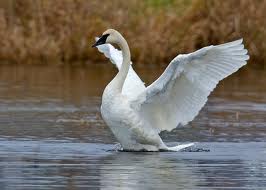
The Schildberg Recreation Area is located on the northwest edge of Atlantic, Lake 4 is on the north side of Highway 83. Atlantic is celebrating 25 winters of the Trumpeter Swans wintering here. This event is not to be missed! IF THE WEATHER IS “BAD” OR THE SWANS ARE NOT AT THE PARK…the program will be at the Atlantic Public Library from 12:00 p.m.-1:00 p.m. with hot chocolate, cookies, and other snacks available. The event is being sponsored by the Cass County Conservation Board, Atlantic Parks and Recreation, and the Iowa Department of Natural Resources.
(Radio Iowa) – Iowa farmers are starting to talk with lenders about borrowing money to pay for operations, or to buy land and equipment. The Federal Reserve Bank reports weakness in the crop sector weighed further on farm finances, and credit conditions have gradually tightened. Ty Kreitman, an economist with the Federal Reserve of Kansas City, says while we’ve seen a couple seasons of high costs and low crop prices, it’s too early to draw comparisons to the farm crisis of the 1980s.
“We’re in the second year of losses, but we also have to recognize that the two years prior, 2021 and 2022 and to some extent, 2023, were very strong years for crops, across the ag sector, in fact,” Kreitman says. “So, we had substantial increase in farm incomes during those periods. And so, a lot of operations were able to bolster their working capital.” Kreitman says the situation is bleakest in the crop sector, where farmers have been at or below the break-even mark for the past couple of harvests. He says the number of operations they classify as highly leveraged has been creeping up.
“There’s probably about 20% of farm borrowers who have debt-to-asset ratios, so a ratio measuring leverage of above 40%, and I would say that would be considered high leverage,” he says, “and then obviously distributed throughout that, even beyond that, we’re not quite sure how many would have extremely high leverage.” Kreitman says younger farmers and those who rent most of their land have been the hardest hit by the downturn in the ag economy, because they haven’t built equity like more established operations. He says land prices remain near historic highs, meaning many operations have strong equity.
There have been 18 farm bankruptcy filings in Iowa so far this year, the largest number since 2020.
(Radio Iowa) – While some Iowans are grumbling over two consecutive weekends of moderate to heavy snowfall, others are loving it and have learned to embrace all that winter in the Midwest has to offer. Matt Miner is president of the Iowa State Snowmobile Association, based in Cresco. Miner says snowmobiling is a wonderful hobby, as long as all riders follow the basic rules. “We want everybody to have a good time, but we want everybody to be safe. We want them to enjoy the sport, enjoy having fun with friends and family,” Miner says. “We always promote to ride safe and don’t do anything you wouldn’t do in your car. We like seeing the partying and stuff that everybody does, but we don’t want to have it continue on into the sleds and riding when you shouldn’t be riding.”

Iowa DNR photo
Miner says the Iowa Department of Natural Resources offers an online course for new snowmobilers between the ages of 12 and 17. “Just go onto the Iowa DNR website, go under the Snowmobile tab and you can look up the classes,” Miner says. “That’s the only thing we offer right now. We are looking to offer here in the next year or so, hopefully be back into in-person training for youth snowmobiles.” Miner says there are nearly 60 separate snowmobiling clubs in Iowa and each offers its own activities and opportunities to ride the trails. “My home club, we’ve got Snow Fest which will be in 55th year this year, the last weekend in January,” Miner says. “There’s the Winter Games over in Okoboji. We do a thing down in Huxley with spina bifida for the kids with spina bifida. We get them out and have them ride in the snowmobile.”
He says the association has helped to maintain an expansive fleet of trail groomers and a trail system comprising 8,800 miles statewide.
Cass County: Corn $4.12 Beans $10.60
Adair County: Corn $4.09 Beans $10.63
Adams County: Corn $4.09 Beans $10.59
Audubon County: Corn $4.11 Beans $10.62
East Pottawattamie County: Corn $4.15 Beans $10.60
Guthrie County: Corn $4.14 Beans $10.64
Montgomery County: Corn $4.14 Beans $10.62
Shelby County: Corn $4.15 Beans $10.60
Oats: $2.46 (same in all counties)
(Prices are per bushel; information is from the area Farm Service Agency [FSA] offices)
(Iowa DNR News) – Hunters may sign up as a deer donor or recipient with the Iowa Deer Exchange at www.iowadnr.gov/deer then scroll down to Iowa’s Deer Exchange Program link. There, donors can provide their information on what they are willing to donate. The database creates a map and table with information deer donors and deer recipients can use to get connected. Hunters and recipients who had previously registered for the Deer Exchange Program should review their information to make sure it is still accurate and active. There is no cost to participate. It is illegal to sell wild fish and game in Iowa.
The Iowa DNR, the Food Bank of Iowa and 32 meat lockers also participate in the Help Us Stop Hunger program for 2025. Hunters are encouraged to contact a participating locker before they harvest a deer to see if the locker has any additional drop off instructions.
************
Hunters interested in working with farmers to harvest additional does are encouraged to sign up with the Iowa Doe Harvest Registry. The Registry has been a resource that the Iowa DNR has offered to farmers since the mid-2000s, but is now easier to access. To participate, go to www.iowadnr.gov/deer and scroll down to Doe Hunter Registry (Connecting Farmers with Hunters) and complete the online form. Hunters and farmers can select their preferred hunting seasons and their region of the state.
Harvesting antlerless deer is the most important tool for managing deer populations at the state, county and local level.
*************
Hunters donated nearly 3,500 deer hides to Elks Lodges across Iowa last year, which was a decrease from the year before but still very beneficial to the program. The deer hides are used by the Elks Veterans Leather Program to make professionally-crafted leather gloves for veterans in wheelchairs and also turned into leather used for therapy programs for recovering veterans.
The Elks Veterans Leather Program relies on the charity of hunters to donate their deer hides. Hunters willing to donate their hides are encouraged to contact the local Elks Lodge for drop off locations or visit www.elks.org/lodges to find the nearest lodge. The therapeutic kits and gloves are distributed at no cost to the veterans. Contact Curtis Blystone at 712-621-2823 or blystonecurtis@gmail.com for more information.
(Iowa DNR News) – Iowa anglers can buy the Missouri and Big Sioux River paddlefish license and tags starting Dec. 15 through Jan. 7. Buy your special paddlefish license and tags on the Iowa DNR online licenses sales website at https://gooutdoorsiowa.com. A resident license sells for $25.50 and a nonresident license is $49. You must also have a valid Iowa fishing license. You can buy up to two tags – one from Dec. 15 to Dec. 31 and an additional tag from Jan. 1 to Jan. 7, or two tags if you didn’t buy one in December. A limited number of paddlefish licenses are available – 950 resident and 50 nonresident.
The license, harvest tag(s), and regulations will be mailed to purchasers in mid-January. Purchasers will be asked to complete an electronic survey to help the Iowa DNR evaluate the success of the paddlefish season. Please complete the survey whether you harvested a paddlefish or not. The Iowa DNR is always working to improve the paddlefish season for anglers; any input provided is considered and is greatly appreciated.
The Missouri and Big Sioux River paddlefish season opens Feb. 1 and runs through April 30. For more information about Iowa’s special paddlefish season, visit the DNR website at www.iowadnr.gov/paddlefish – click on Missouri River Paddlefish Season and Regulations.
(An IOWA CAPITAL DISPATCH report) – Pheasants Forever and Quail Forever have expanded Iowa public lands access with two parcel acquisitions in Fremont County. The 350 acres abut existing public lands owned by state and federal agencies and will be enrolled in the Iowa Habitat and Access Program to allow public hunting access while employing habitat management practices to improve the prairie.
The Iowa Habitat and Access Program is managed by wildlife biologists at Iowa Department of Natural Resources who help to improve the quality of wildlife habitat on a property. The first parcel is a 174-acre addition to the Copeland Bend Wildlife Area. The conservation groups’ acquisition connects multiple tracts of the existing public lands northeast of Nebraska City. The second parcel, also 174 acres, is a few miles southeast of the first site and connects portions of the M.U. Payne Wildlife Area along the Missouri River. The groups said the site will improve access to the northern end of the existing wildlife area.
The acquisition of the sites was funded by Pheasants Forever and Quail Forever’s Build a Wildlife Area program. The program has led to permanent protections and publicly accessible land for more than 243,000 acres in 17 states since 1982, according to a news release from the nonprofit organizations. The news release said the newest parcels add habitat for the game birds in areas that are “heavily utilized” by Iowan and Nebraskan hunters.
In 2024, hunters bagged an estimated 460,000 roosters, or male pheasants, and 27,500 quail in Iowa. Quail Forever acquired another Iowa parcel in August that similarly connected several areas of public land, near Centerville, managed by U.S. Army Corps of Engineers and Iowa DNR.
(Des Moines, IA) – The Iowa Department of Natural Resources is partnering with Iowa deer hunters to collect tissue samples to monitor for chronic wasting disease during the upcoming gun seasons. The goal is to collect samples from each county, with higher quotas based on the presence of or proximity to confirmed positive locations. Hunters interested in submitting samples to the DNR’s surveillance program can do so by contacting their local wildlife staff. Hunters can monitor progress towards county quotas on the DNR CWD Dashboard (www.iowadnr.gov/cwd). So far during the 2025-26 surveillance year, there have been 24 positive cases of chronic wasting disease.
Hunters in areas where the disease has been found or in counties where the quota has filled, can get their deer tested by going to www.iowadnr.gov/cwd and clicking on the hunter submission pathway. There is a video demonstrating how hunters can remove the lymph nodes and package them for mailing. The hunter submission pathway allows hunters to pull and submit their own tissue sample simply by filling out the online form and paying a $25 processing fee, the same fee the DNR pays for its samples.
No special packaging is required and hunter submitted samples are prioritized to expedite testing and results. Samples are tested at Iowa State University’s Veterinary Diagnostic Lab, and results are included with the data from samples the DNR is collecting. Local wildlife staff can help hunters with pulling samples. There are also resources online that shows how to pull and ship samples.
Chronic wasting disease is spread through direct contact between deer and through contact with contaminated surfaces in the environment. Artificially concentrating deer by putting out grain or mineral can increase transmission of the disease because it increases the opportunity for deer to interact and come in contact with infectious material. Deer will concentrate on their own through scrapes and during the breeding season.
The disease can also be spread by transporting infected carcasses. To avoid introducing the disease to a new area, hunters should not transport deer carcasses outside of the county where it was harvested, if at all possible. If, for some reason, hunters need to take the carcass with them, they should landfill the carcass through regular waste disposal. In the few instances where landfilling isn’t an option, hunters should return the carcass to the site of harvest after processing.
DES MOINES – The Iowa Department of Natural Resources (DNR) Lake Restoration Program (LRP) are now accepting public comments on the newly released draft 2026 Lake Restoration Report and 2025 Plan, which includes completion of a project at Lake McKinley, in Union County. The report is available for review at www.iowadnr.gov/Lake-Restoration. It highlights restoration projects completed around the state in State Fiscal Year (SFY) 2025 and outlines plans for upcoming restoration projects.
The Lake Restoration Program works with communities and stakeholders across Iowa to improve water quality and recreational opportunities at publicly-owned lakes. Since the program’s creation in 2006, the Iowa legislature has invested over $176 million in the lake restoration program, with investments at 72 lakes in 55 counties statewide. The program averaged a 37 percent cost share to match LRP funds by other project partners in SFY2025 (local, federal, and other state funds).
Lakes are an important part of Iowa’s economy, accounting for $1.32 billion in annual spending. In 2024, Iowa’s lakes had more than $13.7 million visits statewide. More than 60 percent of Iowans visit a lake at least once per year, and on average, visitors spend an average of $36 on single day trips. Visitors consistently rank proximity to their work or home, quality of facilities, and water quality as their top reasons when choosing a lake to visit.
Accomplishments since the program’s inception include:
Major projects completed in 2025 include: A $3.52 million investment in Three Mile Lake, (Union County); a $2.92 million investment at Casey Lake (located within Hickory Hills Park, Black Hawk County); a $987k investment at the Iowa Great Lakes to assess shoreline damage from the 2024 floods; and a $1.8 million investment at Prairie Rose Lake (Shelby County) and Green Valley Lake (Union County), for phosphorus inactivation treatments.
Major projects planned for 2026 include completion of the projects at Lake Keomah (Mahaska County), and McKinley Lake (Union County), shoreline stabilization projects at the Iowa Great Lakes to address flood damage, and beach restoration projects at Brushy Creek Lake (Webster County), Big Creek Lake (Polk County), and Hickory Grove Lake (Story County), to reduce bacteria concentrations at each of these beaches. Several large-scale shallow lake/wetland restoration projects are underway, including projects at East Twin Lake (Hancock County) and Little Storm Lake (Buena Vista County).
The DNR is accepting comments from Dec. 5th through Dec. 17th. Comments may be submitted via email to michelle.balmer@dnr.iowa.gov. or sent via mail to Michelle Balmer, Iowa Department of Natural Resources, 6200 Park Avenue, Suite 200, Des Moines, Iowa 50321.


 Facebook
 Twitter
 YouTube
 RSS
RSS