

CLICK HERE for the latest market quotes from the Iowa Agribusiness Network!
CLICK HERE for the latest market quotes from the Brownfield Ag News Network!


CLICK HERE for the latest market quotes from the Iowa Agribusiness Network!
CLICK HERE for the latest market quotes from the Brownfield Ag News Network!
(Radio Iowa) – As we move toward spring, a program providing discounted trees is once again available for some state residents. The D-N-R’s Pete Hildreth says it’s designed to help plant more trees in the state. He says the D-N-R and Alliant Energy are partnering to offer landscaped-size trees to private residents at a discount. Hildreth says trees provide a variety of benefits to homeowners.
“Including and reduced home heating and cooling costs, decreased stormwater, shade for outdoor activities, higher home values, and enhance beauty,” Hildreth says. “Alliant Energy customers can place their orders on the D-N-R residential tree distribution program page found on our D-N-R website.” There are a variety of species available, and once you order the trees they will be deliver in several cities.
Here are the tree pick up locations:
Thursday, April 25, 4:30-6:30 p.m., Awaysis Park (1409 E Lakeshore Dr, Storm Lake)
Tuesday, April 30, 4:00-6:00 p.m., Greene County Extension Office (104 W. Washington St, Jefferson)
Thursday, May 2, 4:30-6:30 p.m., Grimes Farm and Conservation Center (2349 233rd St, Marshalltown)
Tuesday, May 27, 4:30-6:30 p.m., Burlington Depot (300 S Main St, Burlington)
Saturday, May 11, 9:00-11:00 a.m., Swiss Valley Park (13069 Swiss Valley Rd, Peosta)
(Des Moines, Iowa) – Here’s a reminder: The Iowa Department of Natural Resources (DNR) is hosting a series of town hall-style meetings where local staff will provide updates on recently completed hunting and trapping seasons, discuss possible changes to hunting and trapping rules and regulations, and address other topics as requested. “We want people to come out to these meetings, listen to the seasons reviews, ask questions and hear directly from our staff,” said Todd Bishop, chief of the Iowa DNR’s Wildlife Bureau. “Part of the meeting will be devoted to discussing potential rule changes and collecting feedback as we work through the rules process.”
The meetings are open to the public. Comments collected from these public meetings will be considered along with other related comments received by the Iowa DNR prior to proposing changes to hunting rules and regulations. Proposed rules will be presented to the Natural Resource Commission during a regular public meeting for consideration and additional public comment.
Meeting date, time and location
Any person attending the public meeting that has special requirements, such as those related to mobility or hearing impairments, should contact the Iowa DNR or ADA Coordinator at 515-725-8200, Relay Iowa TTY Service 800-735-7942, or Webmaster@dnr.iowa.gov, and advise of specific needs.
(Radio Iowa) – The latest “Iowa Farm and Rural Life Poll” answers the question of what we should call the men and women who grow the crops and livestock in our state. J. Arbuckle runs the I-S-U Extension poll and says he noticed that people who work with those in agriculture tend to call them growers or producers. He put a question in the poll and the result was pretty clear, with 75 percent preferring the term “farmer.” Ten percent said they want to be called farm operator, eight percent preferred producer, while rancher and grower each received two percent of the vote. Arbuckle says it’s not surprising, as farmer is an all-encompassing term that indicates more of a lifestyle than a profession. But he says he didn’t anticipate that it would be as big percentage. He says everyone should know what farmers think to be able to communicating effectively with them.
“It’s important for people across the private and public sectors, you know stakeholders who work with farmers, to recognize that and to use the kinds of terminologies that farmers prefer,” Arbuckle says. He says no one seemed to ask the question before. “It’s just very interesting to me that the terminology that we at the university and then some of the private sector firms, and even the public sector, like the conservation agencies and stuff, often times use the term grower or producer,” he says. “And these are actually the least popular terms that the farmers think about when they when they think about terms that they would like to when they think about themselves, I guess.”
You can see more about the Iowa Farm and Rural Life Poll on the I-S-U Extension website.
(Radio Iowa) – A series of regional educational conferences for Iowa hog farmers will be held this week at four strategic locations around Iowa. Zoey Dinkla is producer education director for the Iowa Pork Producers Association, which is helping put on the seminars. Dinkla says, “The Iowa Pork Producers Association, the Pork Industry Center and Iowa State Extension and Outreach partner together to meet our production employees, our veterinarians, and any swine industry stakeholders, bringing them educational material, updates to the industry, and any kind of engagement that we can get with our producers where they are.”
She says there are several nationally-known speakers who will be sharing their knowledge at the conferences, including: “This year, we have Dr. Brett Kaysen with the National Pork Board,” Dinkla says. “He’s the senior vice president of producer and state engagement, so he’ll be discussing program of states that they’ve been working really hard in domestic and international markets, as well as all their success in foreign animal disease preparedness and prevention.”
The meetings are being held today (February 19th) in Orange City, February 20th in Webster City, February 21st in Nashua, and February 22nd in Washington.
iowapork.org
(Radio Iowa) – A bill that’s cleared an Iowa Senate committee targets protein products marketed as meat, but that are made from insects, plants or even stem cell cultures. Selling something labeled as beef, chicken, pork, turkey, goat or lamb that contains even a small percentage of protein that’s not meat would become illegal in Iowa. The fine for the crime would be 855-dollars and the potential for up to 30 days in jail. Senator Dawn Driscoll, a Republican from Williamsburg, is the bill’s sponsor.
“We are trying to promote meat in the state of Iowa,” Driscoll says, “and we are trying to not mislead customers.” Driscoll raises Angus cattle on her family farm in Iowa County. “Our taxpayer dollars should be supporting our agriculture here in Iowa, not some hedge funding fake meat company,” Driscoll says. “…We are also protecting the consumers as far as labeling.” The bill would prohibit the three state universities from conducting research into the production or use of manufactured protein products.
“The Regent universities are not doing it now,” Driscoll says. “We’re setting a precedent in Iowa.” Senator Nate Boulton, a Democrat from Des Moines, says cutting off research is unwise. “We may learn things that are dangerous from cultivated food products. We may learn things that can have potential healing properties that were never thought of before,” Boulton said. “This bill seems to have the effect of knocking the peanut out of George Washington Carver’s hand before he could get started.”
Senator William Dotzler, a Democrat from Waterloo, says the bill pits the livestock industry against farmers who’re raising protein-rich soybeans. “We need to continue to have research on all our products so that we can have value added agriculture in this state,” Dotzler said.
If the bill becomes law all of the state’s school districts, Iowa’s community colleges as well as Iowa, Iowa State and U-N-I would be required to have policies preventing the purchase of plant- or insect-based food labeled as meat.
LYONS, NEBRASKA – Officials with The Center for Rural Affairs, Thursday (Feb. 15, 2024), announced recognition of outstanding people and entities in two states. Among were two from rural Atlantic. Winners of the Seventh Generation Award were Denise O’Brien and Larry Harris, Rolling Acres Farm ( Atlantic, Iowa), for lifetime service in making major contributions in improving rural life and protecting our land and water.
CRA Executive Director Brian Depew says “Each year, we honor the rural champions who help us accomplish so much for rural America. This group of award winners have gone above and beyond to lay the foundation for a better rural future.”
Awards will be presented to each recipient this spring.
The Center for Rural Affairs works to strengthen small businesses, family farms and ranches, and rural communities through action oriented programs addressing social, economic, and environmental issues.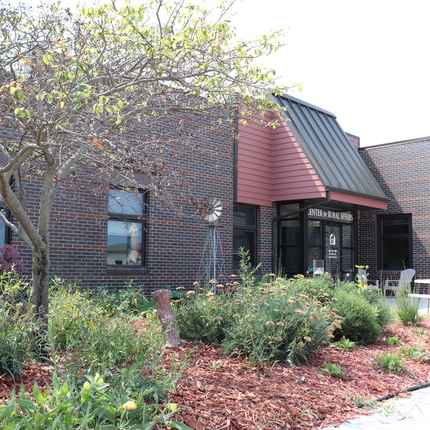
(Radio Iowa) – Iowa’s FFA members will celebrate the group’s 96th anniversary as FFA week starts this Saturday. The group’s advisor in Webster City Kurt Veldhuizen says the national membership is near the one million mark and growing.
“I think that’s huge. I think it’s just a sign of you know how important society is realizing that food and food production is. And then of course the careers are just, agriculture is in such high need to fill careers and I think we see that in our students and finding an interest in this area,” he says. Iowa has 19,200 members involved in many activities. Veldhuizen says the membership is not long strictly from rural areas.
“Urban food production is very important, but beyond that agriculture is such a large industry that the jobs can’t be filled by just those kids coming from rural areas.” He says that in his own town. “I’m proud of that here in Webster City that we have about half and half, Half of our kids live outside of town city limits. Half of our kids do come from in town,” he says. “And that’s important that they’re seeing those things and the skills and the job opportunities that are there too.”
The Iowa FFA Leadership Conference is coming to Ames on April 14-16. You can find out more about FFA at www.iowaffa.com.
(Des Moines, Iowa [Iowa Capital Dispatch]) – A bill that was amended in the Iowa Senate on Thursday would now prohibit the state’s regent universities from researching “manufactured protein products.” The Iowa Capital Dispatch reports Senate Study Bill 3162, which pertains to meat labeling, had previously received early bipartisan support as a way to help consumers distinguish between food that contains meat or meat substitutes, but it was rewritten Thursday by Republicans on the Senate Agriculture Committee.
A copy of the amended bill was not immediately publicly available, but Sen. Dawn Driscoll, R-Williamsburg, said in the committee meeting that the new version “prohibits the Board of Regents from conducting research into the production or use of manufactured protein products.” Meat look-alikes that are derived from cell cultivations, insects or plants also cannot be labeled as beef, chicken, goat, lamb, pork, sheep or turkey, the bill says, and wrongly labeled and “cell-cultivated products” should not be purchased by schools.
“Lab grown products are made in a petri dish and are not the same as the high-quality beef, pork, poultry, goat, lamb raised by hardworking Iowa farm families,” Driscoll said. “The taxpayer dollars should not be used to support these products over the real meat raised on Iowa farms.” Democrats of the committee were incensed by the abrupt changes to a bill they previously supported.
“The clarity of labeling — wanting to make sure people understand when they’re getting a plant-based product versus an actual beef or pork product — those things are important,” said Sen. Nate Boulton, D-Des Moines. “But when we go a step further, and we do it right before a committee meets, and we restrict research, all of a sudden we’re getting way, way, way far away from the original point of this legislation.”
Sen. Bill Dotzler, D-Waterloo, said the amended bill improperly favors one type of Iowa agriculture — livestock production — over another type — soybean production, which is a source of protein for meat substitutes. “I don’t understand what the beef industry’s worried about, because I don’t know anybody who wants to grill soy burger when they have people over,” Dotzler said. “Iowans and people across this country love beef. Why are you worried?”
(Radio Iowa) – The Iowa Senate Ag Committee has approved a bill that gives some liability protection to farm chemical companies, including Bayer, which makes the widely used weed killer Roundup. Senator Jeff Edler, a Republican from State Center, who’s a farmer, says in 2020 the E-P-A determined the main ingredient in Roundup is not a carcinogen.
“This isn’t about emotion. It’s not about who said what. This is about true science and either you believe the EPA does true science or not,” Edler said. “All this does it take away one little loophole in the way someone was able to construe whether they felt Roundup caused cancer.” Senator Dan Zumbach, a Republican from Ryan who’s a farmer, says companies like Bayer will stop developing and improving farm chemicals if their legal exposure grows.
“If we constantly put them in a position where the risk is so high that they say, ‘The heck with it. We’re not going to do it anymore,’ not just farmers but every person in this room will suffer,” Zumbach says. “There will be starving children for the lack of the availability of these products.” Democrats on the committee opposed the bill. Senator William Dotzler is a Democrat from Waterloo.
“What this thing does is it stops people who’ve been exposed to this and die and their farmer families to get compensation,” Dotzler said. Senator Nate Boulton, a Democrat from Des Moines, says he’s siding with farmers who contend they’ve contracted cancer from exposure to farm chemicals rather than a company concerned about profit margins. “When I look at the wealthiest corporations on the planet, I have a hard time feeling like there’s a tug at my heart strings to make sure they’re going to be ok,” Boulton says.
A similar bill was introduced in the Iowa House, but failed to pass a key committee by today’s (Friday’s) deadline.
(Des Moines, Iowa) – As part of his annual visits to each of Iowa’s 99 counties, Iowa Secretary of Agriculture Mike Naig will be in Southwest Iowa on Friday for four different stops.
In Shelby County, Secretary Naig will tour a brand new, Farm Service Cooperative Warehouse. He was unable to attend their open house last summer and so he will tour the warehouse and meet with employees and leadership to hear about current issues and how preparations for the spring planting season are going.
In Harrison County, Secretary Naig will tour and learn about the IGNITE Pathways Land and Cattle Program, in Woodbine. IGNITE was founded by a group of enterprising students in 2022. The program aims to provide practical learning opportunities in agriculture by renting a farm and raising chickens, goats, sheep, and cattle. The students have demonstrated their commitment to the welfare of the animals by taking on the responsibility of sourcing resources, building and maintaining farm infrastructure, and installing fences. Under the guidance of Justin Mills, Agriculture Instructor at IGNITE Pathways, the program has grown in scale and scope. The students gain invaluable hands-on experience in various aspects of agriculture, including caring for animals, crop cultivation, and farm management.
And, the Secretary will speak at a regional Iowa Corn Growers meeting in Missouri Valley, about current topics in agriculture, provide an update on some of his priorities and initiatives, and take questions from the audience.
In Pottawattamie County, Secretary Naig will meet with FFA members and ag students from the Tri-Center FFA in Neola, and learn about their school’s efforts to partner on pollinator habitat and conservation and water quality projects with area partners, including the local Soil and Water Conservation District. Ahead of FFA Week, which is the following week, Secretary Naig will also tour their livestock facility.


 Facebook
 Twitter
 YouTube
 RSS
RSS