

CLICK HERE for the latest market quotes from the Iowa Agribusiness Network!
CLICK HERE for the latest market quotes from the Brownfield Ag News Network!


CLICK HERE for the latest market quotes from the Iowa Agribusiness Network!
CLICK HERE for the latest market quotes from the Brownfield Ag News Network!
(Des Moines, Iowa) – Lawmakers in a House Ways and Means Committee Wednesday advanced a bill, and uttered a number of bee-related puns, to exempt the sale of honeybees from state sales tax. According to the Iowa Capital Dispatch, the bill would bring honeybees in line with the tax protocol of other livestock, which are exempt from state sales tax. Richard Vonderohe, a beekeeper in Mason City and president of the North Iowa Beekeepers Club, said the bill would help beekeepers, — especially those who have suffered from bee losses over the winter. Commercial beekeepers lost on average 62% of their colonies from June 2024 to January 2025, according to results from a survey of beekeepers, administered by Project Apis m. and other bee industry groups.
Project Apis called it the largest honeybee loss recorded in the country, and estimated the economic impact, caused by lost revenue and the cost of replacing colonies, to be $600 million on beekeepers. The broader economic impact could be even greater, as honeybees are responsible for pollinating $15 billion worth of U.S. crops, annually, according to the U.S. Department of Agriculture. Researchers are uncertain what is causing the losses, though many, including Vonderohe, wonder if commercial pesticide use is to blame. Honeybee colonies can also be harmed by parasites, disease and starvation. “I’ve had enough losses,” Vonderohe said. “We need help with our bees.”
Rep. Mike Vondran, R-Dubuque, called House File 247 the “sweetest bill” of the day. He said exempting honeybees from the state tax has a fiscal note of less than $20,000 annually. Rep. Lindsay James, D-Dubuque, supported the bill that she said has had “lots of buzz.” According to USDA report from March, Iowa has around 41,000 honeybee colonies, though this number is likely higher as USDA only reports on producers with five colonies or more. HF 247, called a “bee-utiful bill” by Vondran in his closing remarks, passed unanimously from the committee and is now eligible for floor debate.
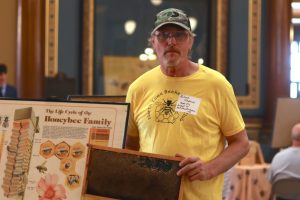
Richard Vonderohe displays a rack from a bee box at the Iowa Capitol on Iowa Honeybee Day, March 26, 2025. (Photo by Cami Koons/Iowa Capital Dispatch)
There are more than 4,000 native bee species in the country and according to the U.S. Geological Survey, bees are the primary pollinators for the majority of agricultural crops. While they won’t get any honey out of the deal, Iowans have an opportunity this summer to engage with native bee populations as part of a national survey project. The Iowa Department of Natural Resources is seeking participants in its second Bumble Bee Atlas and will host online trainings April 19 and May 10. The citizen science project aims to identify the bumblebee species of Iowa, where they’re located and their preferences in flowers.
Last year, participants conducted nearly 150 surveys and identified 10 bumblebee species. The brown-belted bumblebee was the most common species identified last year and DNR estimates there are more species to be found in Iowa. Participants need a net, cellphone or other camera, bee-holding container, a cooler and about 45-minutes to dedicate to catching and identifying bees. Those interested can register online. Twenty states participate in the Bumble Bee Atlas and collectively have observed 36 species of bumble bees and engaged more than 4,000 citizen scientists.
(Radio Iowa) – An official with the Iowa D-N-R is warning the state’s anglers to be on the lookout for a ferocious, toothy type of fish that spawned a horror movie in the early 2000s. It’s called the northern snakehead and it’s native to places like China, Russia, and the Koreas. Kim Bogenschuts, the state’s aquatic invasive species program coordinator, says it’s believed snakeheads reached the U-S as aquarium fish for collectors, though they’re not friendly with other fish.
“They can get to be over three feet long,” Bogenschuts says. “They’ve got really big teeth and are very aggressive, which is why sometimes people then get rid of them.” If those “pets” were dumped into waterways, that would explain why the fearsome fish are finding their way into the Mississippi River, though none have been confirmed in Iowa’s waters, at least not yet. The northern snakehead is tan with dark brown splotches in a pattern that may resemble a python’s skin and a head that looks, well, snakelike. Bogenschuts says it might be mistaken for a couple of native Iowa fish. “If people are familiar with what we call our bowfin or dogfish, which is a long, tubular, muscular fish, the snakeheads look similar to that,” she says, “although their heads are more flattened and they do have scales on their heads.” In addition to having bands of sharp teeth and a vicious temperament, the northern snakehead is especially renown for being able to survive on land — for several days at a time. 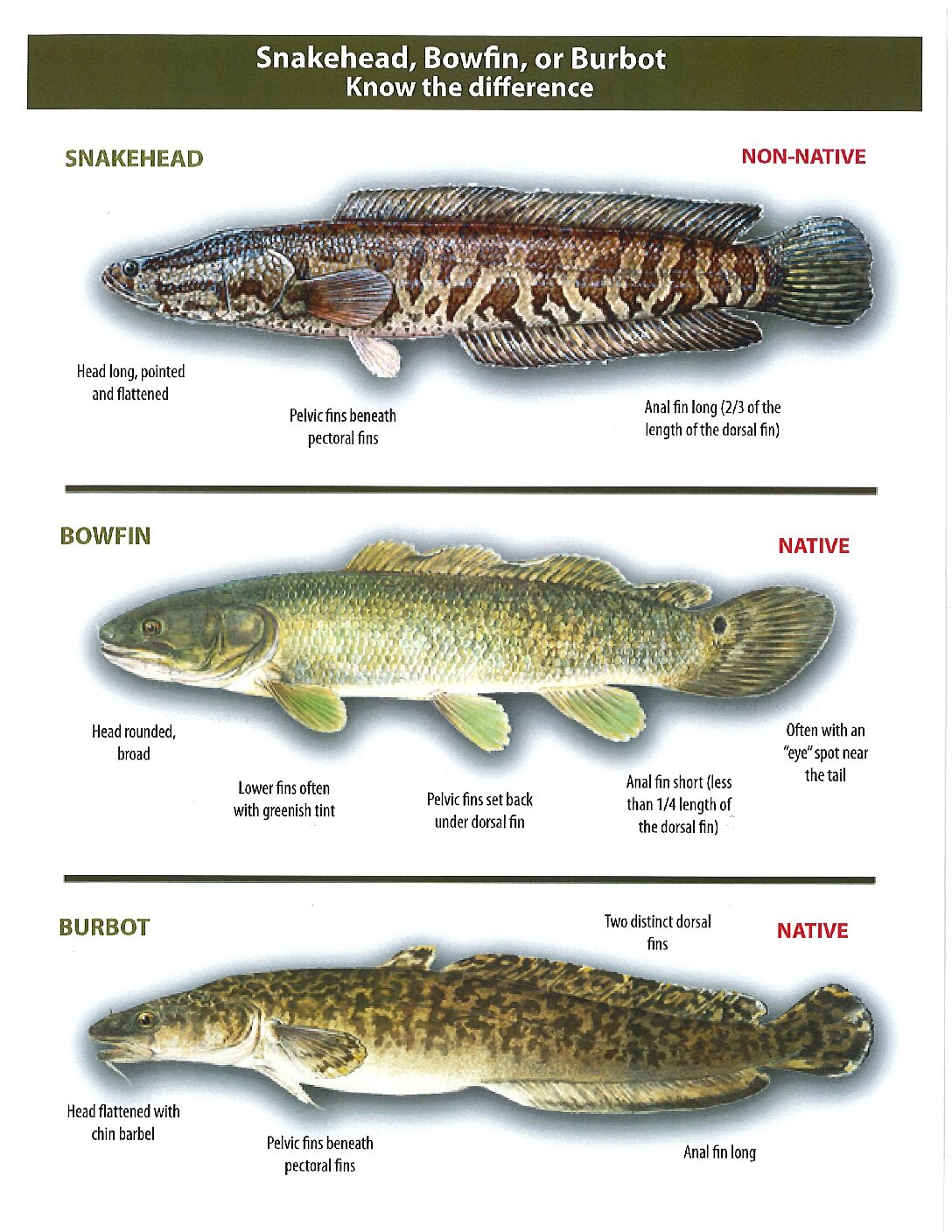
“If they’re in wet grass, wet vegetation, they can slither through it, because they can get enough oxygen from the moisture,” Bogenschuts says. “They’re also capable of kind of like burrowing in the sediments, so if the water levels drop down, they can still get air from the moisture where they’re at.” It’s that unusual behavior that prompted horror filmmakers to focus on a fictionalized version of the feisty fish.”Back when they were first found in the U.S., there were a few movies made, ‘Snakehead Terror’ and things like that, where these giant fish were walking across the land and, you know, eating people,” Bogenschuts says. “It’s not quite that scary, well, it is scary for our native species.”
Iowans who think they’ve caught a snakehead should snap a photo of it and send the pic to the D-N-R. Bogenschuts says the fish should not be released — but killed — and do not leave the body on shore. She notes, snakeheads are supposed to be quite tasty to eat.
(Radio Iowa) – The new leader of an agricultural products company in north-central Iowa is very aware of the impact the Trump administration’s latest round of international tariffs may have on his business’ bottom line. Tom Mangan is president and C-E-O of Sukup Manufacturing Company, based in Sheffield, which is known for its corrugated metal grain bins.
“Priorities change, sometimes on a day-to-day basis, depending on what’s going on in the world,” Mangan says. “We’ve got a lot of conversation about tariffs. That does have some impact on us, because we’ve got some great customers and dealers in Canada. Also we’ve got a European subsidiary that we get product out to. And then Mexico and Central America is also a big market for us, so a lot of tariff concerns.”

Tom Mangan. (photo from Sukup Manufacturing)
Mangan says most of the company’s products are built with American-made components, including all U-S steel. He says Sukup is growing and now employs more than 800 people. “We put up a new big building here in Sheffield. Over the past five years, we’ve grown to double the size of our Manly operation, into Clear Lake, into Hampton. We acquired two companies just in the past 15 months in Ramco Innovations in West Des Moines, and then also, just within the past few weeks, the manufacturer of our bin stairs, Greene, down in Illinois.”
Mangan is the first non-Sukup family member to run the company since it was founded in 1963.
(Lewis, Iowa) – The Cass County Conservation Board is now taking Pre-orders for the CCCB’s Native Plant Sale. The order form and payment will be DUE April 30th 2025 at 4-p.m. Forms can be found online https://www.casscountyia.gov/county-departments/conservation-office/
Native Local Eco-type live Plants will be sold. Live plants from nursery will come as small plugs; cells are 5” deep x 2” wide at top, or 4.5”deep x 2” Cone.
Two species of Native grass, and 11 Native Forbs are being offered, including many that benefit Pollinators.! New this year: Rough Blazing Star and Pale Purple Coneflower.
All orders must be picked up during designated times at the Conservation office in Lewis, unless prior arrangements are made. Designated pick up times will be: Thursday May 25th 8 AM-6 PM OR Friday May 26th 8AM-7PM.
Plants not picked up will be donated with NO REFUND.
(Radio Iowa) – Spring is spawning season and Iowa’s fish hatcheries are working to grow the fish to fill lakes across the state. Spirit Lake Fish Hatchery Manager Kim Hawkins says they were very successful in collecting the northern pike needed this year. “Within one night, we had over 130 fish in one net, so we caught plenty,” she says. Hawkins says it took them six nights last year to catch the same number of fish. The extract the eggs from the females and fertilize them with the males and then wait for them to hatch. “We warm the incubator water up to about 50 degrees so with these northern pike since they usually spawn in shallow sloughs or shallow lakes and those types of areas with that water nice and warm in those sections it only takes about 13 to 15 days for them to hatch,” Hawkins says. Other species are grown in the hatchery and then released, but not the pike.
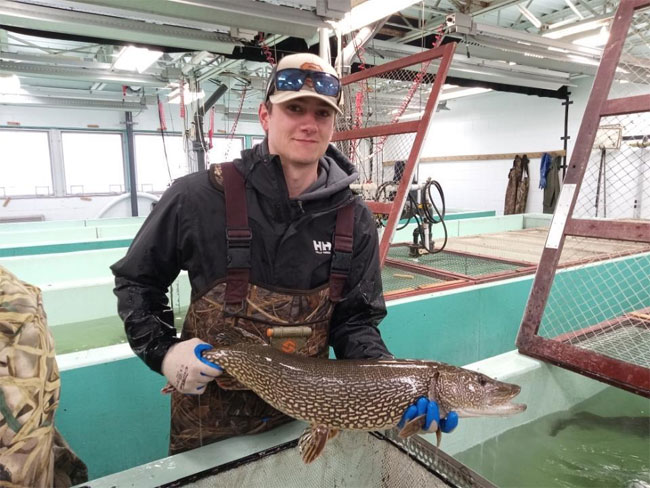
A Northern Pike at the Spirit Lake Hatchery. (IA DNR photo)
“We don’t raise them past hatch, so once they are sac fry, when they first hatch out of their eggs, we will distribute them into the waters that we had fish requested,” she explains. “And most of those are shallow lakes, either they’re brand new renovated shallow lakes or some that are just newly renovated a few years ago. So, that’s were most of these fish go for the year.” Spirit Lake also handles walleyes and muskies. “Our walleyes will go in about 30 different lakes and impoundments, and we are only one of two hatcheries in Iowa that do the walleye fry,” Hawkins says. “So, Rathbun Hatchery also takes care of the southern and eastern portion of the state, so they have another stocking list to do. Muskies are our priority for up in this hatchery, we are the ones who produce those for Iowa.”
Hawkins says the Spirit Lake Hatchery is open to the public starting Thursday (April 10) from 8 a-m to 8 p-m seven days a week until the netting is completed for the walleyes and muskies.
(Radio Iowa) – Farm commodity groups are calling on the Trump administration to negotiate with trade partners and find new markets amid escalating tariffs and retaliation. The president imposed steep tariffs last week on products from dozens of nations, while he put tariffs on Mexico and Canada earlier this year, the largest importers of corn and ethanol, respectively. Stu Swanson, president of the Iowa Corn Growers Association, calls the new tariffs “disappointing but not unexpected.”
Swanson says, “Now, with widespread tariffs announced on lots of countries, including some of the ones that we see as emerging markets, the concern raises again.” The association is encouraging President Trump to support more domestic uses of corn, like bio-based chemicals and fabrics, and by allowing E-15 to be sold nationwide, year-round. Export markets consume roughly half of U-S soybeans, more than a quarter of pork products, and around 15 percent of the country’s corn production. Swanson says the U-S exported nearly five-billion bushels of corn and value-added corn products last year, and he says the administration’s new tariffs come on top of low commodity prices and high input costs.
“We see tariffs impact us as farmers and the economy and finances on the farm,” he says, “but it also relates heavily to rural Iowa and the communities that we live in.” A downturn in the farm economy has contributed to recent layoffs of hundreds of workers at Corteva, John Deere, Firestone and Cargill. The American Soybean Association is urging the administration to quickly negotiate with impacted countries, including China, the largest importer of American soybeans.
(Iowa DNR News) – A mild winter followed by timely spring rains has Iowa forests and woodlots leafing out ahead of spring turkey season, possibly tipping the playing field in favor of the gobblers, after a record harvest of more than 16,000 birds in 2024. The first of Iowa’s four regular spring turkey seasons opens on April 14. “We are greening up ahead of schedule,” said Jim Coffey, forest wildlife research biologist with the Iowa Department of Natural Resources (DNR). “For anyone hunting second season or later, it could be a jungle out there.”
Winter turkey flocks are breaking up and birds are spreading across the landscape. Turkey production has been above the five-year average for three of the past four years, providing good numbers of birds, especially two-year-old jakes. “Jakes will usually respond to calls more easily than toms and have been known to come in in groups – if a group of jakes come in, make sure you have a clean shot at one bird,” Coffey said.
Although Iowa has set spring turkey harvest records twice since 2020, Coffey said it’s important to remember that historically, only one in five hunters will tag a bird. “Success should be determined by time spent outside, watching the sunrise as the timber comes alive around you, the experience in the woods, not by bagging a turkey,” he said. “Spring turkey hunting is a close, intimate sport, where the excitement is happening in less than 30 yards. And with the early leaf out this year, it could be even closer.”
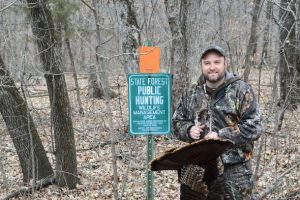
IA DNR photo
To improve the chances of bagging a turkey, Coffey said hunters should go through their equipment to make sure it all works and gear still fits before hiking into the timber on opening morning. He also said that the ticks are already out so plan accordingly. Iowa’s first of four turkey seasons opens on the second Monday in April each year, and this year, that’s the middle of April, aligning turkey hunting with mushroom hunting season.
“If we get rain and a little heat – it should be a good year for mushroom hunting – which also means we need to be aware of other people in the woods – hunters need to identify their bird, make sure it has a beard, and what’s beyond it,” Coffey said. One final tip, Coffey said don’t overlook Iowa’s smaller woodlots, as they are typically good places to hunt.
Successful hunters are required to report their harvest by midnight of the day after it is recovered by going online at www.iowadnr.gov, calling the toll free phone number printed on the tag, at any license vendor during regular business hours, by texting your registration number to 1-800-771-4692 or through the Go Outdoors Iowa app. “Best way for turkey hunter to help with conservation is to report your harvest,” he said.
Youth-only season is April 11-13
Youth turkey season is designed to provide a strong mentoring experience for the youth hunter. It is restricted to Iowa residents only. “Turkey hunting is an intimate sport and mentoring is a way to learn from other’s mistakes,” Coffey said. “With only about one-in-five hunters tagging a turkey, failure is part of the process. A successful hunt should be gauged on the adventure and experience of being in the woods not placing a tag on a bird.”
Youth tags are sold through the end of youth season on April 13. Youth tags are valid for youth season and each of the four regular seasons until filled or when the season four closes on May 18. Licenses are not sold after the youth season closes.
2025 spring turkey season dates
The youth season license is good until filled, but it must be purchased before the youth season closes.
Around 50,000 turkey licenses will be purchased this year. Hunters may purchase two turkey tags, with at least one for season four. Shooting hours are one half hour before sunrise to sunset.
(Radio Iowa) – A bill to make it legal to go “noodling” for catfish in Iowa lakes, streams and rivers is under consideration in the Iowa House. Representative Ray Sorenson of Greenfield sponsored the bill to have the state start issuing noodling licenses after hearing from Iowans who want to try to catch catfish with their bare hands. “I’ve had constituents bring it to me before,” he says, “but this was an entire family.”
Sorenson says the teenage girl in that family went “noodling” in another state. “And that’s where she kind of fell in love with it,” Sorenson says. It is legal to go “noodling” for catfish in at least 17 other states, including Wisconsin and Illinois. The fishing technique has opponents. Jim Obradovich is a lobbyist for the Iowa Conservation Alliance.

Representative Ray “Bubba” Sorensen (R-Greenfield) (official photo)
“How noodling works is a person reaches in with their hand and the biology of the catfish kind of creates a kind of a handle or a hook for a person once you get past your wrist and you grab on and the catfish grabs on,” Obradovich said, “and the way it ends is one of the two will give up.” Beynod the potential of injury to the human hand, Obradovich says noodling isn’t good for the fish.
“Noodlers generally don’t then take that catfish and then filet it or eat it. They just send it back. This causes damage to the fish,” Obradovich said. “The larger fish which they go for in this activity are the gene pool that we want to keep around and keep healthy for catfish procreation.”
The bill has cleared the House Natural Resources Committee and was reviewed yesterday (Tuesday) by another subcommittee. Noodling for fish is sometimes referred to as “tickling” or “hogging” and it is currently illegal in Iowa. People caught using the noodling technique to snag a catfish can face a fine.
In 2019, a man who pulled a 50 pound catfish from the Mississippi River and was photographed with his catch in downtown Davenport was fined nearly 100 dollars. In 2012, a Harlan man was pictured in the local newspaper with a 30 pound catfish and he was assessed a 177 dollar fine for noodling.
Senate File 608 would increase the minimum of the grain indemnity fund to $5 million and the maximum to $12 million. This is an increase from the current parameters, which are set at $3 million and $8 million, though it is not as great an increase as a bill proposed in the Iowa House of Representatives. The House bill would increase the fund’s range to $8 million and $16 million. SF 608 would also include “grain purchased under credit-sale contract” under the definition of “purchased grain” meaning grain purchased on a credit sale would be eligible for the same indemnity protections. 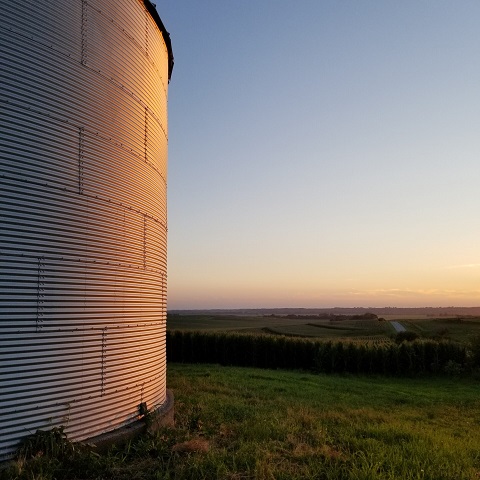
The House version of the bill would also include credit-sale contracts, but would reimburse those contracts at a rate of 70% of the grain purchased. Sen. Kerry Gruenhagen, R-Walcott, added a minor clarifying amendment to the bill, which passed. The bill advances after a vote of 39-8.
House File 508 has yet to be debated on the House floor.
(Radio Iowa) – The Iowa Supreme Court has brought back a lawsuit in a zoning case involving a Christian conservative group. The Family Leader sought the rezoning of a former pumpkin farm and cornfields in rural Polk County so it could turn it into an office area and events venue. Nearby landowners and the One-thousand Friends of Iowa group sued to stop the rezoning, but the district court ruled they did not have standing to sue.
The Iowa Supreme Court ruled that the landowners do have standing, and One-Thousand Friends should be able to fill in other information in their suit to prove they have members with a direct interest in the zoning.
Three justices dissented on that point, and the case now goes back to the district court.


 Facebook
 Twitter
 YouTube
 RSS
RSS