

CLICK HERE for the latest market quotes from the Iowa Agribusiness Network!
CLICK HERE for the latest market quotes from the Brownfield Ag News Network!


CLICK HERE for the latest market quotes from the Iowa Agribusiness Network!
CLICK HERE for the latest market quotes from the Brownfield Ag News Network!
(Radio Iowa) – Iowans who love to fish can make plans to teach a friend without needing to buy a license as the state’s annual Free Fishing Weekend runs this Friday through Sunday. Iowa DNR fisheries biologist Joe Larscheid says these are ideal days in the season to cast a line. “This time of year, the bluegills are on the nest, so they’re close to shore. Crappies are still close to shore, and so it’s an excellent time,” Larscheid says. “If the weather is favorable, get out with your family and line the shores and catch a lot of fish.”
The event is open to all Iowa residents on any of the hundreds of Iowa lakes, thousands of miles of rivers or scores of neighborhood ponds. Plus, hands-on fishing events are being offered to help families new to fishing get started. “There’s a whole lot of events going on in Iowa, across the state in different cities and different counties,” Larscheid says, “and you can go on our website and our Special Events Calendar and check those out.”
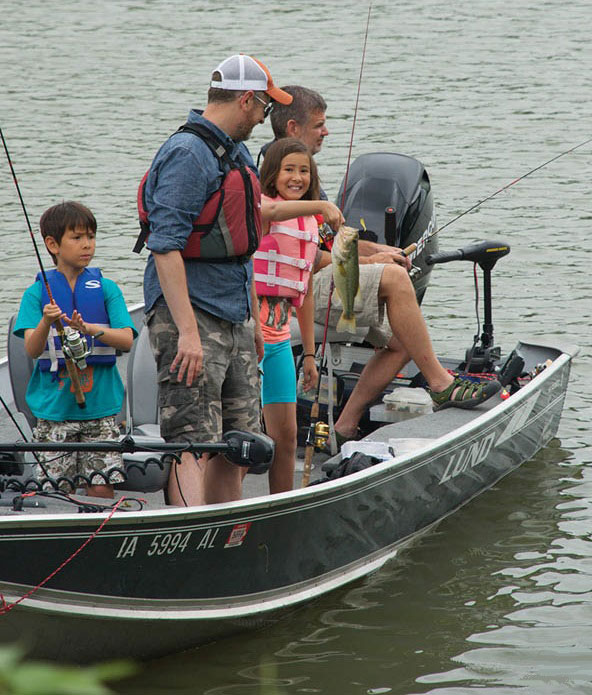
Iowa DNR photo
If you want to fish beyond Sunday, you’ll need a license, but getting one is easier than ever. “There’s a ‘Go Outdoors’ app that you can download for free, and on that app, you can buy your fishing licenses. You can have all the information at your fingertips like our Fishing Atlas, where to go fishing, where they’re biting, our fishing reports, even habitat features in a lake — you’re a dot on the map and you can walk right to them, fishing jetties and things like that.”
Learn more at www.iowadnr.gov or by visiting your county recorder’s office to purchase a fishing license.
Cass County: Corn $4.16 Beans $9.94
Adair County: Corn $4.13 Beans $9.97
Adams County: Corn $4.13 Beans $9.93
Audubon County: Corn $4.15 Beans $9.96
East Pottawattamie County: Corn $4.19 Beans $9.94
Guthrie County: Corn $4.15 Beans $9.96
Montgomery County: Corn $4.18 Beans $9.96
Shelby County: Corn $4.19 Beans $9.94
Oats: $3.36 (same in all counties)
(Radio Iowa) – Vietnamese officials visiting Iowa have signed agreements to buy more agricultural products from the Midwest, including Iowa. Iowa Secretary of Agriculture Mike Naig says the five agreements represent 800 MILLION dollars worth of soybeans, corn, dried distillers grain and pork. “I would definitely categorize it as historic,” Naig said, “and what we need to be seeing even more of.” The agreements, which are non-binding, were signed yesterday (Monday) during a ceremony at the Iowa Capitol. Naig led a trade mission to Vietnam in 2023 and plans to return to the country this fall.
“We’ve seen Vietnam as an attractive market, a market that’s got a real upside,” Naig said. “It’s a young population. It’s a growing economy.” Under one of the agreements, Vietnam is to purchase of 400 MILLION dollars worth of soybeans and soybean meal from A-G-P, a farmer owned cooperative that has five processing plants in Iowa. Randy Miller, a farmer from Lacona, is on the U-S Soybean Export Council’s board of directors. “Vietnam has grown to one of the most valued partners,” Miller said, “and we don’t take that for granted.”
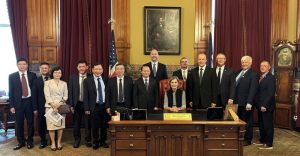
Iowa Governor Kim Reynolds hosted a delegation of Vietnamese officials on June 2, 2025. (Governor’s office photo)
Commodity groups see Vietnam and other Asian countries as opportunities to diversify supply chains, especially with escalating trade tensions between the U.S. and China.
Cass County: Corn $4.17 Beans $9.95
Adair County: Corn $4.14 Beans $9.98
Adams County: Corn $4.14 Beans $9.94
Audubon County: Corn $4.16 Beans $9.97
East Pottawattamie County: Corn $4.20 Beans $9.95
Guthrie County: Corn $4.19 Beans $9.99
Montgomery County: Corn $4.19 Beans $9.97
Shelby County: Corn $4.20 Beans $9.95
Oats: $3.37 (same in all counties)
(Lewis, Iowa) – The annual summer field day at Iowa State University’s Armstrong Research and Demonstration Farm in Lewis will be held from 9:30 a.m. to 3:30 p.m. on Thursday, June 26. The field day will feature experts from Iowa State University Extension and Outreach and other partner organizations, who will speak on a variety of current crop and soil health practices in agriculture.
Wes Everman, extension weed management specialist at Iowa State, will begin the program by providing insights on integrated weed management strategies. Then, James Holz, Iowa farmer and co-owner of Iowa Cover Crop, will discuss financial considerations for cover crops. 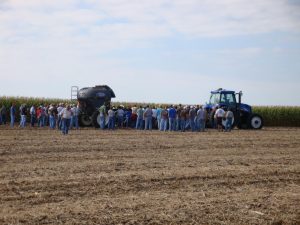
The Iowa Natural Resources Conservation Service team will begin the afternoon session with a presentation on assessing soil function. Rick Cruse, professor of agronomy at Iowa State and director of the Iowa Water Center, will discuss water resource management and climate resilience. Daren Mueller, extension plant pathologist at Iowa State, will wrap up the day by sharing tips for corn and soybean disease management to maximize profitability. Please visit the following website for more information:
https://www.extension.iastate.edu/news/armstrong-research-and-demonstration-farm-field-day-june-26
Cass County: Corn $4.20 Beans $9.97
Adair County: Corn $4.17 Beans $10.00
Adams County: Corn $4.17 Beans $9.96
Audubon County: Corn $4.19 Beans $9.99
East Pottawattamie County: Corn $4.23 Beans $9.97
Guthrie County: Corn $4.22 Beans $10.01
Montgomery County: Corn $4.22 Beans $9.99
Shelby County: Corn $4.22 Beans $9.97
Oats: $3.35 (same in all counties)
(Radio Iowa) – Better weather this spring could bring pheasant numbers back up this year after a dip brought on by last year’s flooding. Iowa D-N-R wildlife biologist Todd Bogenschutz says spring weather determines how many of the new birds survive. “Overall, the spring has kind of seemed like it’s going to come in around average. So I’m cautiously optimistic that we’re going to have a good hatch,” he says. Bogenschutz says early June is generally the main time for the hatch, and anything earlier is a good sign. “I actually had four broods reported to me before the Memorial Day weekend, and usually it’s the last week of May that I get the first report of broods,” he says. “So to get four reports of broods prior to the last week of May, you know that kind of tells me that winter was good, that spring has been good,” Bogenschutz says. He says it’s usually a 50-50 proposition on how many chicks survive the hatch.
“Usually, first nests are in the neighborhood of about 11 to 12 eggs on average, the first nest that the hen produces, and about half the nest hatch, and on average, about half the chicks survive,” he says. “So, if it’s a little bit better spring weather wise then we might do a little bit better than that.” He says hens are determined nesters and if they lose a nest, they will continue to re-nest into July, but the data shows that each attempt has fewer eggs than the previous nests. Bogenschutz says a slight improvement in the hatch can make a big difference in the number of birds. “We get to 60 percent of nests hatch and 60 percent of chicks survive, that’s a huge difference over the 50 and 50. So, you don’t have to move the needle a lot to make a big change in the fall,” he says.
Bogenschutz says his gut feeling right now is the hatch will be good, but they won’t be able to confirm that until they run their August roadside survey.
ATLANTIC, IA (June 1, 2025) – Produce in the Park’s Summer 2025 Farmers Market Opening Day is Thursday, June 5 from 4:30 to 6:30 PM at the Atlantic City Park. Market Manager Ciara Hoegh says this year promises to be bigger and better than ever. The highlight of the day is live music by the Prairie Gators—a band known for their infectious zydeco, bluegrass, vintage country, and gospel sound. The band has been performing for over 20 years at events including Junkstock and Omaha Mardi Gras. Featuring instruments like accordion, washboard, and bass guitar, their unique style is fun, upbeat, and perfect for an evening in the park.
The opening day farmers market also features 27 vendors–including 19 vendors selling food products. Shoppers will find early summer produce, farm-fresh eggs, locally raised meats (beef, pork, chicken, lamb), honey, sourdough breads, nut and trail mixes, fresh-squeezed lemonade, lots of desserts and other baked goods, as well as an array of crafts. Zipp’s Pizzaria food truck will be selling hot slices on-site.
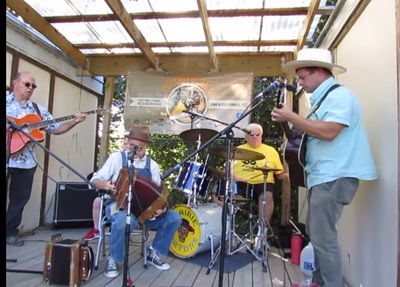
The Priarie Gators Band jams at Portchfest. The Prairie Gators will be at Produce in the Park June 5.
The June 5 market theme is “Dinosaur Time”—a playful nod to a TikTok trend encouraging everyone to eat greens like plant-eating dinosaurs (no forks required!). Market visitors of all ages are invited to join in the fun and gobble up free tastes of fresh greens (lettuce, spinach, kale). The YMCA will provide a free bounce house, and dinosaur-themed face painting will be
available for purchase.
June 5 Vendor Lineup:
● Food truck: Zipp’s Pizzaria
● Bridgewater – Lettuce, kale, arugula, chard, broccoli, and more produce
● Brun Ko Farm – Greens, radishes, snap peas, green onions, eggs, chicken, lamb, honey
● Bubba’s Freeze Dried Foods – Freeze-dried candies, fruits, vegetables
● Deliciously Dunn – Cookies
● Dodi’s Rock & Crystal Shop – Crystal jewelry, resin crafts, tumbled stones
● Ehrman Family Farm – Sourdough breads, rustic rolls, handmade crafts
● Fire and Flour – Sourdough, yeast breads, cupcakes, cake pops, brownies, donuts, mini
flavored loaves
● Frosting, Inc. – Gourmet cupcakes and cookies
● Hansen Family Homestead LLC – Chicken and duck eggs, chicken, pork, sourdough
breads
● Hoopy Hallow Ranch – Beef, lamb, free-range eggs
● Imagine – Garden crafts and planters from vintage and repurposed items
● It Makes Total Scents – Car air fresheners
● Juj’n Juj’n – Art and handmade goods
● Kringle Man – Danish kringle, pastries, rye bread
● Little Lark’s Mercantile – Baby clothes, baked goods, eggs, custom crafts
● MinDee’s Nuts LLC – Flavored nuts and trail mixes
● Mystic Dawn Creations – 3D printed toys, games, fidgets
● Noble Provisions – Meats and eggs
● Oak Hill Honey – Honey
● Paige’s Pieces – Keychains, signs, bookmarks, jewelry
● Piper’s Brae Farm – Aronia berries and products
● Renander Farms – Eggs, cookies, cinnamon rolls, breads, fruit crisps
● Squeezing Lemons – Fresh squeezed lemonade
● Stork Treasures – Handmade pens, badge reels
● Ter-Bear Honey – Honey
● TJ’s Kitchen – Wine bread
Admission to Produce in the Park is always free. Community organizations will be on site sharing local resources. The market accepts SNAP EBT and Double Up Food Bucks for all qualifying food items. Vendor and sponsor applications remain open for the summer season. Interested sellers of handmade or homegrown products—including local foods, crafts, art, and plants—can apply online at www.ProduceInTheParkAtlanticIowa.com or pick up paper copies at the Atlantic Area
Chamber of Commerce (102 Chestnut St., Atlantic).
Opening Day is proudly sponsored by Atlantic Area Chamber of Commerce, Cass County Tourism, Cass Health, City of Atlantic, First Whitney Bank & Trust, Gregg Young Chevrolet of Atlantic, Nishna Valley Family YMCA, and United Church of Christ of Atlantic. For the latest market updates, follow Produce in the Park on Facebook at www.facebook.com/ProduceInThePark and Instagram at www.instagram.com/produceintheparkatlanticia/
LITTLE SIOUX, Iowa — A new addition is coming to the Loess Hills State Forest in western Iowa after Iowa Natural Heritage Foundation (INHF) transferred the former Little Sioux Scout Ranch to the Iowa Department of Natural Resources.
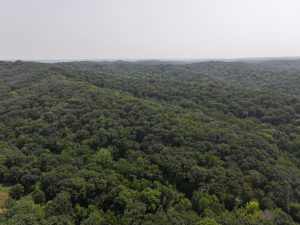
The 1,776-acre property sits on the western slope of the Loess Hills in Monona County, about halfway between Sioux City and Council Bluffs. The site offers numerous opportunities for outdoor recreation such as hiking, birdwatching, wilderness camping, fishing and hunting. The property has dozens of miles of established trails that will link to the surrounding state forest and a 20-acre lake with excellent fishing.
The property will be open to the public after boundary signs are installed in late June. A public celebration is tentatively planned for Friday, Sept. 26.
The site is mostly old-growth oak woodland and remnant prairie on the western bluffs of the Loess Hills, a globally unique area consisting of ridges formed by wind-blown soil. It is in a state-designated Bird Conservation Area, making it a haven for birdwatching, one of North America’s fastest growing outdoor activities. It is also in a National Park Service-designated Special Landscape Area and lies along the Loess Hills National Scenic Byway.
“To be able to protect a piece of this size, and what that means for wildlife habitat and outdoor recreation, is a once-in-a-lifetime opportunity,” said INHF Loess Hills Land Stewardship Director Kody Wohlers.
INHF photo
Little Sioux Scout Ranch had been used as a scout camp for more than 50 years by troops from Iowa, Nebraska and South Dakota. The site is well-known for a tragic event. On June 11, 2008, a deadly EF3 tornado struck the camp, injuring 48 and killing four young scouts. A memorial and open-air chapel were erected in their honor.
In 2021, the Gilwell Foundation, which owns all the properties used by the Mid-America Council of Scouting America, came to the difficult decision to sell the camp to INHF due to declining attendance.
In working on the sale with the council, INHF has agreed to do three things: Open the property to the public; maintain the memorial to four boys that died in a 2008 tornado on the property; and honor and share the history of LSSR as a scout camp.
INHF privately raised $2 million from more than 500 donors — including lead gifts from the Iowa West Foundation, Polina and Bob Schlott, the Gilchrist Foundation, and the MidAmerican Energy Foundation — to help protect the property. Additional funding came from the Forest Legacy Program administered by the U.S. Forest Service and Iowa’s Resource Enhancement and Protection (REAP) Program.
“We’re grateful to all the donors and partners that made the protection of this special place possible,” said Joe McGovern, INHF president. “This was one of the largest protection projects INHF has ever done. Donors have told us they want to see this place protected — staying in one piece and not being developed — but they’re also excited to see it opened to the public.”
In an effort to re-wild the property to benefit nature and align with the rest of the state forest, most of the camp infrastructure has been removed. More than $250,000 in buildings and materials were salvaged to be used by other scout camps, nonprofits and county conservation boards. The memorial and chapel on the site will be maintained.
Iowa Natural Heritage Foundation is a nonprofit conservation group that works with private landowners and public partners to protect and restore Iowa’s land, water and wildlife. Since its founding in 1979, INHF has helped protect more than 200,000 acres of Iowa’s natural resources. Learn more at www.inhf.org.
(UPDATED/Radio Iowa) – Opponents of a proposed carbon pipeline urged Governor Kim Reynolds again today (Friday) to sign a bill into law to limit the use of eminent domain by pipeline developers. Mary Powell of Shelby County recalled that Reynolds mentioned Iowa’s state motto-“our liberties we prize and our rights we will maintain”-during a nationally televised speech a few years ago.
Page County landowner Marty Maher says the bill won’t stop any pipelines, but it will make the process more fair.
Supporters of the carbon capture pipelines are asking Reynolds to veto the bill, saying it would kill those projects and hurt Iowa’s ethanol industry. Reynolds has said she’s meeting with groups on both sides of the issue to help her make a decision. She has to sign or veto bills passed in the legislative session by June 14th.


 Facebook
 Twitter
 YouTube
 RSS
RSS