

CLICK HERE for the latest market quotes from the Iowa Agribusiness Network!
CLICK HERE for the latest market quotes from the Brownfield Ag News Network!


CLICK HERE for the latest market quotes from the Iowa Agribusiness Network!
CLICK HERE for the latest market quotes from the Brownfield Ag News Network!
(Harlan, Iowa) – The 2025 Shelby County Fair that got underway July 5th, continues today with a full slate of activities. Here’s the schedule for Wed., July 9th:
6:30 – 8:30 a.m………….Enter & Weigh 4-H/FFA Swine – Unload at dock and be inspected by veterinarian.
8:00 a.m…………………..Flag Raising
8:00 – 10:00 a.m………..4-H Cake Decorating Entries – 4-H Exhibit Building
8:45 a.m…………………..4-H Table Setting Exhibitors’ Meeting
9:00 -11:00 a.m…………4-H Table Setting – 4-H Exhibit Building (see Green Book for detailed schedule)
9:00 -10:00 a.m…………Enter & Weigh 4-H/FFA Sheep and Goats – Unload at dock and be inspected by a veterinarian
10:00 a.m…………………4-H Booths to be finished
11:00 a.m…………………Willard Olson Swine Contest – 4-H Exhibit Building
12:00 – 6:00 p.m………..Enter Open Class Non-Livestock Exhibits
4:30 – 5:30 p.m………….4-H/FFA Horses will be checked in – All livestock must be inspected by the vet before going to stall.
4:30 – 7:00 p.m………….Enter & Weigh 4-H/FFA Market Beef, Breeding Beef Heifers, Bottle/Bucket Plus Ones, & Dairy Heifers – Unload at dock and be inspected by a veterinarian.
6:00…………………….Market Beef Pen of 3 – check-in for carcass scanning
5:30 – 6:30 p.m………….Enter 4-H/FFA Rabbits – All livestock must be inspected by the vet before going to their cage
6:00 p.m…………………..Western Iowa Pullers Tractor Pull – Grandstand
6:00 p.m…………………..Bill Riley Talent Search
6:30 p.m…………………..Judge Open Class Non-Livestock Departments (if not judging Thurs.)
6:30 – 7:30 p.m………….Enter 4-H/FFA Poultry
(Greenfield, Iowa) – The Adair County gets underway today. The Fair continues through July 13th. Here’s the schedule of events for July 9th:
*ALL animals, including horses, will be inspected by a veterinarian on the trailer before going to the barn/scale. Livestock trailers will enter through the pit area and line up for the veterinary check. Animals to be weighed must arrive during their specific time frame. All livestock (not poultry) must be stalled and checked in with the superintendent by 12:00 pm.
6:00 am All livestock (not poultry) may begin arriving
7:00 am – 8:00 am Enter Rabbits – West end of Dairy Barn Rabbits will go directly to the barn
and will be inspected by a veterinarian upon arrival.
7:00 am – 8:30 am Weigh Swine
8:00 am til gone Donuts/rolls provided by Adair County Health System – near scale house/barns
8:30 am – 10:00 am Weigh lead market beef followed by junior feeder pen cattle
10:00 am – 10:30 am Weigh Bucket/Bottle Calves
10:30 am – 11:00 am Weigh Meat Goats
11:00 am – 12:00 pm Weigh Sheep
12:00 pm – 3:00 pm Quilt Show Entry – Varied Industries Building
1:00 pm Bucket/Bottle Calf & Bottle Lamb/Goat Record Books Due to 4-H/FFA Center
Dog Show – Mid-American Arena Dog Parent Showmanship- directly following youth Dog showmanship class.
1:00 pm – 1:45 pm Enter Swine Performance – Swine Barn
1:45 pm – 2:30 pm Enter Lamb/Goat Performance – Swine Barn
3:30 pm Clover Kids Rabbit/Cavy Show – Swine Show Ring
4:00 pm 4-H/FFA Rabbit/Cavy Show – Swine Show Ring Rabbit Parent Showmanship- directly following youth Rabbit showmanship class.
4:00 pm Fun with Water Event- NW corner of fairgrounds; Hosted by Adair County Hot Shots
4:30 pm – 5:00 pm The Amazing Bubble Factory Show – Midway 
5:00 pm – 8:00 pm Live Music – Gazebo
Quilt Show – Varied Industries Building
Conservation Station Trailer – in front of 4H/FFA Center
5:00 pm – 11:00 pm $1 Inflatables in the Midway
6:00 pm Free BBQ Hamburger/Pork Burger Meal compliments of the Adair County Fair Board –Courtyard
Ice Cream Social (Historical Society) – Courtyard
4-H/FFA Building Opens
4-H Silent Auction Begins – 4-H/FFA Center
6:30 pm – 7:00 pm The Amazing Bubble Factory Show – Midway
8:00 pm GAZEBO PRESENTATIONS
Little Miss and Little Mister Adair County
Local Conservation Awards – Adair County Soil & Water Conservation
Adair County Extension:
● Awards: Crops in the Field, On-Site Garden, Bucket of Junk, Pride of Iowa, Cookie Baking Contest, Cookie/Cupcake Decorating Contest, Quilt Square Creation
● 4-H Hall of Fame
● 4-H Senior Recognition
Adair County Fair Queen Coronation
8:30 pm – 9:00 pm The Amazing Bubble Factory Show – Midway
(Radio Iowa) – From green foxtail to goosegrass, a contest at the Iowa State Fair next month will test Iowans’ knowledge of weeds. There’ll be three divisions, for future agronomists under 19, a general division, and one for professionals. They’ll need to correctly name between 20 and 35 common Iowa weeds. Meaghan Anderson, a field agronomist with the Iowa State University Extension, says contestants will have to be able to identify real weed samples, potted on a tabletop display. “The primary goal is just to raise awareness of some species that people may see all the time but don’t know the names of,” Anderson says. “We also like to provide some fun facts so people know a little bit more about the species that are surrounding us in our environment.”
The extension has online weed guides so anyone can learn how to distinguish crabgrass from quackgrass from witchgrass. “A lot of the species are really common ones like velvetleaf, common lambsquarters or dandelions,” Anderson says, “and we accept any common name that we are aware of, so if you call it creeping Charlie, but I call it ground ivy, we’re still going to give you the points for it on the test.” Perhaps you already know bull thistle, bush honeysuckle and burcucumber, but Iowa is home to many dozens of invasive plants, like the Japanese knotweed. “We encourage you to study a little bit ahead of time, identify some of those common weeds, focus on things that you may see in your yard or in your neighborhood, and you’re going to be pretty good on identifying at least a handful of them,” Anderson says. “If you’re not quite ready to compete, we do put them in the Ag Building at the State Fair and they will stay in there for the duration of the fair and they will have their labels on them.”
There are cash prizes for the top finishers in each division, but Anderson says most contestants aren’t in it for the money. “I think the bragging rights is probably the most important thing, right? A good family competition is important, so the kids and the parents can compete against each other and see who wins to get the most correct,” Anderson says. “We do have State Fair ribbons, so the top five in each of our divisions, the blue ribbons are usually the nice, big blue ribbons, very fancy.”
The contest will start at 9 AM on Friday, August 8th in front of the John Deere Agriculture Building.
https://crops.extension.iastate.edu/encyclopedia/weed-identification-fact-sheets
(Radio Iowa) – The state and other partners are launching a more than one-point-nine MILLION dollar project in five Iowa counties to reduce nitrate run-off into the Beaver Creek Watershed. A 380 square mile area drains into the watershed and Iowa Agriculture Secretary Mike Naig says the money will be used over the next three years to finance conservation measures around Beaver Creek.
“Things that will have an impact on reducing nitrate loss and nitrate levels in the stream and so of course that’s of interest, certainly, in central Iowa, but I would stress that it’s really been a focus of ours now for several years,” Naig said, “and we’ve done projects like this before and so it’s a next round, if you will.” Beaver Creek flows into the Des Moines River, a drinking water source for over 600-thousand customers in metro Des Moines.
Central Iowa Water Works has banned lawn watering since June 12 as the utility’s nitrate treatment facility has had a hard time keeping up with high nitrate levels in the Des Moines and Raccoon Rivers. Naig says he’s focused on collaboration with the utility and other parties. “We know that they’ve got infrastructure needs and investments that they certainly need to make on the water treatment side and there’s work that needs to be done and is being done upstream in the farm landscape,” Naig said.
“It’s time to talk again, of course, and we’ll continue that conversation…I don’t think that playing the blame game is a good idea. Let’s figure out ways we can work together on both ends of the equation.” This latest water quality project along Beaver Creek will finance efforts in Boone, Webster, Greene, Dallas, and Polk Counties, like bolstering oxbows in the stream.
“When a stream meandered and then through flooding or just normal kind of how the water flows, it’ll cut a new channel, but it leaves the remnant of that bow out of the stream and so what you can actually do is work to engineer those in a way that they can once again be useful in denitrifying water,” Naig said. Over time, soil fills in oxbows, but Naig says mapping can discover where those oxbows were and plans can be made to restore those side channels along Beaver Creek into wetlands.
“They are a low cost practice that can be very, very effective,” Naig said. “They don’t work everywhere and they don’t exist everywhere, but where they do they make a ton of sense.” The money will also be used to help landowners build saturated buffers and bioreactors that filter run off from farm fields.
The Iowa Department of Agriculture, the Boone County Soil and Water Conservation District and other public and private groups are partners in the project.
The Iowa Department of Natural Resources (DNR) is seeking informal comments on administrative rules related to game harvest reporting and landowner tenant registration. Executive Order 10 (EO10), signed by Governor Reynolds on January 10, 2023, requires all state agencies to identify which administrative rule chapters will be retained or rescinded. The EO10 process includes public engagement with the opportunity for input.
The Iowa DNR has reviewed chapter 571 Iowa Administrative Code (IAC) Chapter 95 (Game Harvest Reporting and Landowner-Tenant Registration). Based on the review, DNR has revised this chapter to modernize processes and improve clarity to customers on methods to report harvests. The public is invited to provide informal comments on the proposed rule changes. DNR will accept written comments through July 15, 2025. Written comments regarding the proposed rules should be submitted to: denise.roberg@dnr.iowa.gov. Comments should be made to specific portions of the rule.
After receiving and reviewing informal comments, the DNR will create a draft Regulatory Analysis and draft Notice of Intended Action.
Drafts of the rules, including a “clean” copy and a version showing revisions, can be found on the DNR webpage: www.iowadnr.gov/eo10.
(Iowa DNR News) -Iowa’s 2024 estimated pheasant harvest was the second highest in nearly two decades, coming in at more than 460,000 roosters last fall, surpassed only by the 2023 harvest of 590,000. This is the best back to back pheasant harvest years since 2007. Only South Dakota had more pheasants harvested last year. The 2024 August pheasant survey showed a population decline of 14 percent from 2023, likely due to ill-timed spring flooding across northwestern Iowa. “The roadside counts were confirmed in the small game harvest hunter survey, but overall we had a really good fall and are looking forward to this year’s August roadside survey to see where the bird numbers are ahead of the 2025 season,” said Todd Bogenschutz, upland wildlife biologist with the Iowa Department of Natural Resources.
The statewide August roadside survey is conducted by Iowa DNR staff between Aug. 1-15, who drive 225, 30-mile routes on gravel roads at dawn on mornings with heavy dew. Hen pheasants will move their broods to the edge of the gravel road to dry off before they begin feeding, which makes them easier to count. Bogenschutz estimated more than 77,400 hunters pursued pheasants in Iowa last fall, down from 83,600 in 2023. Iowa’s quail hunters harvested 27,500 birds or 2,700 fewer than last year. Iowa’s rabbit and squirrel harvest both increased over 2023; rabbits by 13 percent to an estimated 77,000, squirrels by 32 percent, to more than 124,300. Iowa mourning dove hunters harvested an estimated 143,000 doves, down from the 195,000 in 2023.
A century of pheasant hunting
The Iowa DNR and Pheasants Forever are celebrating 100 years of pheasant hunting in the Hawkeye State. The first season was held Oct. 20-22, 1925, when 13 counties in north central Iowa were opened to pheasant hunting. Hunters were allowed a three-rooster limit, for a half-day of hunting. An estimated 75,000 hunters participated. Hunters can commemorate the 100th anniversary by purchasing a hard card featuring Iowa Pheasants Forever Print of the Year when they purchase their 2025 hunting and fishing licenses.
Information on places to hunt, the August roadside survey results and more is available online by clicking the 100 Years of Pheasant Hunting link at www.iowadnr.gov/pheasantsurvey.
Cass County: Corn $4.07 Beans $10.12
Adair County: Corn $4.04 Beans $10.15
Adams County: Corn $4.04 Beans $10.11
Audubon County: Corn $4.06 Beans $10.14
East Pottawattamie County: Corn $4.10 Beans $10.12
Guthrie County: Corn $4.09 Beans $10.16
Montgomery County: Corn $4.09 Beans $10.14
Shelby County: Corn $4.10 Beans $10.12
Oats: $3.21 (same in all counties)
(Prices are per bushel; information is from the area Farm Service Agency [FSA] offices)
(Radio Iowa) – Iowa’s biodiesel producers says a credit in the spending and tax bill signed by President Donald Trump last week should help the industry. Iowa Biodiesel Board Executive Director Grant Kimberly credits Iowa’s Congressional delegation for negotiating several provisions that will help smaller biodiesel producers, who have been struggling recently. “Senator Grassley in particular, was, was really solely instrumental in making sure that also the small producer biodiesel credit was added into this. They call it the 40-A, the, the old program bringing it back, and adding that in, and, and that’s going to, in particular help plants in Iowa, the independent biodiesel plants in Iowa and throughout the Midwest,” he says.
Some smaller biodiesel plants in the state have been idled due to market uncertainty. “This is really important to get this legislation passed. I mean, the, the biodiesel industry has been struggling, to put it lightly here in the last, really in the last year and a half.”
Kimberly says they’ll still need more guidance on tax credits before production returns to full capacity.
(Radio Iowa) – A federal report on economic activity shows Iowa’s gross domestic product — or G-D-P — fell just over six percent in the first three months of the year. The G-D-P fell in 39 states, but Nebraska and Iowa tied for the biggest drop. Iowa State University economist Peter Orazem says Iowa’s has been growing more slowly than the rest of the country. “We started growing more slowly than the U.S. in 2018 and if you go back to the start of the pandemic, we’ve not added any jobs,” Orazum said, “so I don’t think Iowa has been doing particularly well not in just the last quarter, but the last seven years.” The latest figures show about about 36-thousand fewer people are in the Iowa workforce compared to early 2020.
“And Iowa goes into the pandemic as one of the older labor forces in the country,” Orazem says, “and so one of the problems that Iowa has faced since the pandemic recovery has been we simply don’t have enough workers to fill jobs, and atypically compared to other states.” Iowa State University ag economist Chad Hart says the feed grains side of Iowa’s agricultural sector is struggling right now, which has had an impact on ag-related manufacturing. “We think of Deere. We think of Kinze,” Hart says. “…We’ve seen the layoffs over the past year with those two big giants, along with a lot of other smaller firms doing that.” Hart says agricultural sector of Iowa’s economy took a hit a few years ago and then farm income dropped about four percent again in 2024. 
“When we think about agriculture here in Iowa, it impacts all other sectors as well,” Hart says. “…When you think about what’s the biggest thing on the real estate side, that’s farm values…The crop insurance industry is a big industry here and so when you think about, ‘Ag slows down,’ all these other industries related to that slow down as well.” The two I-S-U economists made their comments during a recent appearance on Iowa Press on Iowa P-B-S. Last week, Governor Reynolds said the recent drop in Iowa’s G-D-P is linked to declines in Iowa’s ag sector, plus challenges in the state’s financial services and insurance industries. Iowa’s insurance industry accounts for about 11 percent of the state’s G-D-P.
AMES, Iowa — Farmers, landowners and friends of farmers are invited to participate in Practical Farmers of Iowa’s 2025 field day season. This year, more than 60 farmer-led events are happening across Iowa and surrounding states from June through November. All events are led by PFI farmer members who are eager to share their knowledge, discoveries, mistakes and successes so others can learn and grow their own operations. One of the PFI Field Day events will take place July 22nd, from 10-a.m. until Noon, near Elliott (IA). The event is free to attend and open to the public.
Liz Kolbe, PFI’s farmer-led education director, says “It doesn’t matter if you’re just getting started or have been farming for decades, or if you farm 2 acres or 2,000 – there’s something for everyone at a PFI field day.” Field days cover a wide range of topics, showcasing farmers with operations of all sizes and production practices. This year’s events explore conventional and organic field crops, cover crops and small grains; livestock systems of various scales and species; fruit and vegetable production; flowers and orcharding; efforts to add habitat and conservation practices; and more.
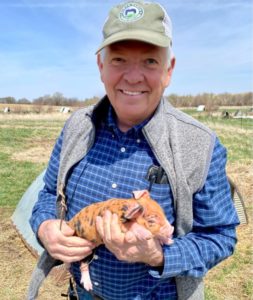
Health and Happiness With Pastured Farrowing
To continue to serve PFI’s growing network, 13 field days will be held in states outside of Iowa, including Illinois, Minnesota, Missouri, Nebraska and Wisconsin. PFI field days are free to attend and open to all – membership in Practical Farmers of Iowa is not required or expected. Events are marked by a welcoming atmosphere, a spirit of curiosity, a culture of mutual respect and farmers openly sharing their knowledge and experience.
All events occur rain or shine. While RSVPs are not required for most field days, they are appreciated to help with event and meal planning. The full list of events – along with additional information about PFI field day policies and logistics – is available at practicalfarmers.org/field-days.
Practical Farmers’ 2025 field days are supported by Level A sponsors Choose Iowa | Iowa Department of Agriculture and Land Stewardship; Diverse Corn Belt; Grain Millers; Green Cover; Mad Capital; Naylor Seed; Niman Ranch; Organic Valley; Sunderman Farm Management Co.; and Tidal Grow AgriScience.


 Facebook
 Twitter
 YouTube
 RSS
RSS