

CLICK HERE for the latest market quotes from the Iowa Agribusiness Network!
CLICK HERE for the latest market quotes from the Brownfield Ag News Network!


CLICK HERE for the latest market quotes from the Iowa Agribusiness Network!
CLICK HERE for the latest market quotes from the Brownfield Ag News Network!
(Radio Iowa) – Two scientists who helped create an international seed vault received the World Food Prize last week in Des Moines, spotlighting the importance of seed banks, including one in northeast Iowa. The Seed Savers Exchange, based in Decorah, is a collection with more than 20-thousand heirloom varieties of fruits, vegetables, flowers and grains. The non-profit’s development director Cindy Goodner says it’s one of the largest non-governmental seed banks in the U.S. “Our collection of home-grown seeds is really deemed as being globally significant,” Goodner says. She notes the Seed Savers’ mission is to build a community of people who safeguard heirloom seeds for the future.
Goodner says this year’s World Food Prize, often dubbed the Nobel Prize of food and agriculture, elevates the importance of protecting crop diversity. Mike Bollinger, executive director of the Seed Savers Exchange, says home gardeners and small-scale farmers who save and share heirloom seeds are also vital links to maintaining diversity in our crops. “No matter how you’re looking at it, you need crop diversity,” Bolinger says. “It is really the foundation of our agricultural food system, and so it’s important to preserve that.” Bollinger says he was happy to see the World Food Prize awarded to scientists in this field. He says it brings attention to seed banks and their role in food security, especially in the face of climate change.
The World Food Prize went to Geoffrey Hawtin and Cary Fowler, who helped start the Svalbard Global Seed Vault in Norway in 2008. It’s a backup for more than 100 seed banks around the world, including the Seed Savers Exchange.
(Radio Iowa) – Creating a field of solar panels to generate power doesn’t have to mean taking farmland out of agricultural production. Mallory Tope, a policy associate with the Center for Rural Affairs, says “dual use solar” is an excellent solution for meeting the growing demand for renewable energy while also utilizing Iowa’s fertile soil for growing crops — and growing other things. “A dual use solar site combines solar generation with agricultural use,” Tope says. “There’s a lot of different options. You could do livestock grazing, crop production, pollinator habitat, beekeeping, but it really just is the essence of using the same land to have ag and solar generation.”
The center is launching an educational campaign designed to reach policymakers at the city, county and state level. “There’s a lot of concern around having solar on agricultural land and taking that land out of production, but with dual use, you’re able to get both and have all the benefits that come with having a solar site,” Tope says. “You get the tax revenues, the landowners get their lease payment, but you still get to use that land for agricultural production.” The Center for Rural Affairs is working to encourage local leaders to consider agri-solar and dual use when drafting or amending ordinances that relate to solar development.
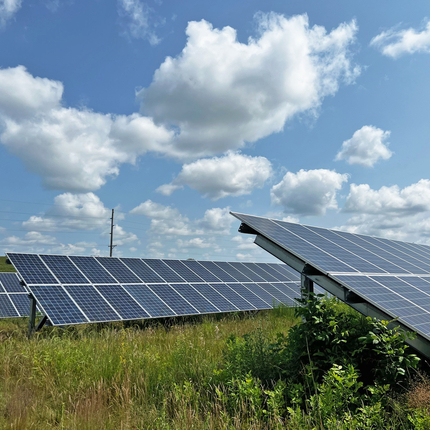
CFRA photo
“It’s a great solution, as a lot of people maybe don’t want to completely take out land for just solar, but with agri-solar, you still can get some use out of it,” Tope says. “It’s kind of like the best of both worlds, having that energy generation and being able to still use your land for some agricultural usage.” To support dual use development, Tope says counties could set additional land-use expectations, adopt zoning approaches that allow for mixed land use, or set up overlay districts for special solar permits.
A report from the Clean Grid Alliance says Iowa has more than 30-million acres of farmland, with about 18-million considered “prime” acres, while about 25-hundred acres statewide are devoted to solar, generating 260-megawatts of power.
(Radio Iowa) – The trapping season opens in Iowa Saturday with a D-N-R expert saying the prospects look good. Furbearer biologist Vince Evelsizer says some of the animals have managed the recent wet to dry weather swings better than others. “The more aquatic fur bear species like beavers, otters, mink and muskrats, they’re more affected by this extreme wet to dry to wet, intra-annual variation that we’re seeing more than ever in Iowa,” he says. “That’s hard on them for rearing litters and overwintering successfully.”
He says the bobcat, coyote and foxes, are less impacted by that, but it can impact their numbers to some extent when it gets really dry out. He says the price of fur is one thing that has trappers more motivated. “There’s a little bit of optimism because of reports of an increased demand and wild furs from more countries than have been at the table the past few years. So the demand is there a bit more than it has been the last few years,” Evelsizer says. But he says you are not going to make a fortune with fur in Iowa.
“Trapping is not a lucrative sport any longer. It’s something to do just out of sheer passion and a way to enjoy the outdoors and learn many things about reading animal sign and just seeing things go on out there while you’re out there,” he says. Evelsizer says it is a venture that doesn’t take a big investment to get started. “It’s one of those activities where you can keep it as simple as you want or as complex as you want,” Evelsizer says. “So generally, for a few hundred dollars you could get enough equipment to get a taste of trapping, If you wanted to get into it even more than you can spend even more.”
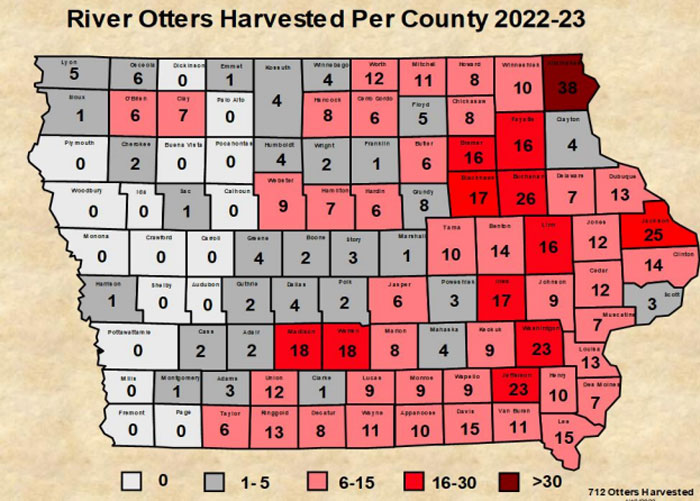
(DNR graphic)
Evelsizer says it’s also not hard to learn the basics. “There’s more ways than ever to get into trapping. Probably the number one way is to find a seasoned, experienced trapper that’s and you know that can kind of play a role as being a mentor,” he says. “Another option is to attend one of our beginner Trapper education events that are held annually around the state.” A change was made to the trapping law to try and get younger kids interested. “Youth trappers under age 16 can go trapping with a licensed adult now without having to pay for a youth for harvester license,” Evelsizer says.
He says you can find out more about trapping on the D-N-R’s website.
Oats: $2.96 (same in all counties)
MORTON MILLS – On October 31 at 10:55 a.m., the Iowa Department of Natural Resources was notified of a potential cattle manure release into an unnamed tributary of Sevenmile Creek in Montgomery County.
Staff from the DNR Field Office in Atlantic responded to the site. Further investigation revealed recent precipitation created runoff from a small feedlot located at 1490 Spruce Avenue, northwest of Morton Mills. The runoff flowed across a vegetated area before entering the unnamed tributary, which flows into Sevenmile Creek.
The manure originated from a small feedlot owned by Duane Bergren, Jr. At the time of the investigation, no fish were observed in the tributary. There is very little flow in the stream, and there was no observed impact in Sevenmile Creek.
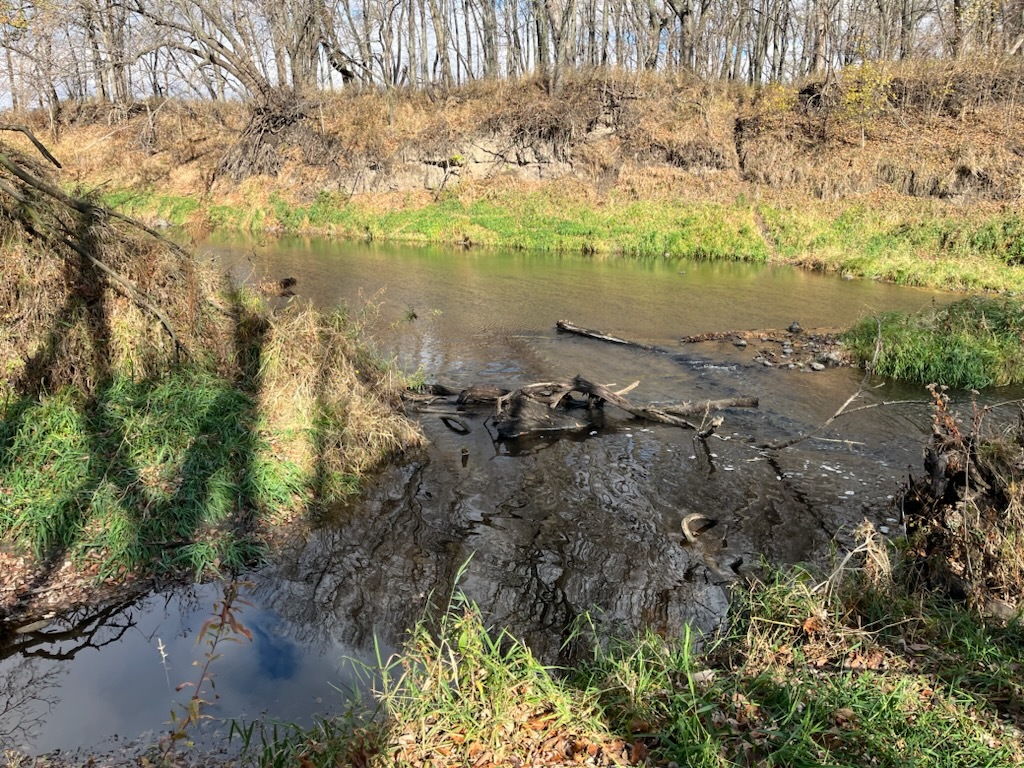
An unnamed tributary of Sevenmile Creek in Montgomery County.
Cleanup efforts have begun. Mr. Bergren was assisting with cleanup efforts by constructing earthen berms in the feedlot to prevent any further runoff to the tributary.
Samples have been collected and will be submitted to the State Hygienic Laboratory for analysis.
Any downstream users should take caution and avoid using water from Sevenmile Creek. The Iowa DNR will follow up for further assessment.
If you see dead or stressed fish at a lake or river, call the DNR’s 24-hour spill line at 515-725-8694 as soon as possible. Quick reporting can help DNR staff identify the cause of a fish kill and potentially stop a fish kill in progress.
(Radio Iowa) – The Iowa Department of Natural Resources is exploring ways to address a national decline in the number of hunters, and to prevent the drop from happening here. D-N-R wildlife biologist Matt Dollison says Iowa has seen its number of pheasant hunters -rise- by almost 20-thousand in the past few seasons, and they now number 83-thousand, but he says national hunter figures have been falling for decades.
“Back in the ’80s, we had about 9% of the population that was hunters and now they say it’s less than 4%, so we’ve lost a ton of hunters overall,” Dollison says. “It is nice to see a few more pheasant hunters taking advantage of the resource here in Iowa this past few years.” Dollison says several factors have likely contributed to the overall decline in hunter numbers nationwide.
“The high number that we had back in the ’80s was really driven by the Baby Boomers getting into hunting, so unfortunately, we’re losing a lot of them from the ranks of hunters,” Dollison says. “It seems like there’s a lot more activities for kids these days to be involved with and there’s way less free time for parents especially, and the kids also have more things to do themselves.”
Dollison says game populations and the availability of public land are also likely factors in the decline. That’s why he says positions like his exist — to manage habitats, spur population numbers in public areas, and to help organize hunting programs. He notes hunting-related expenses provide the bulk of the money for conservation efforts. “A huge portion of the funding for conservation comes from hunting license sales and hunter dollars in the form of excise tax on firearms and ammunition — 90% of the funding for conservation comes from that,” he says. “So, if hunters go away, we don’t have that anymore and that pays all of our salaries in the wildlife bureau, and our management budget is paid by that.”
The focus in the past was on hosting youth hunting events across the state, but Dollison says they’ve started turning to young adults in recent years. “Now there’s a focus to encourage more adults to get into hunting, especially the 20-year-olds that are getting out of school, have available income and time, and aren’t loaded down yet by a bunch of kids and events to attend. The idea is to get those people into hunting, expose them to it, then they’ll eventually have kids, they’ll take their kids out, and then those kids will become hunters.”
Dollison encourages hunters to invite friends who are interested in outdoor recreation to go along, and to point them toward educational events in their area.
Iowa Attorney General Brenna Bird and 24 other states filed an amicus brief with the U.S. Supreme Court Monday in support of the Port of Tacoma’s appeal of a U.S. circuit court decision that upheld a citizen’s ability to sue individuals for violating the Clean Water Act. “We must not allow unelected, green activists to weaponize lawsuits to force woke mandates, hurt farmers, or threaten cities that are working hard to keep drinking water clean,” Bird said in a press release.
The Iowa Capital Dispatch reports the original case involved a citizen-led environmental group in Washington, Puget Soundkeeper Alliance, who sued the Port of Tacoma and its tenants for not implementing stormwater controls in accordance with the state-issued pollutant discharge permits.
In June 2024, the 9th Circuit Court ruled in favor of the environmental group. The court’s opinion said “even though the (state pollutant permits) exceeded the requirements of the federal regulations, they were enforceable in a citizen suit.” Circuit Judge Diarmuid O’Scannlain wrote that without the existing precedent, “private citizens such as Puget Soundkeeper Alliance would have no standing to sue” in such cases.
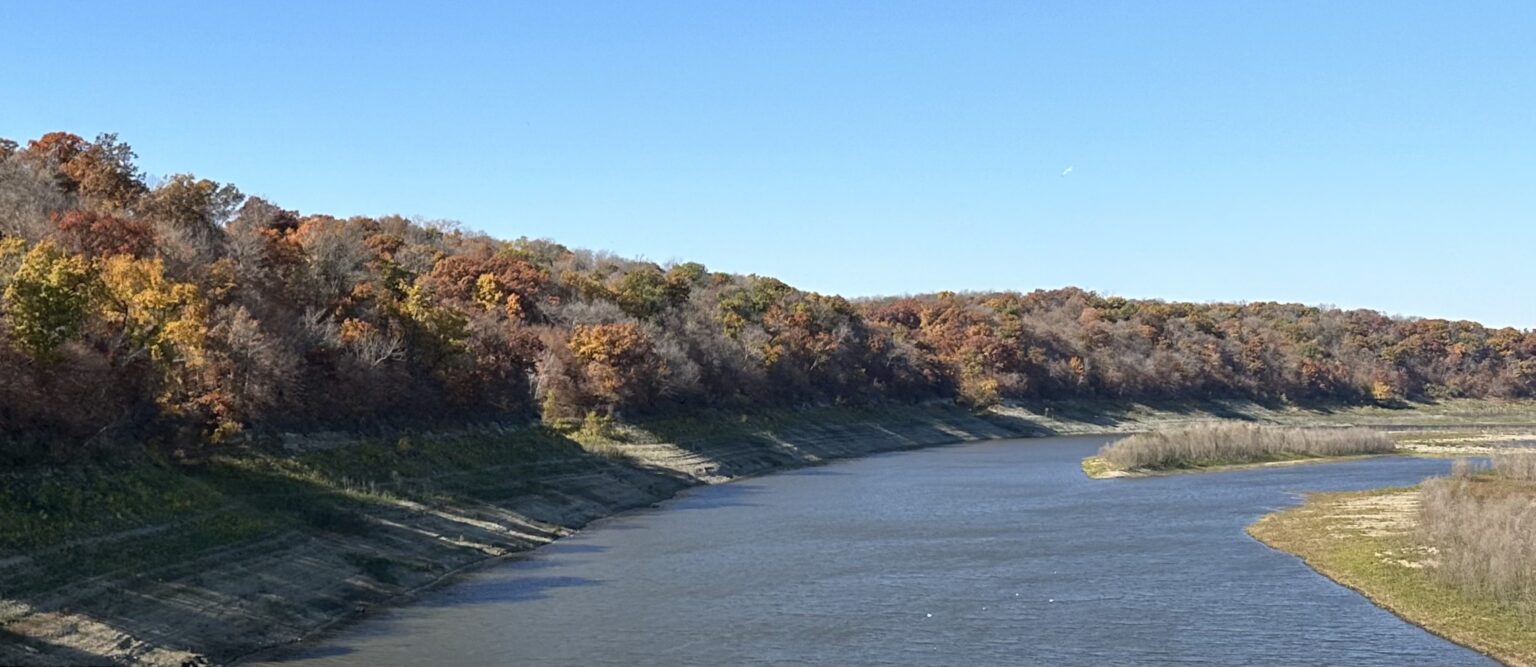
(Photo by Cami Koons/Iowa Capital Dispatch)
The precedent that set the court’s opinion was a citizen suit from 1995 claiming the City of Portland had violated the Clean Water Act. O’Scannlain said in his concurring statement the precedent “continues to expand citizen standing in a way Congress never intended.” Sean Dixon, Puget Soundkeeper executive director, said in a statement at the time of the ruling that it “closes the book on a proposed loophole in environmental protection,” and will help protect clean water across his state of Washington.
The recently filed brief by Bird and other states argues that the decision “interferes with (s)tate authority over water resources” and “undermines” state environmental efforts. This interference, the brief argues, disrupts the “cooperative federalism” approach of the Clean Water Act which allowed states to “tailor” federal programs to local needs.
The precedent set by Port of Tacoma case would take away a state’s flexibility and ability to experiment with implementing various conservation laws that prioritize what is most important to citizens of a given state, according to the brief.
A press release from Bird’s office called the citizen lawsuits “politically charged” and said taxpayers would be “on the hook” paying for the government to defend itself from “woke green activists.” Bird also argued the new interpretation could lead activists to “weaponize” the Waters of the United States rule and try to enforce “radical” point-source regulations by suing farmers and cities. The brief urges the Supreme Court to reverse the judgment of the 9th Circuit Court.
“The states are calling on the U.S. Supreme Court to hear the case and restore regulatory power to the (s)tates so that farmers and cities are not forced to choose between woke, costly mandates or defending from aggressive lawsuits,” the press release said.
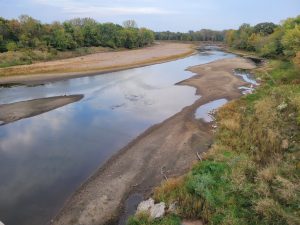
(Radio Iowa) – River and stream flows have dropped as the wet spring turned to a dry fall, which raises some concerns for fish. D-N-R fisheries biologist Scott Grummer works in north-central Iowa. “We’re starting to get a few calls from citizen reports of some fish getting stranded in isolated pools, especially at the you know, the upper, upper reaches, or headwaters of some of our rivers,” he says. Grummer says the wet spring had rivers full, but it never fully replenished groundwater.
“Even with the flooding, you know, the sub soil moisture wasn’t fully replenished, and once we got those spring rains through, you know, we slid right back into dry events where we seen very little rainfall really since July on, especially parts of Iowa, and kind of slid us right back to where we were a year ago, at this time in drought,” Grummer says. Rivers with less water depth could freeze over. “The thing that keeps river water from from freezing solid is obviously the current, or flow velocity,” Grummer says. “And when we’re in these dry periods, like we are now, you know, the current is is minimal, and that makes it you know, where a harsh, cold winter could have some some dramatic effects on fish.”
Public Health Watch photo
He says the natural instincts of fish kick in. “Fish will move to the deepest water they can find to winter. They can sense winter coming. But when we’re in this, this type of drought and flow conditions, there’s not a lot of deep water for them to find,” he says. Grummer says there could be some fish kills. “On the positive side, you know, obviously, fish have dealt with droughts through history, and they are very resilient. And typically, it’s not like a complete destruction of the fishery, but it could cause some, some minor setbacks in in some areas, if, if we get a harsh winter, and especially in these northern Iowa rivers,” Grummer says.
Grummer says precipitation generally drops in the winter, so there’s not a lot of chance for the waterways to get replenished.
(Des Moines, Iowa) – Iowa’s furbearer season opens Saturday and according to the state’s Department of Natural Resources (DNR), the outlook for trappers is positive – most species populations are steady, and there are some early indications wild fur pelt prices could be trending up this winter. The challenge, however, could be that fewer marshes and streams have good water levels. Vince Evelsizer, state furbearer and wetland biologist with the Iowa Department of Natural Resources says “Our water levels are similar to last year in some regions, even with a wet spring. These wet/dry-dry/wet swings within a year can have an impact on aquatic furbearers – otters, mink, beavers and muskrats. But the upland species – bobcats, red fox, coyotes – are much less impacted.”
Evelsizer encouraged trappers to do some preseason scouting as marsh water levels vary by location with many either dry or drying by the day. The furbearer season is Nov. 2 to Feb. 28, 2025. Beaver trapping closes on April 15, 2025. 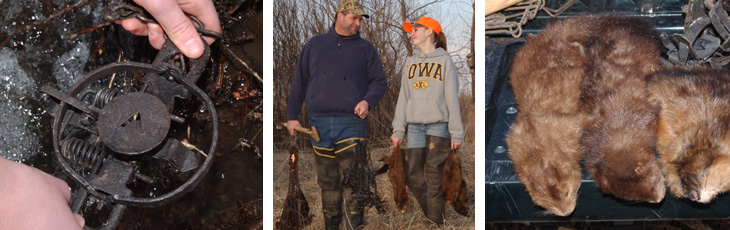
Mentoring young trappers
A regulation change allows youth age 15 and younger to go trapping with a licensed adult trapper without purchasing a license. This change brings trapping in line with hunting. “This allows the youth to experience trapping to see if it is something they would enjoy without having to purchase a license,” Evelsizer said. Each youth must be accompanied by a licensed adult.
Gray fox study
The Iowa DNR will again be looking for live caught gray foxes as part of a pilot population study to learn more about this small, secretive woodland furbearer. “We’re asking for the public and our trappers to contact us if they’ve recently seen a gray fox or catch a gray fox. Better yet, contact us in advance if you’re trying to catch a gray fox in your area. Private trappers are a valuable partner for this pilot project. We have one fox collared so far, and hope to add to that this year,” Evelsizer said. The collar provides researchers with data on the fox’s movement, habitat preference and survivorship. There is a $400 reward, provided by the Iowa Wildlife Federation, for anyone who catches a gray fox that can be used for this study. He said the fox will be released on the site where it was caught.
The DNR is also working with Iowa State University on a pilot project this winter in northeast Iowa, using cameras to track fishers and gray foxes to determine what areas these species occupy and what areas they don’t occupy in this region. “Other regions may be surveyed in the future, depending on how this study goes,” Evelsizer said.


 Facebook
 Twitter
 YouTube
 RSS
RSS