


Pilot project working on allowing EMS to administer blood in the field
November 21st, 2025 by Ric Hanson
(Radio Iowa) – The Des Moines and West Des Moines Fire Departments have taken on a pilot project that could end up saving lives across the state. Des Moines Lieutenant Dan Davis says it involves having blood available that first responders can administer to patients in the field. “So what they wanted us to do was to build up a program, and since we’re full time and we have administrative staff that we could take on this big of a project, build the framework that we could use for the rest of the state,” he says. It’s based on military use where administering blood in the field can help soldiers survive. Davis says the command vehicles for the two departments will have special coolers to carry the blood when the departments receive a call.
“So these vehicles will get dispatched, like in Des Moines, they’re automatically dispatched to all automobile accidents with extrication, all industrial entanglements with extrication, gunshots, stabbings, that stuff, they’re all automatically initiated,” he explains. Iowa paramedics are normally not allow to administer blood, but the pilot program status gives them that ability. Davis says the procedure has been shown to make a huge difference for victims.
“Part of the training is watching that video from New Orleans, and this guy is barely do anything more than moan. By the time they get two units of blood in him, he’s telling his name, date and name and birth date, so it’s pretty remarkable thing,” Davis says. West Des Moines paramedic Brian Rayhons is working with Davis on the project. He says it brings hospital type care to the field to give the patient more time before they get to the doctor. “I’ve been in E-M-S for about 20 years at this point. And I think in my career, even in the future, this is going to be one of the biggest highlights. One of the biggest transformations in care that we are providing to our patients,” Rayhons says. Rayhons says they are figuring out how to put the whole system into a box that departments can use.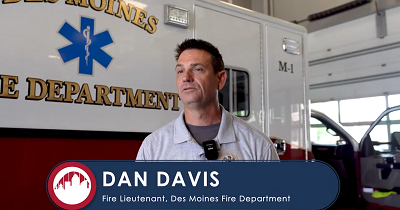
“A part of that is how do we bring this to the rest of the state of Iowa, whether that be Fort, Dodge or Waterloo or Iowa City. You name the other city or entity, county level ambulance service that wants to do this. Dan and I are trying to set a pathway or pave the path for them to be able to do it much faster,” he says. They have been planning for around a year to now get it started in the field for the two departments to work through the larger process. Rayhons says there is one thing everyone can do to help. “Blood is a, one of those resources that we can’t just make up, and so without people going out and donating, we wouldn’t have this, this treatment that to be able to provide,” he says.
Rayhons and Davis say another step for the program is to change the rules so E-M-S personnel in Iowa can administer blood to patients.


 Facebook
 Twitter
 YouTube
 RSS
RSS